









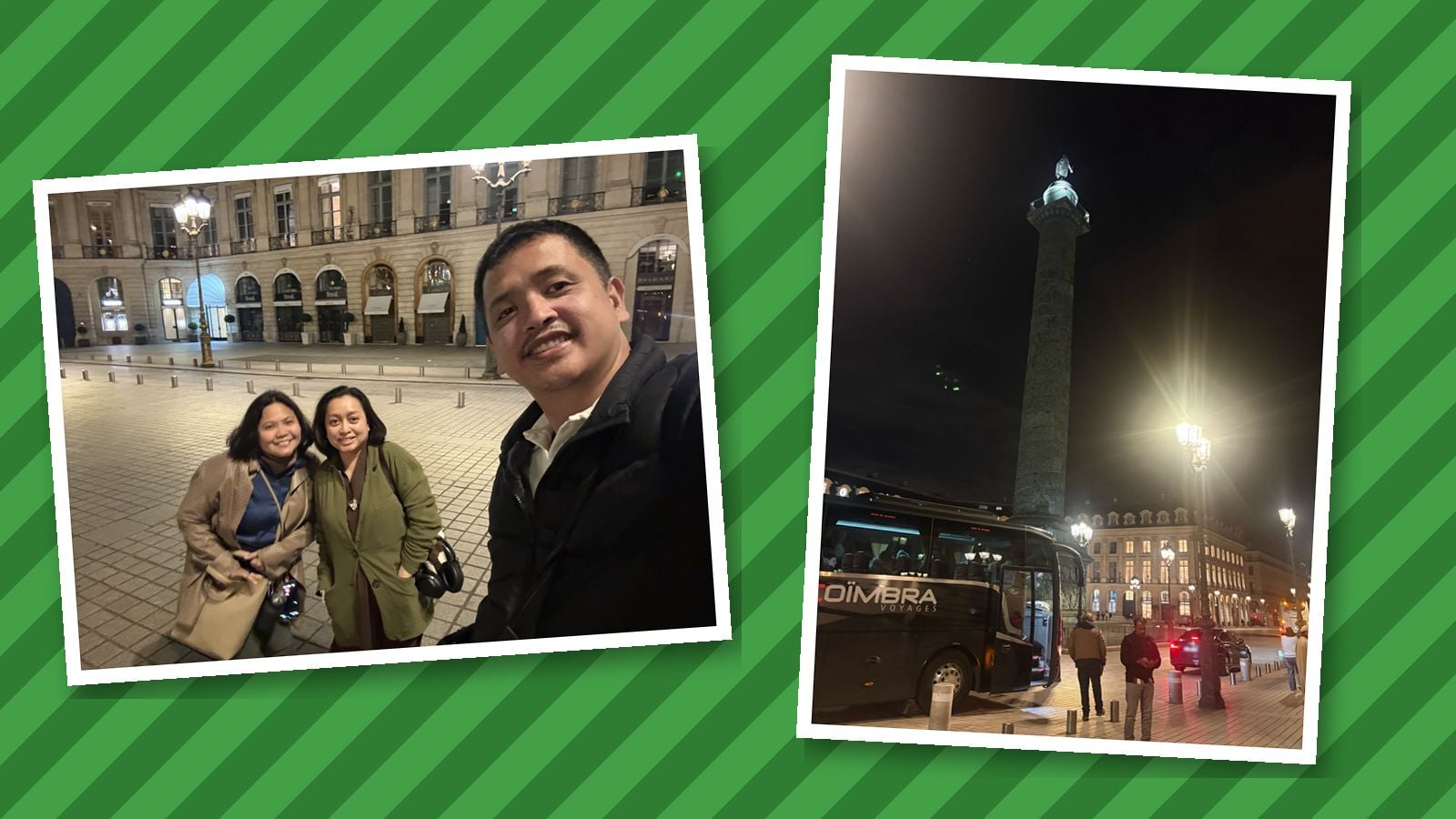
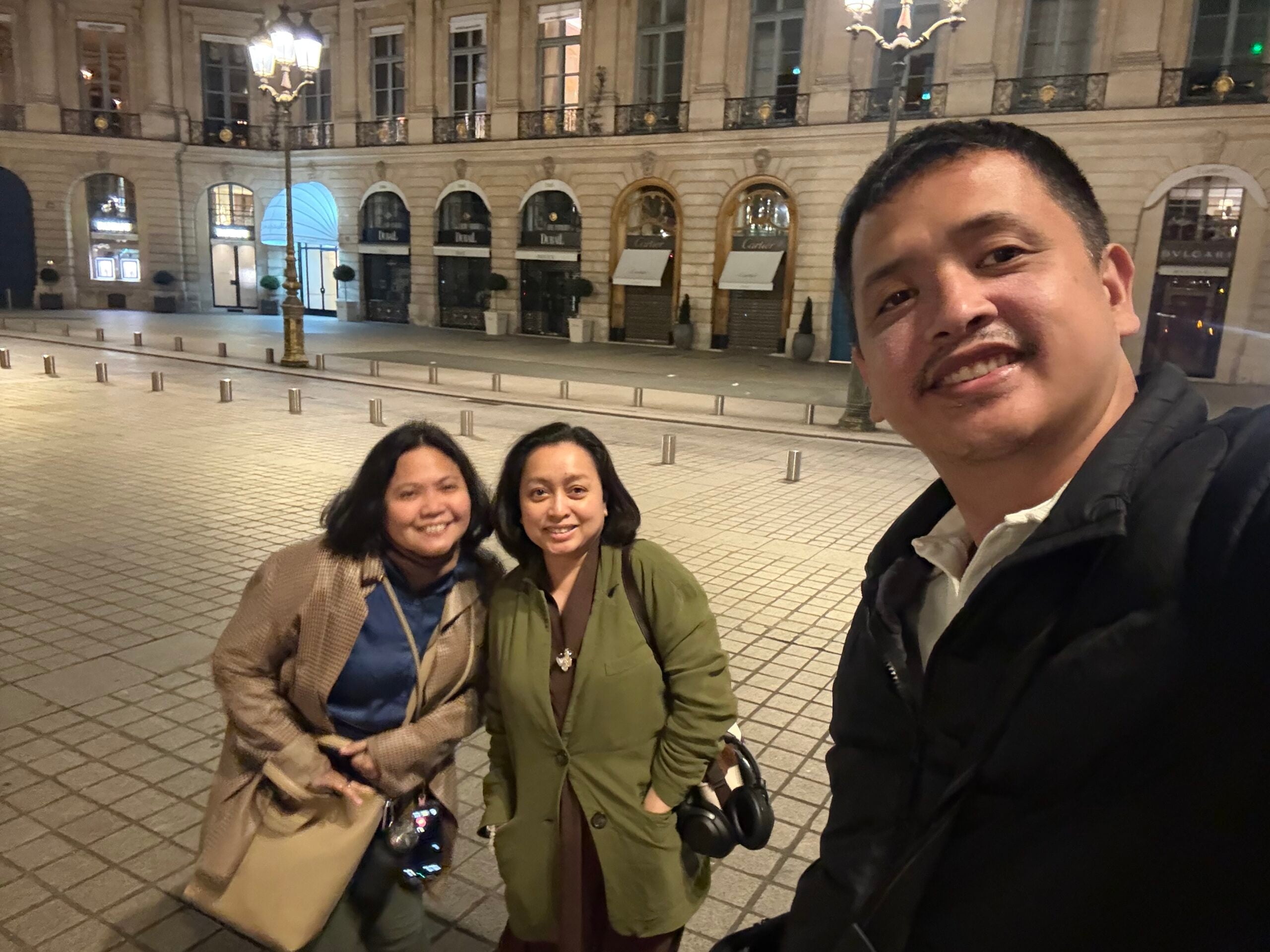
Some Paris squares are for sitting. Place Vendôme is for looking, ideally with your hands in your pockets and your credit card even deeper in your bag. Dimple, Tin and I walked it at night with a guide, when the square is quiet, the windows are lit and every shopfront seems to be glowing at you personally.
Earlier in the trip: the Moulin Rouge.
A square built to impress a king
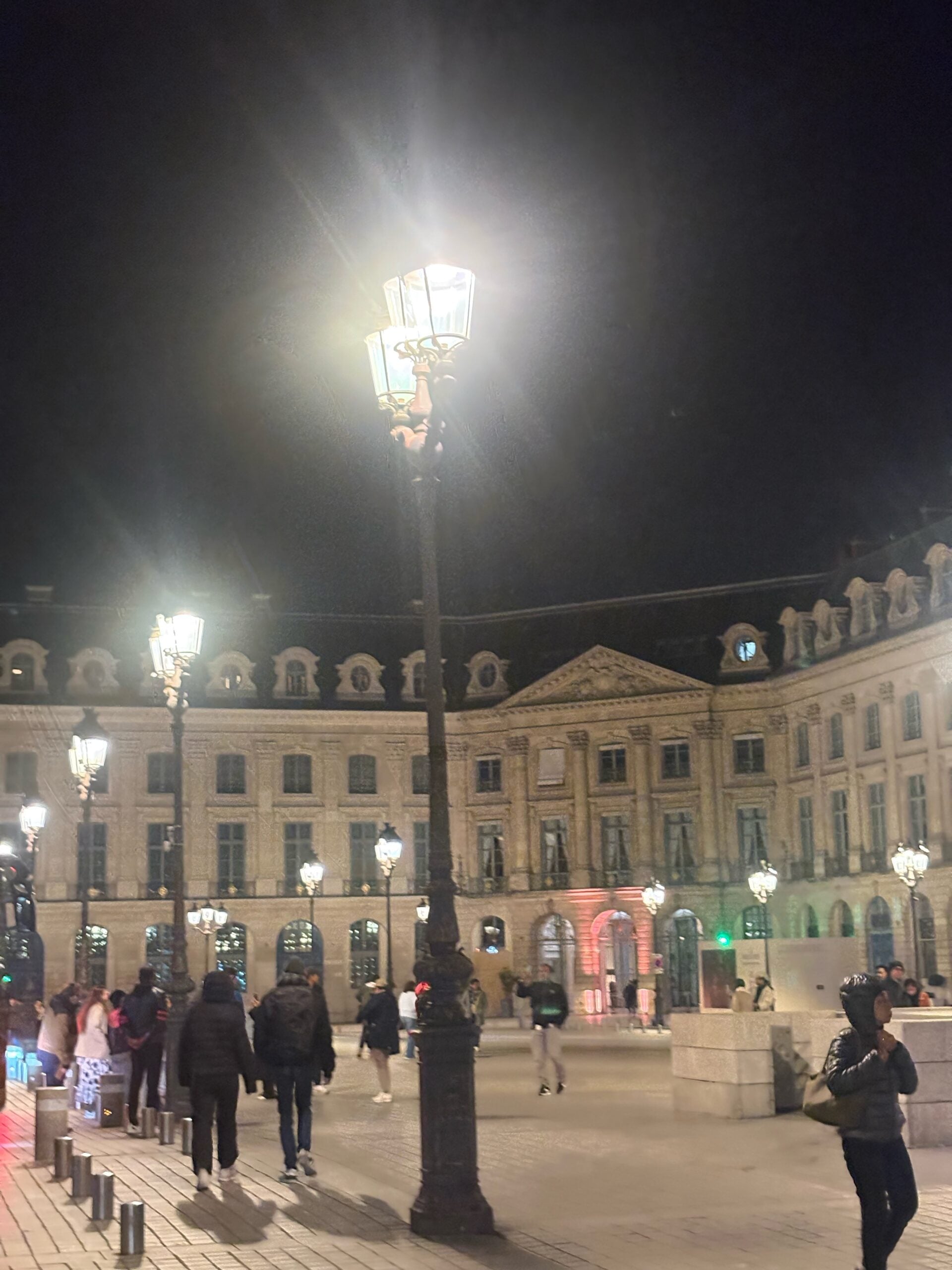
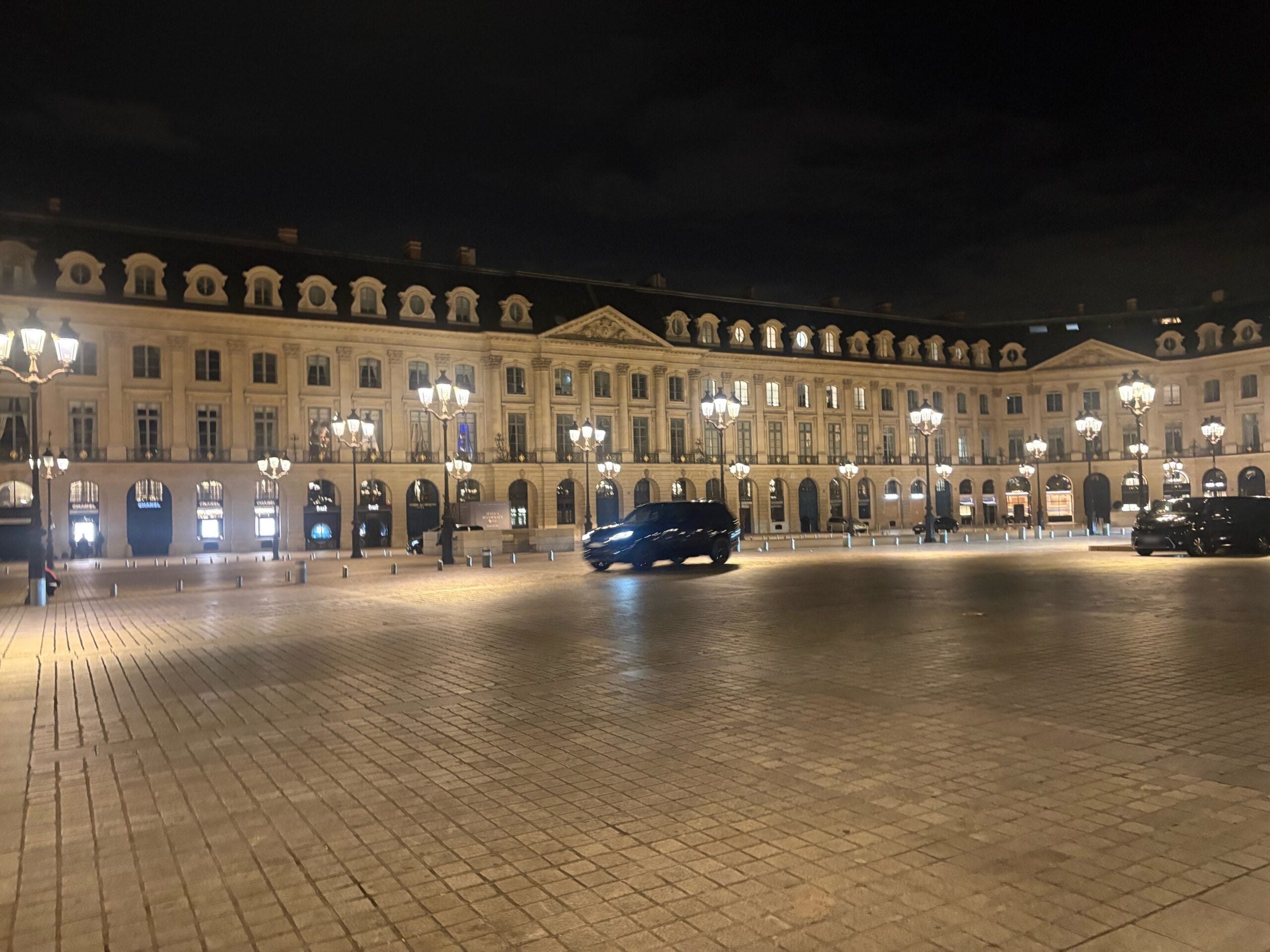
Place Vendôme was built for Louis XIV’s glory. Work began in 1698, and it was first called Place des Conquêtes, the Square of Conquests. Subtle. Jules Hardouin-Mansart, the same architect behind the Dome at Les Invalides, designed only the matching fronts. Buyers had to build whatever they wanted behind them. The cut-off corners make the rectangle look like an octagon, which is why it feels so neat when you stand in the middle.
When the money ran short, a financier named John Law took over and built himself a house on the square. It was finished around 1720, just as his famous Mississippi bubble burst. Even in the 1700s, luxury real estate and financial crashes went together.
The column made of cannons
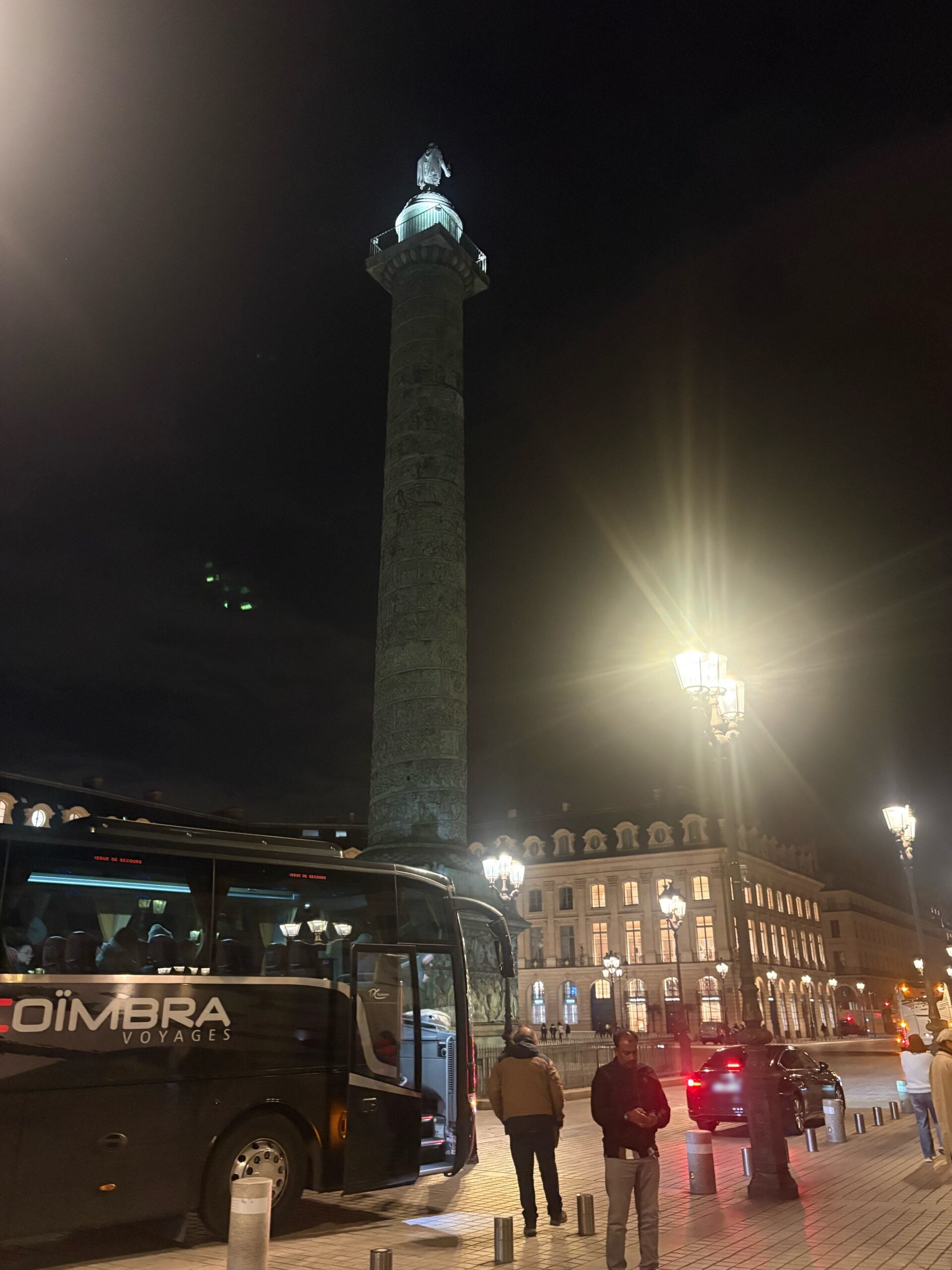
The column in the middle was Napoleon’s idea. He ordered it in 1806 to celebrate his victory at Austerlitz, modelled on Trajan’s Column in Rome. Its 425 bronze plates spiral up the sides and were said to come from captured enemy cannons, though historians think the usual figure is exaggerated.
Its life got dramatic. In 1871 the Paris Commune pulled it down, and the painter Gustave Courbet, who had proposed taking it apart, was later ordered to pay for rebuilding it: about 323,000 francs, at 10,000 francs a year. He fled to Switzerland and died there. The column went back up in 1874. Let that be a lesson about volunteering ideas in meetings.
The Ritz, and the woman who lived there
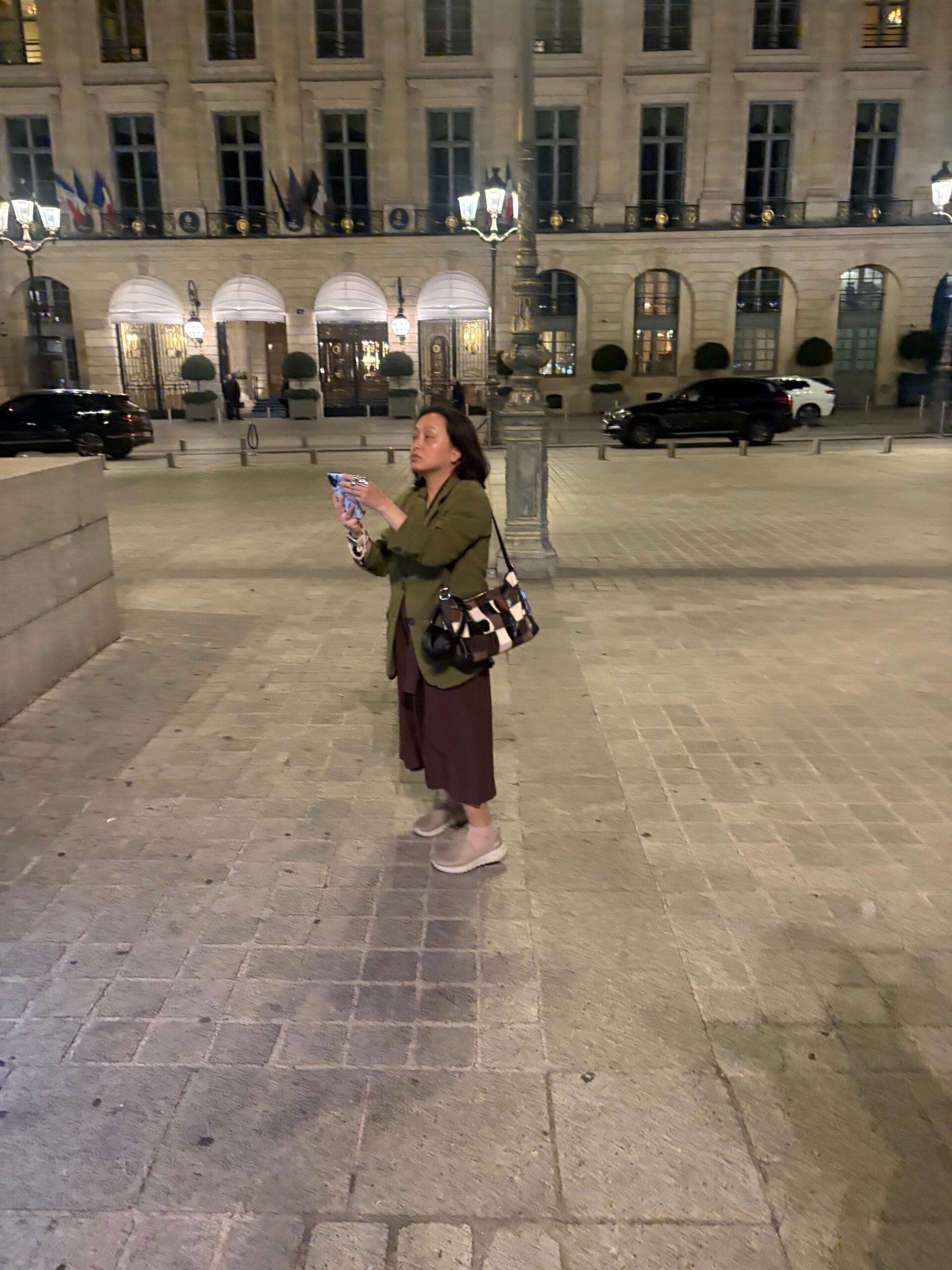
The centrepiece of the square, for us, was the Ritz at No. 15. César Ritz opened it in 1898, and the hotel says it was the first in the world with electricity on every floor and private bathrooms.
Its most famous resident was Gabrielle “Coco” Chanel. Once she was rich and famous, she didn’t buy a mansion. She moved into the Ritz. Chanel made the Ritz her home for decades, from the 1930s until her death there in 1971. Picture living in one of the world’s most famous hotels and calling it home. It’s either the dream or the most expensive way to never do your own laundry.
Our guide told us how her perfume got its name. The perfumer Ernest Beaux presented Chanel with numbered samples, and she chose No. 5. She kept the number, saying it would bring good luck, and Chanel No. 5 launched in 1921. Some brands spend months on a name. She just read the label.
Our guide also said that whatever she touched turned to gold, and jewellery was no exception. In 1932 she presented Bijoux de Diamants, a collection of about 50 diamond pieces with stars, comets, moons and suns. Today Chanel’s fine jewellery flagship is right here on the square, at No. 18. The House of Chanel bought the building in 1997, so in a way her name still lives on in Place Vendôme.
Diana’s last evening
The Ritz is also part of a sadder story. Our guide told us about Diana, Princess of Wales, and her last evening in Paris in 1997.
Diana and Dodi Al Fayed arrived in Paris after a holiday on the Al Fayed yacht. Dodi’s father, Mohamed Al Fayed, owned the Ritz. They went into the hotel restaurant, left after a few minutes, and had dinner in a private suite instead. Photographers were gathered out front. After midnight, they left by the rear exit of the hotel, on rue Cambon. Their car crashed in the Pont de l’Alma underpass. Dodi and the driver, Henri Paul, died at the scene, and Diana died later that night in hospital.
Standing there, the square felt very quiet for a moment.
Why the jewellers are all here
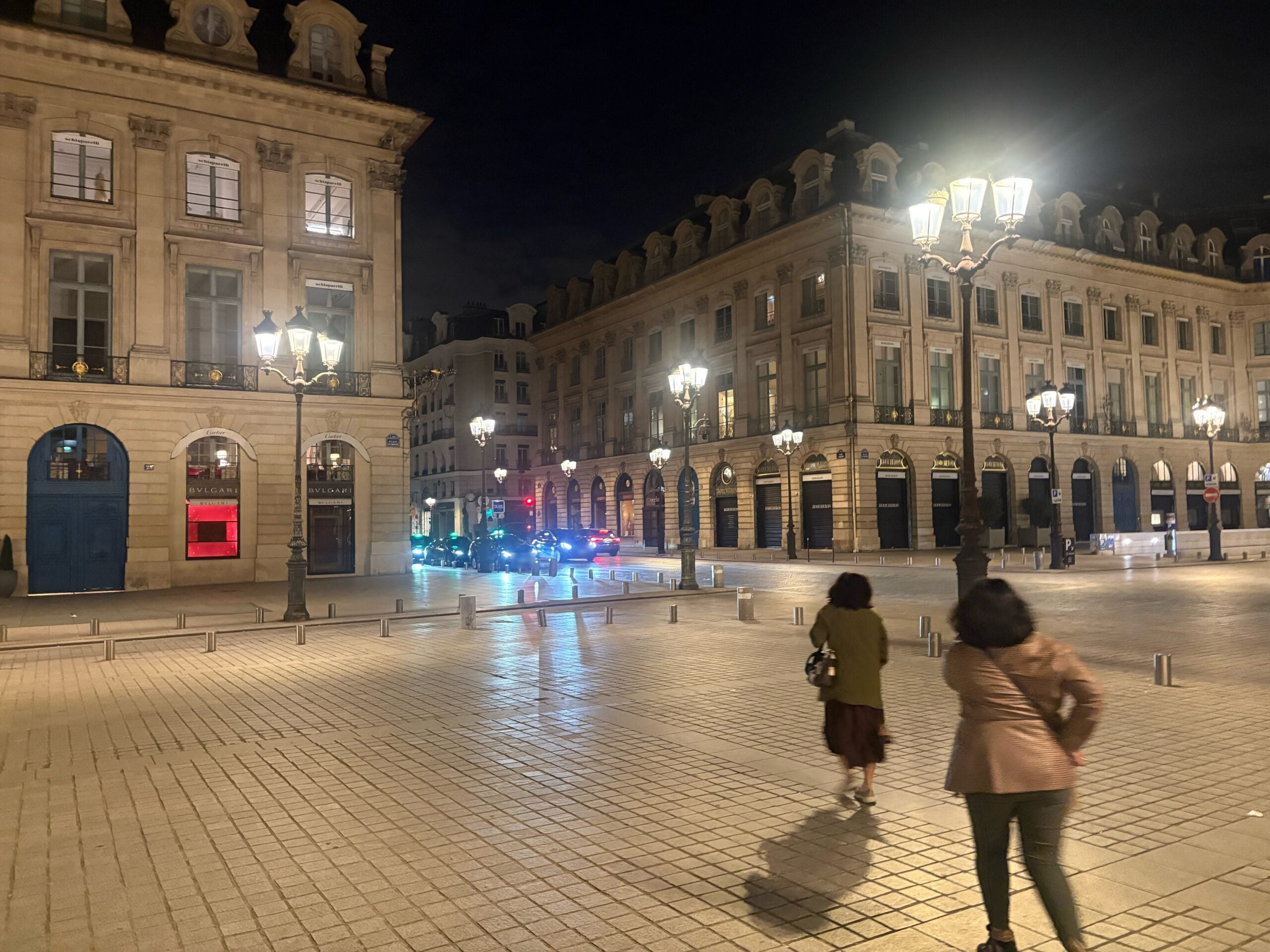
Today the square is lined with some of the biggest names in jewellery and luxury. It started in 1893, when Frédéric Boucheron became the first of the great modern jewellers to open here, at No. 26. Back then the big houses were on Rue de la Paix. He picked No. 26 because it gets the most sunlight, which makes the jewels sparkle. The Ritz opening five years later sealed the square’s reputation.
Others followed. Chaumet is at No. 12, the same building where the composer Chopin died in 1849. Van Cleef & Arpels opened its first boutique at No. 22 in 1906, and its logo still includes the Vendôme Column. Chopard is at No. 1, and the shirtmaker Charvet has been at No. 28 since 1877.
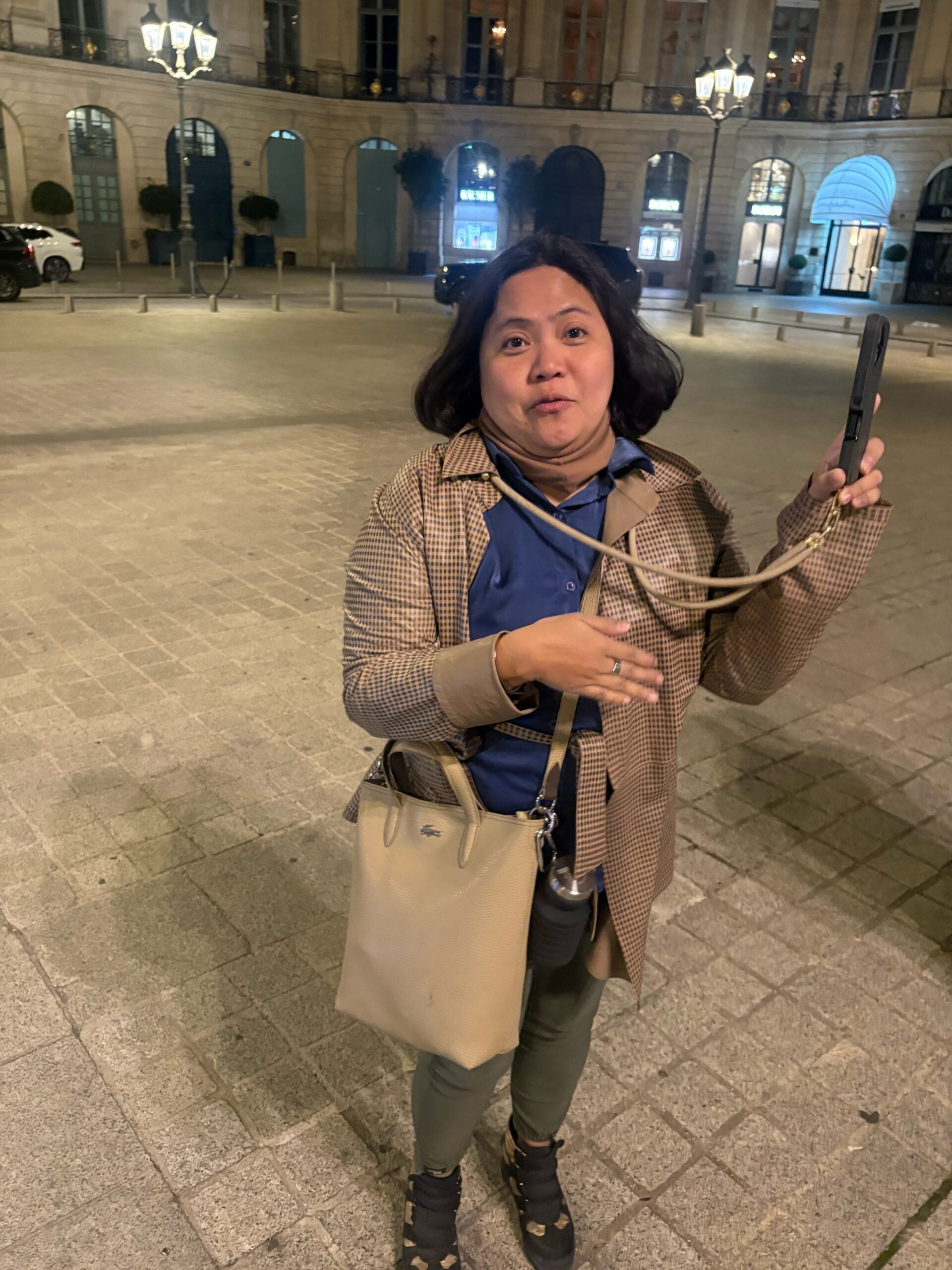
At night, with the shops closed and the windows lit, it’s the best kind of window shopping: everything sparkles, nothing is for sale, and nobody’s wallet gets hurt. We didn’t buy anything, and we’re proud of it.
Visiting Place Vendôme
- It’s a public square on city streets, so you can walk through it. Night is a lovely time to go, when it’s quiet and the windows are lit.
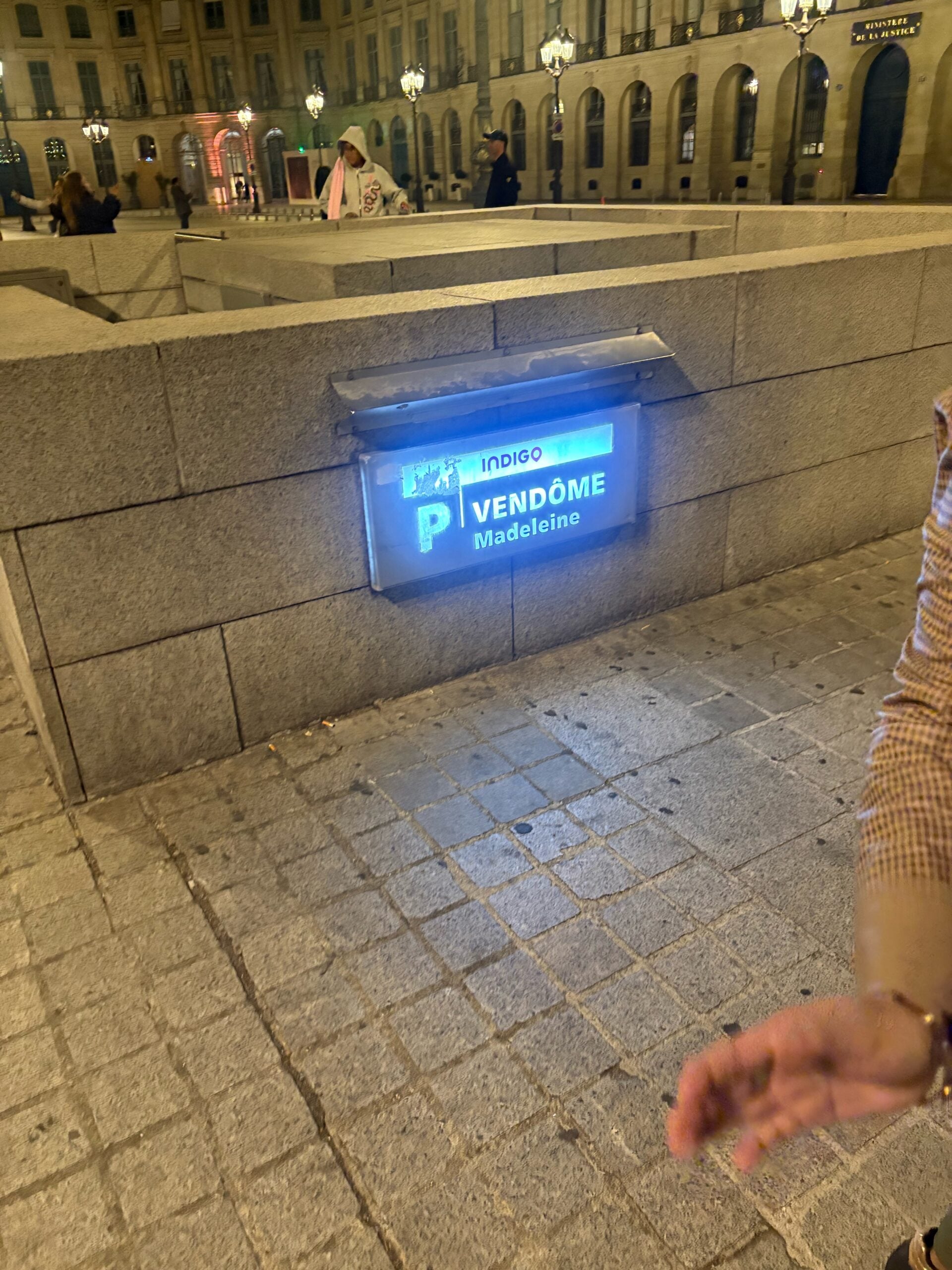
- The closest metro stations are Opéra, Pyramides, Madeleine and Tuileries.
- You can’t climb the column.
- Look for Boucheron at No. 26, the Ritz at No. 15 and the Ministry of Justice at Nos. 11–13, which has been there since 1718.
FAQ
Yes. Chanel made the Ritz her home for decades, from the 1930s until her death there in 1971.
Boucheron opened at No. 26 in 1893, and other great jewellers followed. The Ritz opened in 1898 and made it Paris’s luxury address.
It’s the Vendôme Column, which Napoleon ordered in 1806 to celebrate the victory at Austerlitz. Its bronze plates were said to come from captured cannons.
It’s a public square, so you can walk through it. The column isn’t open to climb.
Opéra, Pyramides, Madeleine and Tuileries are the closest.