









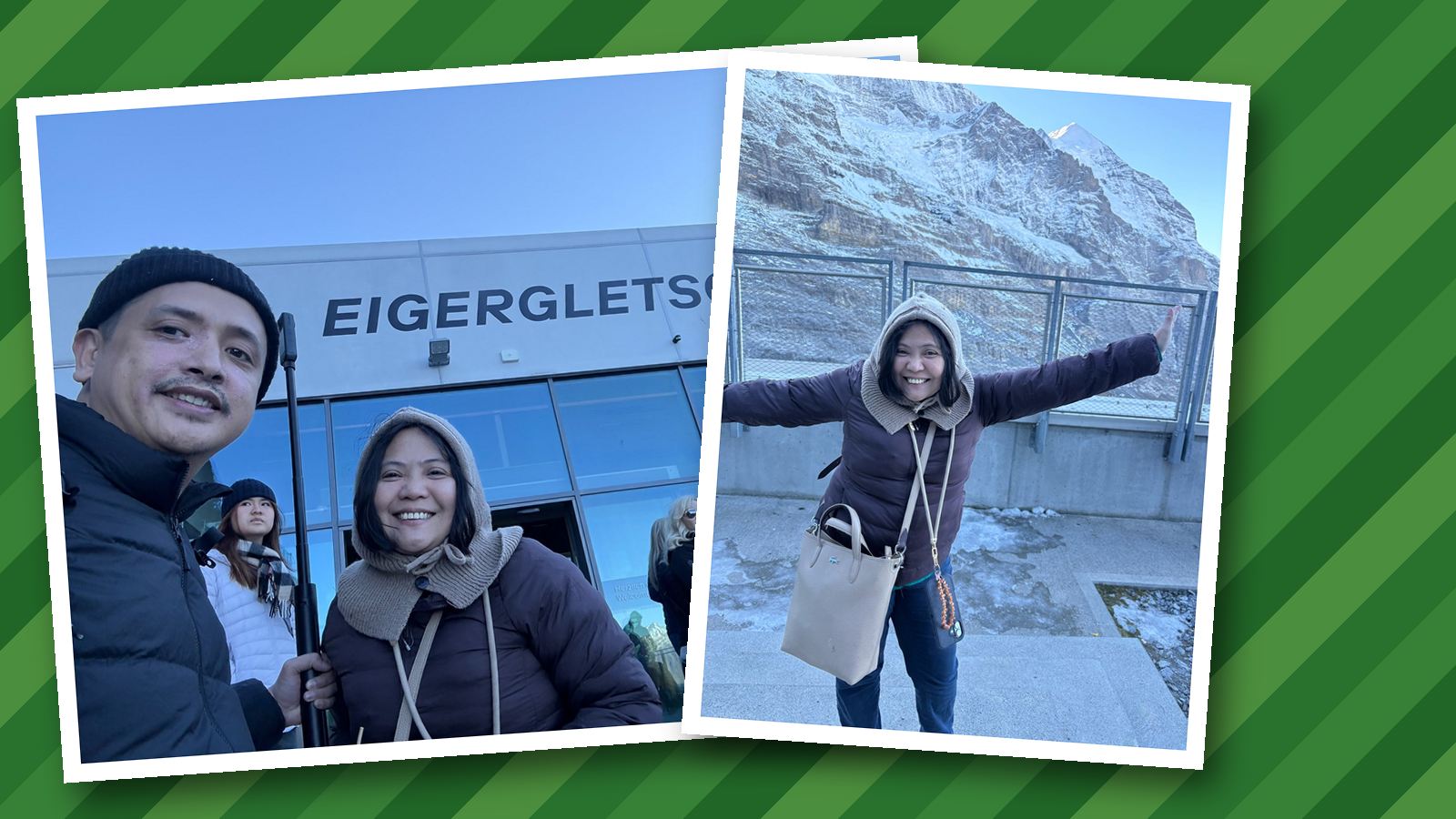
Some rides just get you from A to B. The Eiger Express isn’t one of them. On our Swiss Alps day trip, Dimple and I rode this gondola from Grindelwald up to Eigergletscher, and we’re still talking about it. Here’s what the ride is like, a little about the very large mountain staring at you the whole way up, and a few tips if you’re planning your own trip.
What is the Eiger Express?
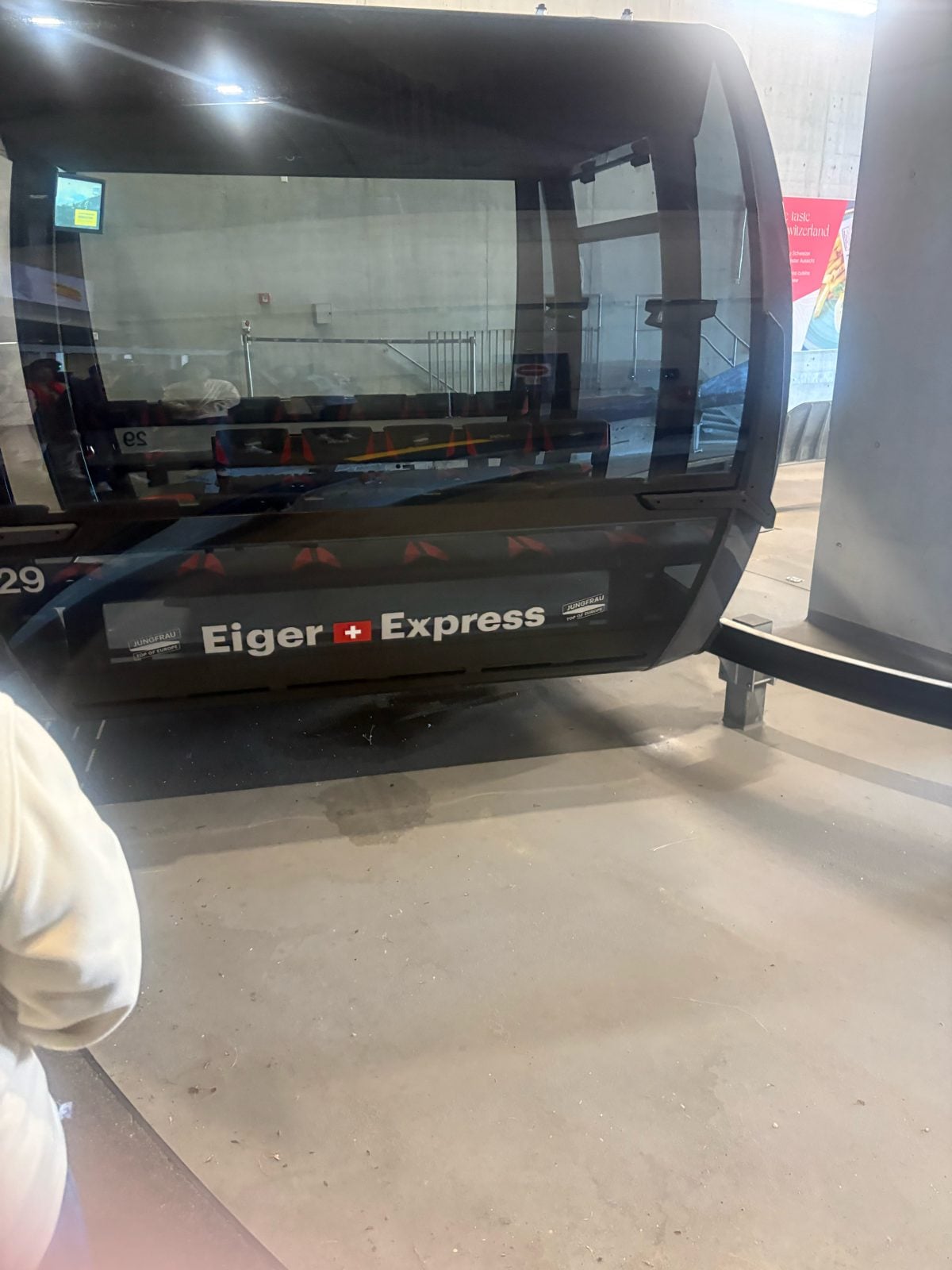
The Eiger Express is a tricable gondola, also called a 3S cable car, run by Jungfrau Railways. It links Grindelwald Terminal in the valley with Eigergletscher station at the foot of the Eiger.
“Tricable” means each cabin hangs from three cables instead of one. That keeps the cabins steady even in wind, and the whole line needs only seven support towers. For passengers, it means a smooth, quiet ride. For nervous passengers, it means three cables. We counted.
Here are a few numbers from Jungfrau Railways and the builder, Doppelmayr/Garaventa:
- Length: about 6.5 km
- Height gained: about 1,385 m
- Ride time: about 15 minutes
- Cabins: 44, with 26 seats each
- Capacity: up to 2,200 people per hour each way
It opened in December 2020 as part of the V-Cableway project, which also built the new Grindelwald Terminal. According to Jungfrau Railways, it gets you to the Jungfraujoch about 47 minutes faster than the old train route.
Starting at Grindelwald Terminal
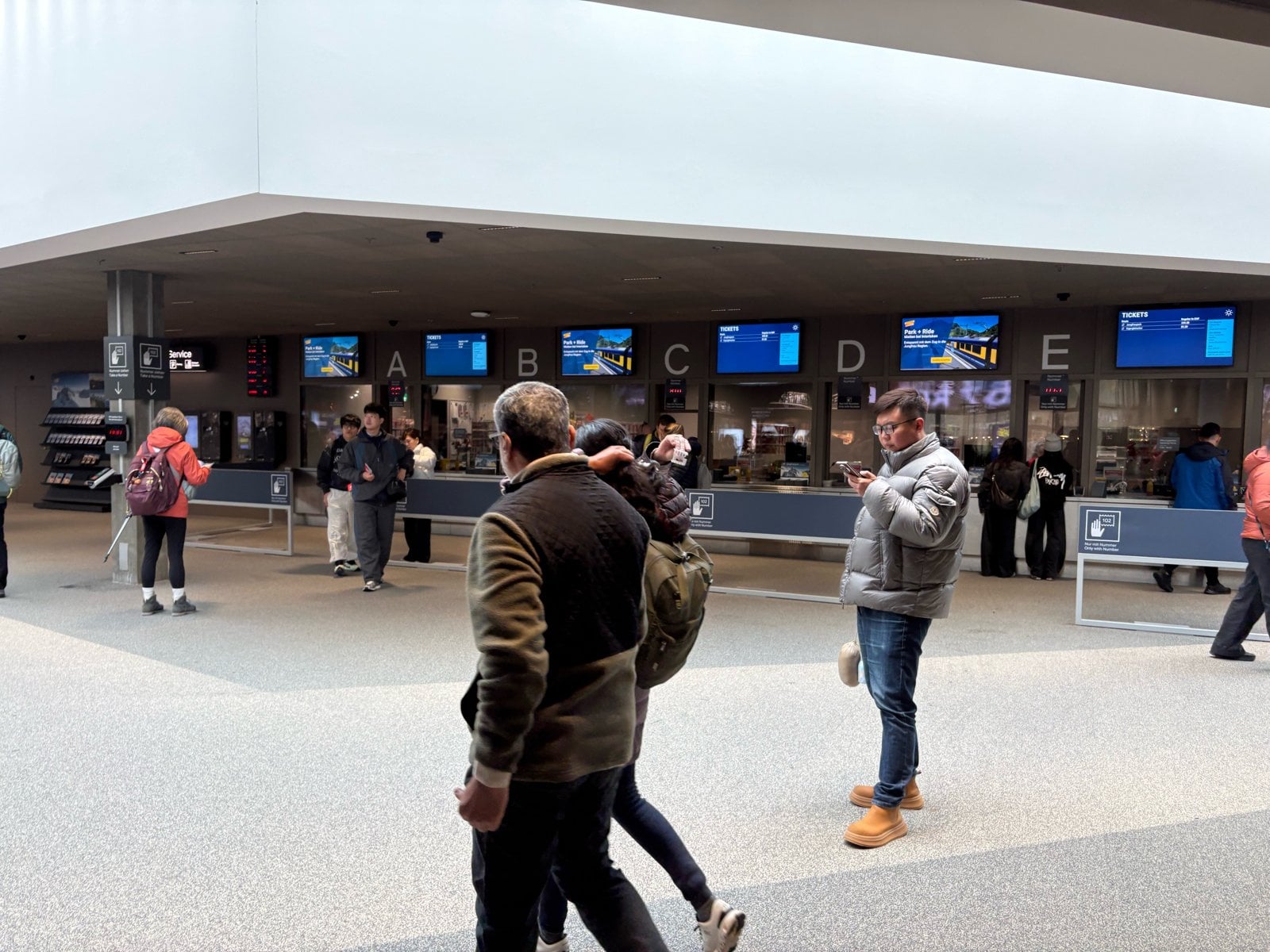
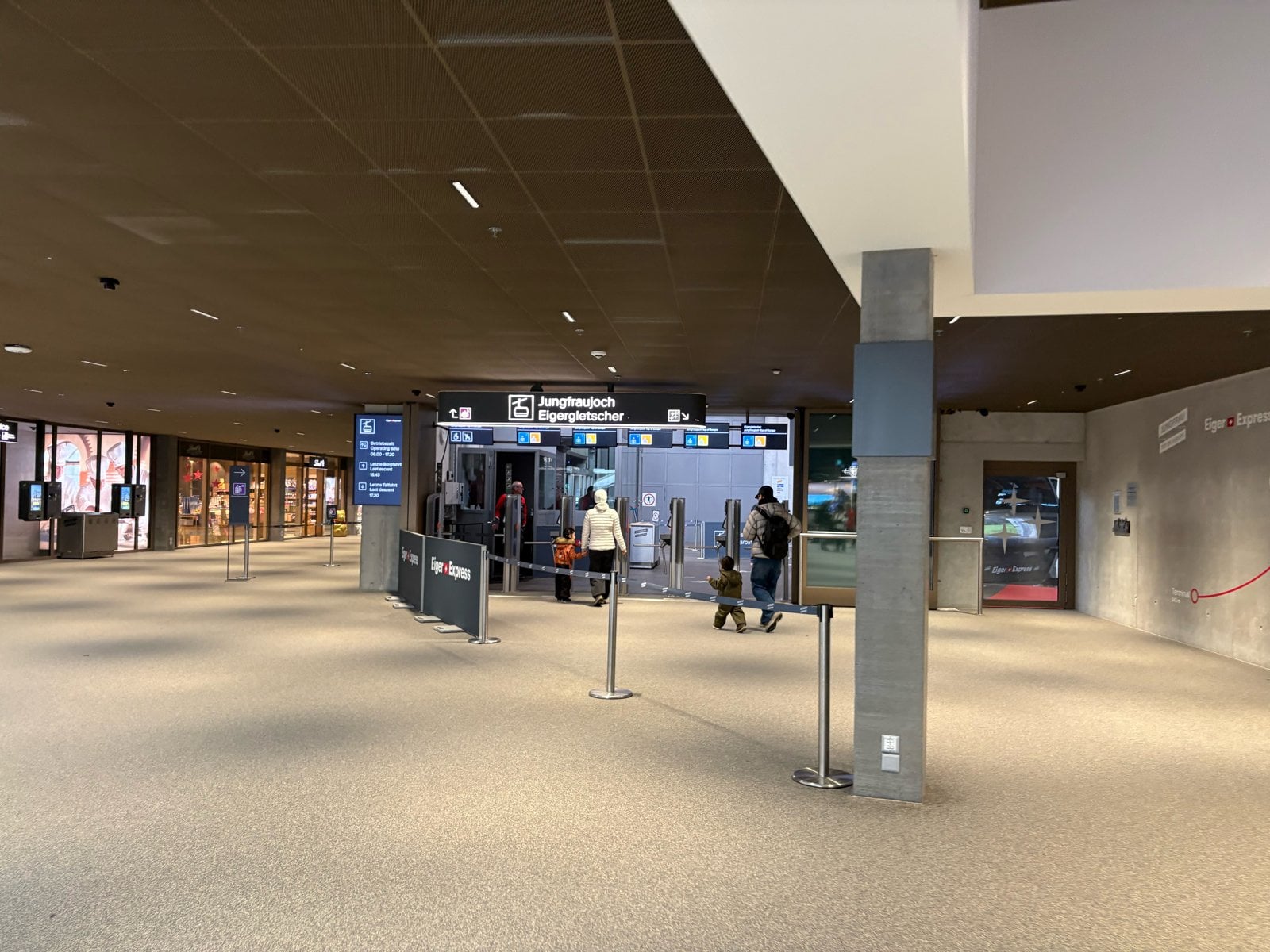
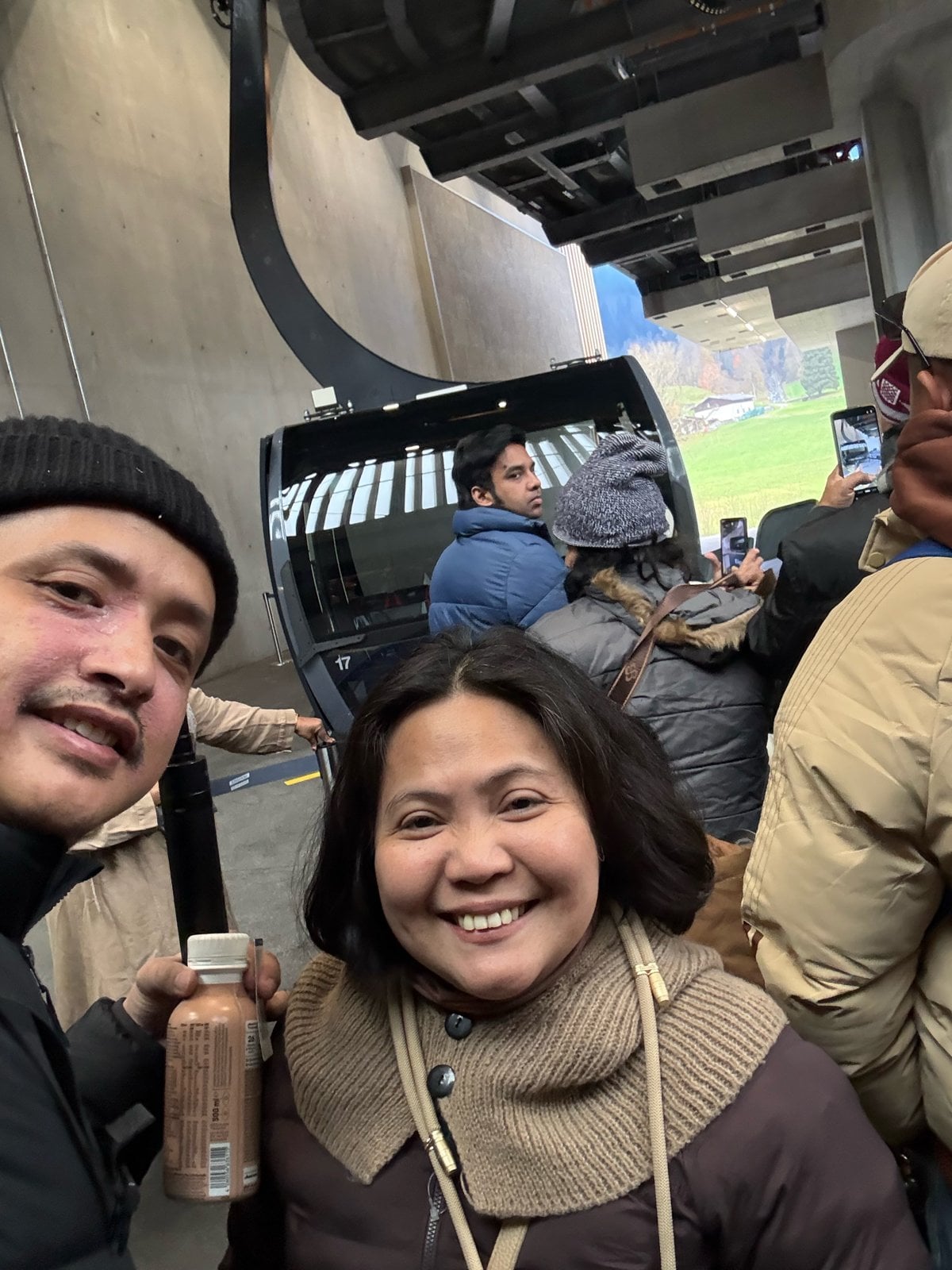
Grindelwald is all wooden chalets and big mountain views. Grindelwald Terminal is the modern base station, with a train stop built in, so lots of visitors step off a train and walk straight to the cabins. We were with a tour, so our guide handled boarding. Our job was simply to follow the person in front of us.
Up the mountain
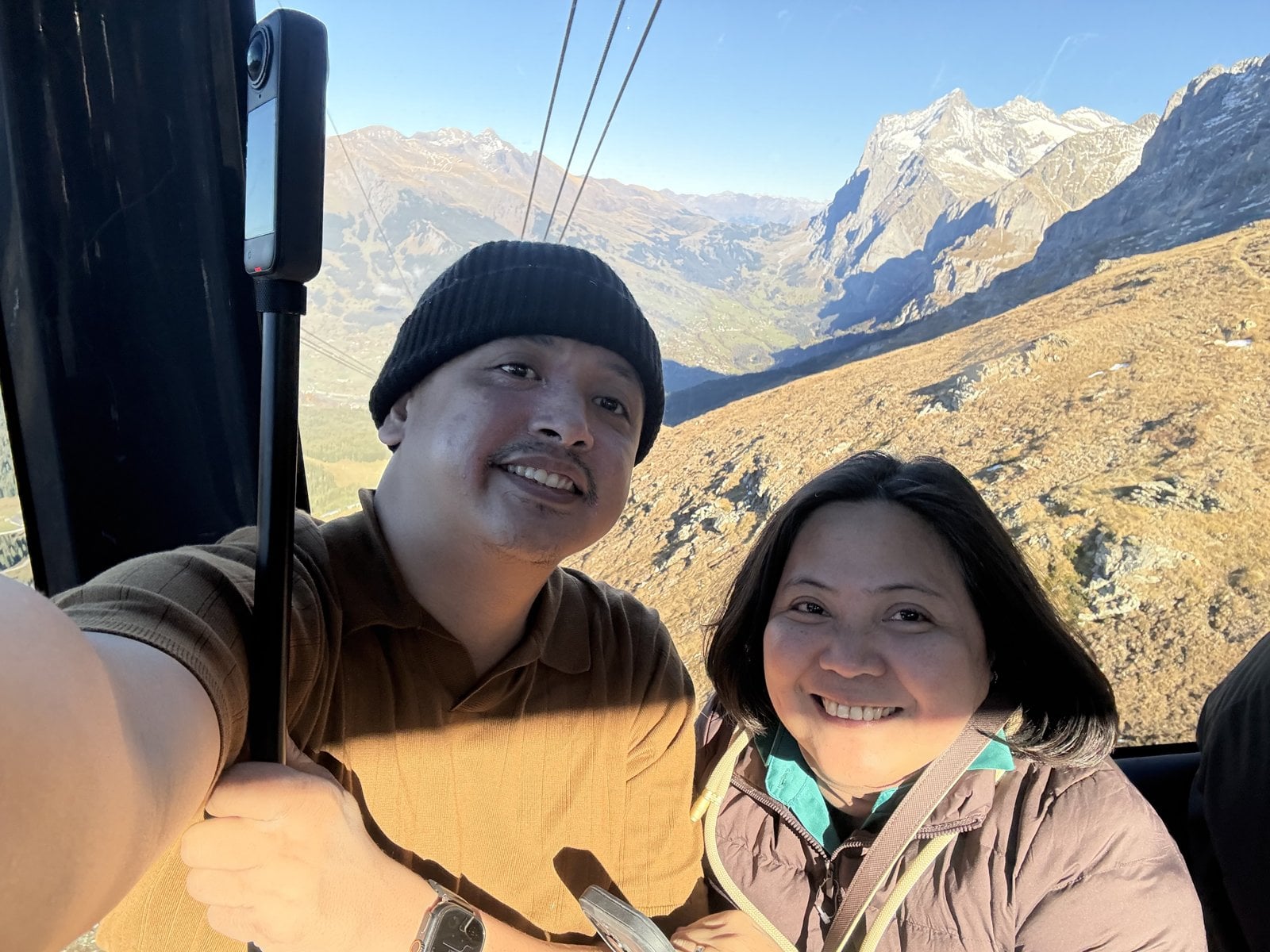
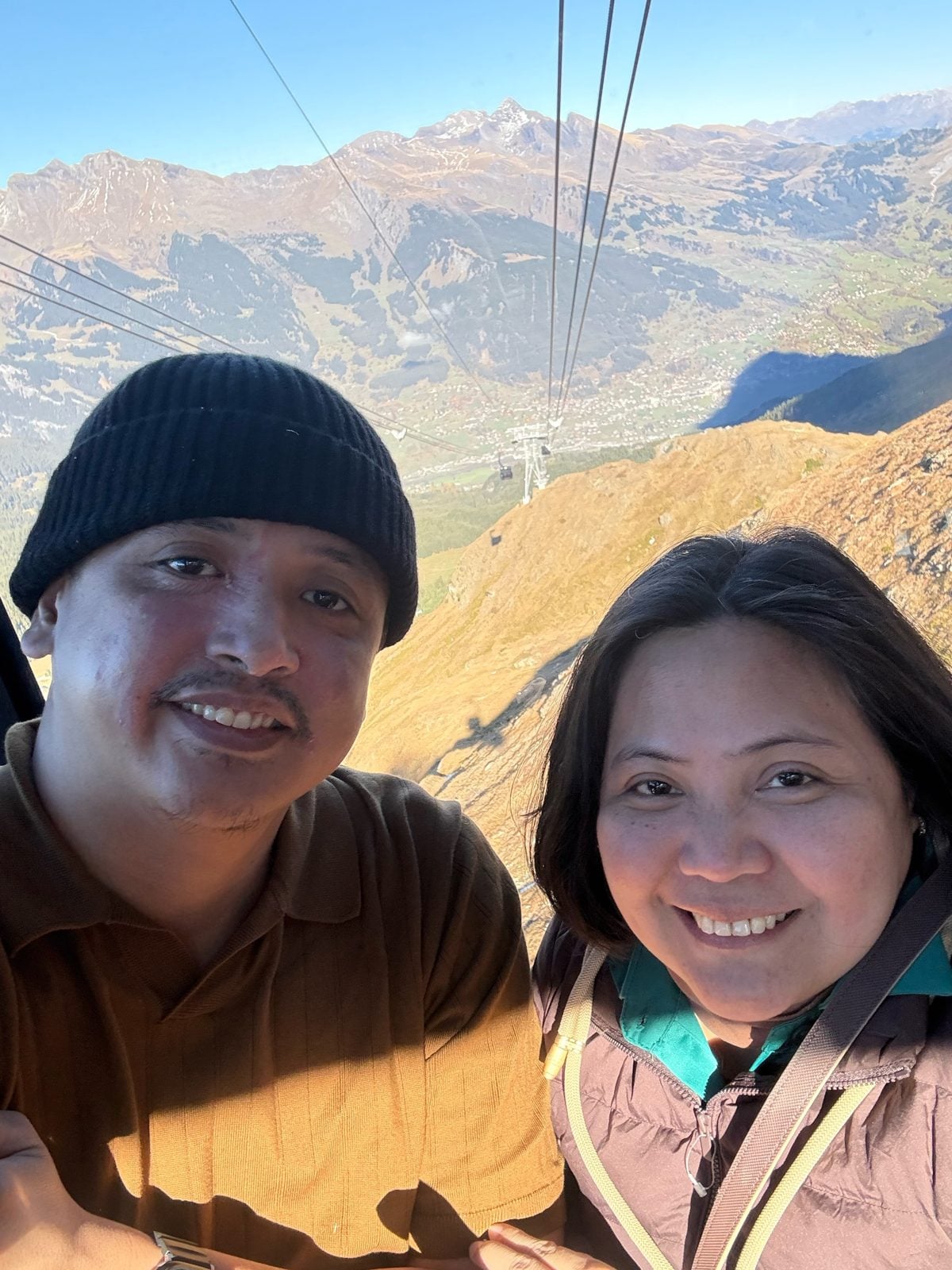
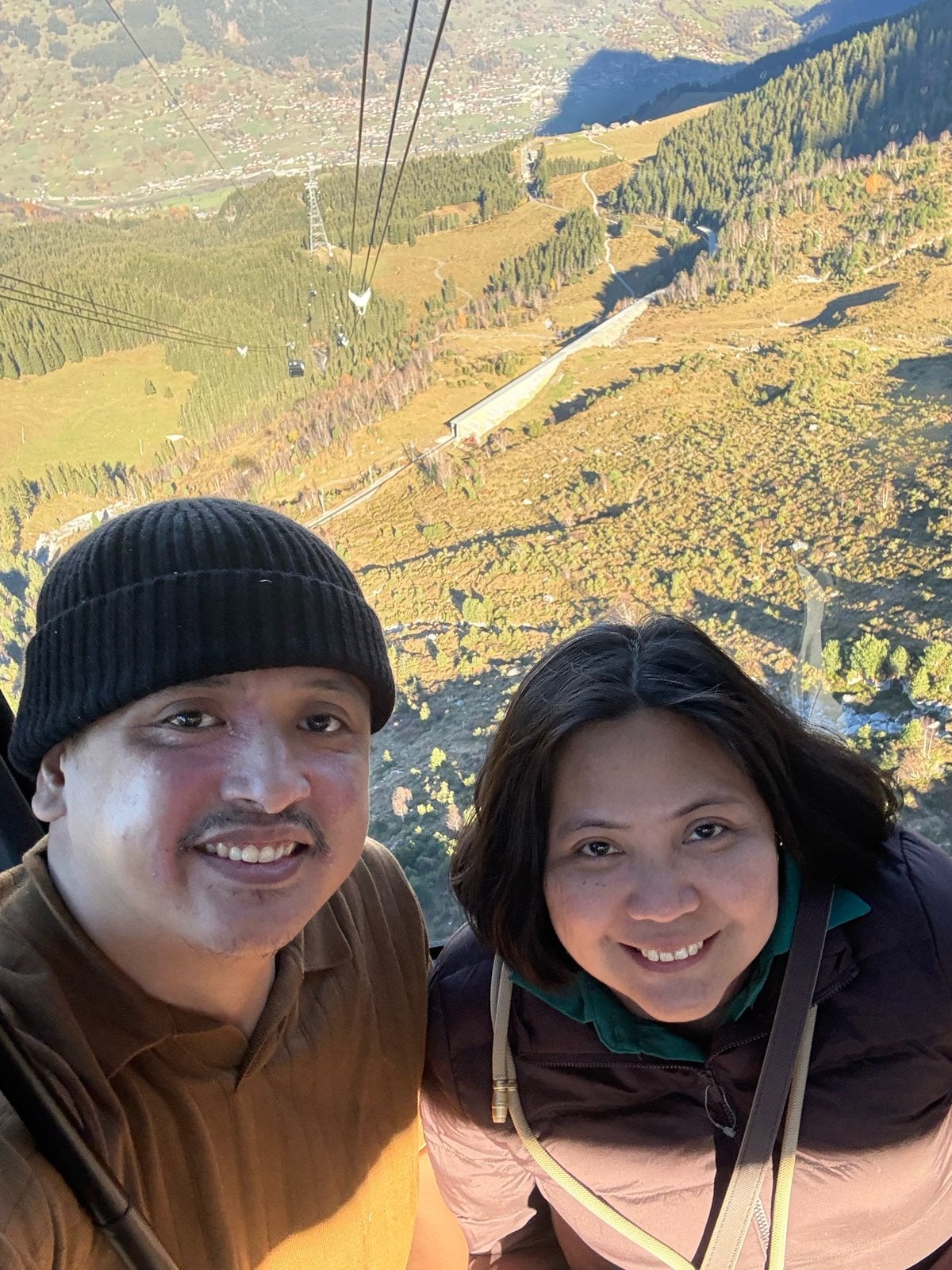
The cabins have windows on almost every side, so the ride is one long view. Grindelwald shrinks below you, the chalet roofs turn into dots, the meadows open up, and the slopes slowly turn rocky.
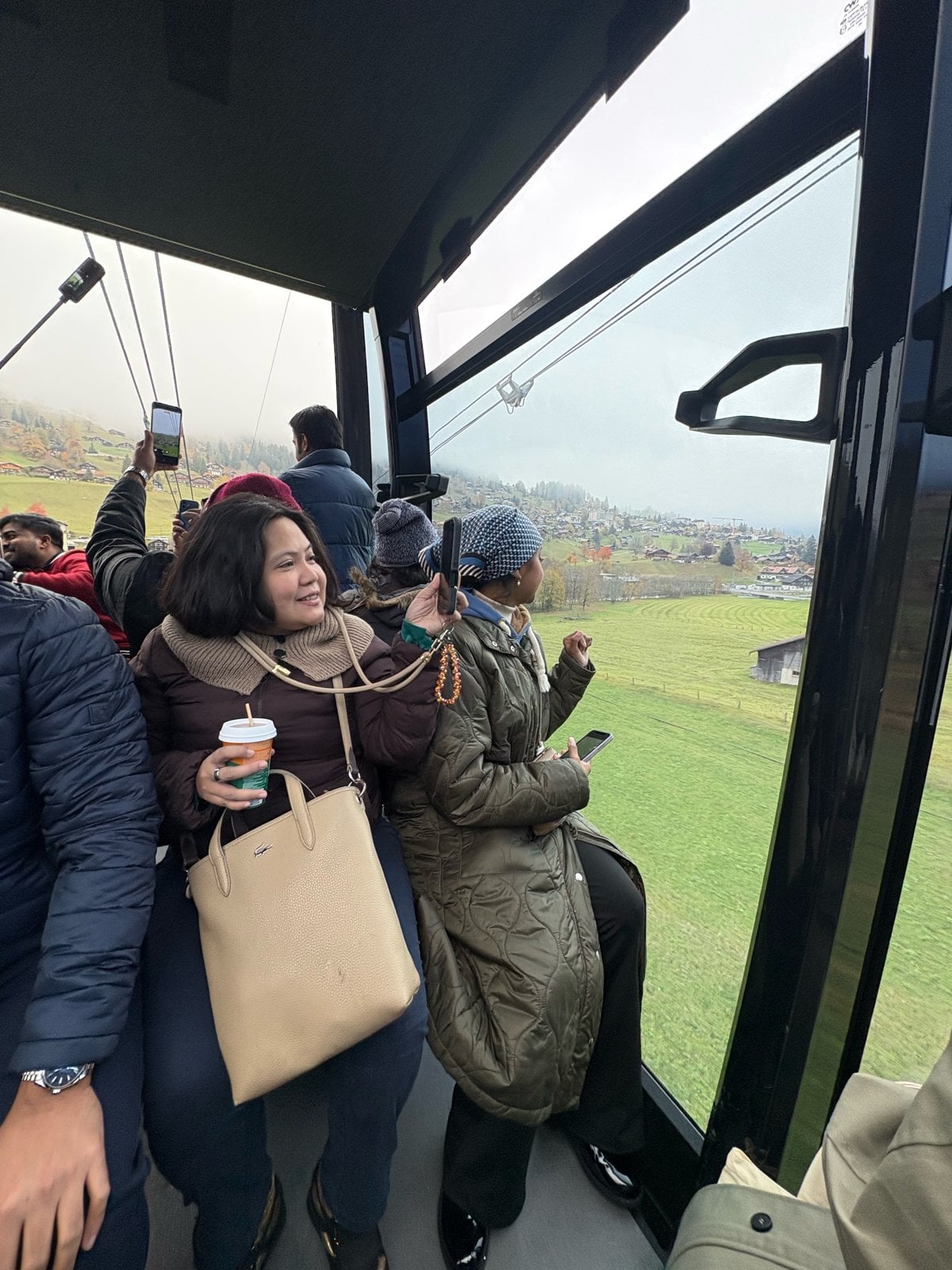
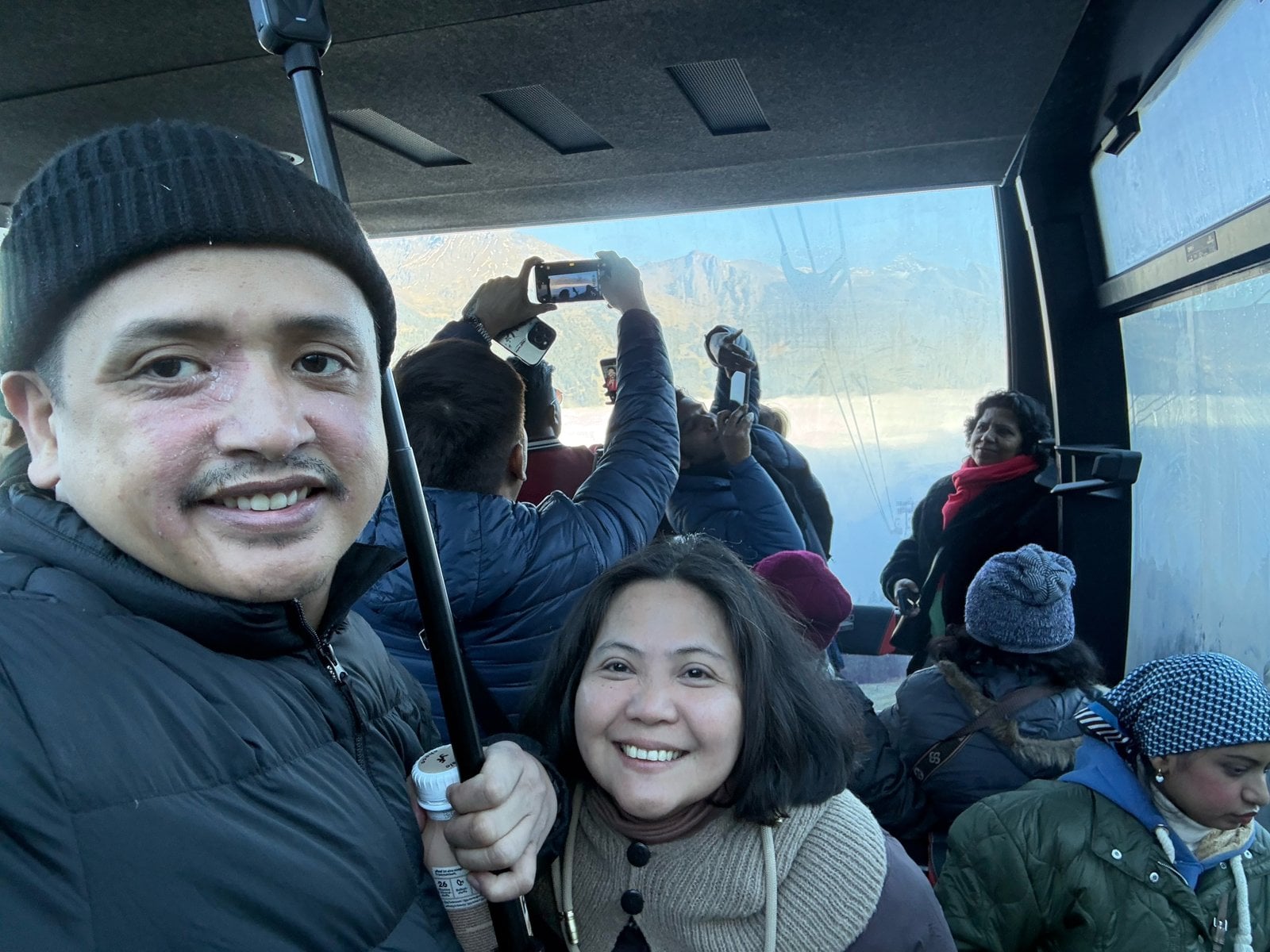
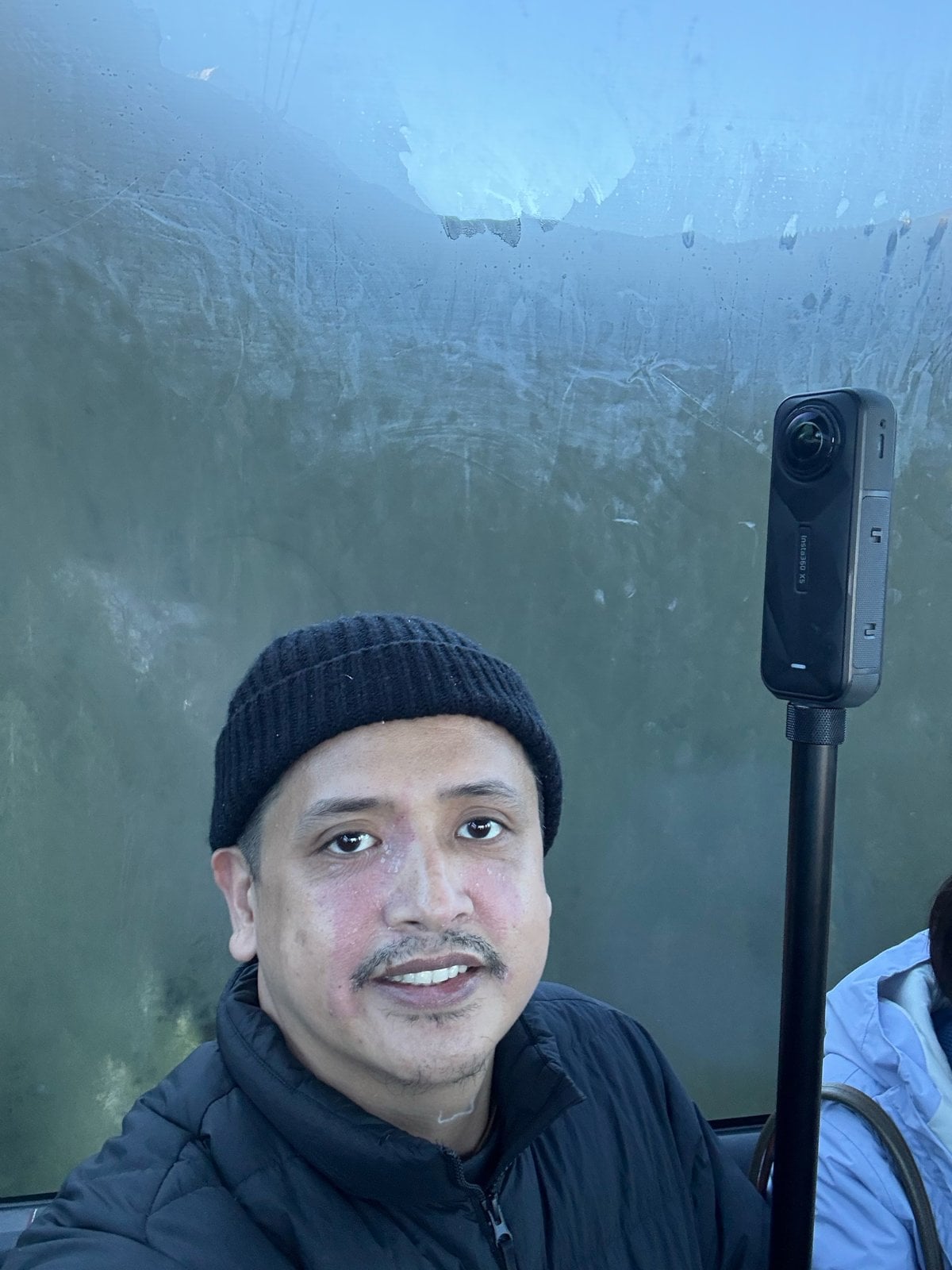
Meanwhile, the Eiger keeps getting bigger. The line runs close to its famous north face, and the higher you go, the more of that dark wall of rock and ice fills the window. Dimple and I barely put our phones down, and no photo really shows how big it feels. Fifteen minutes goes by fast.
Getting to know the Eiger
The Eiger is 3,967 m high and stands beside two other famous peaks, the Mönch and the Jungfrau. Together they make one of the best-known views in the Swiss Alps.
It’s best known for its north face, nearly 1,800 m of rock and ice and often called the biggest north face in the Alps. Climbers once called it one of the “last problems” of the Alps. It was first climbed in July 1938 by Anderl Heckmair, Ludwig Vörg, Heinrich Harrer and Fritz Kasparek. Earlier attempts ended in tragedy, which earned it the grim nickname Mordwand (“murder wall”), a play on Nordwand, the German word for north face.
Looking up at it from a warm, comfortable cabin, we were very happy with our choice of route.
Arriving at Eigergletscher
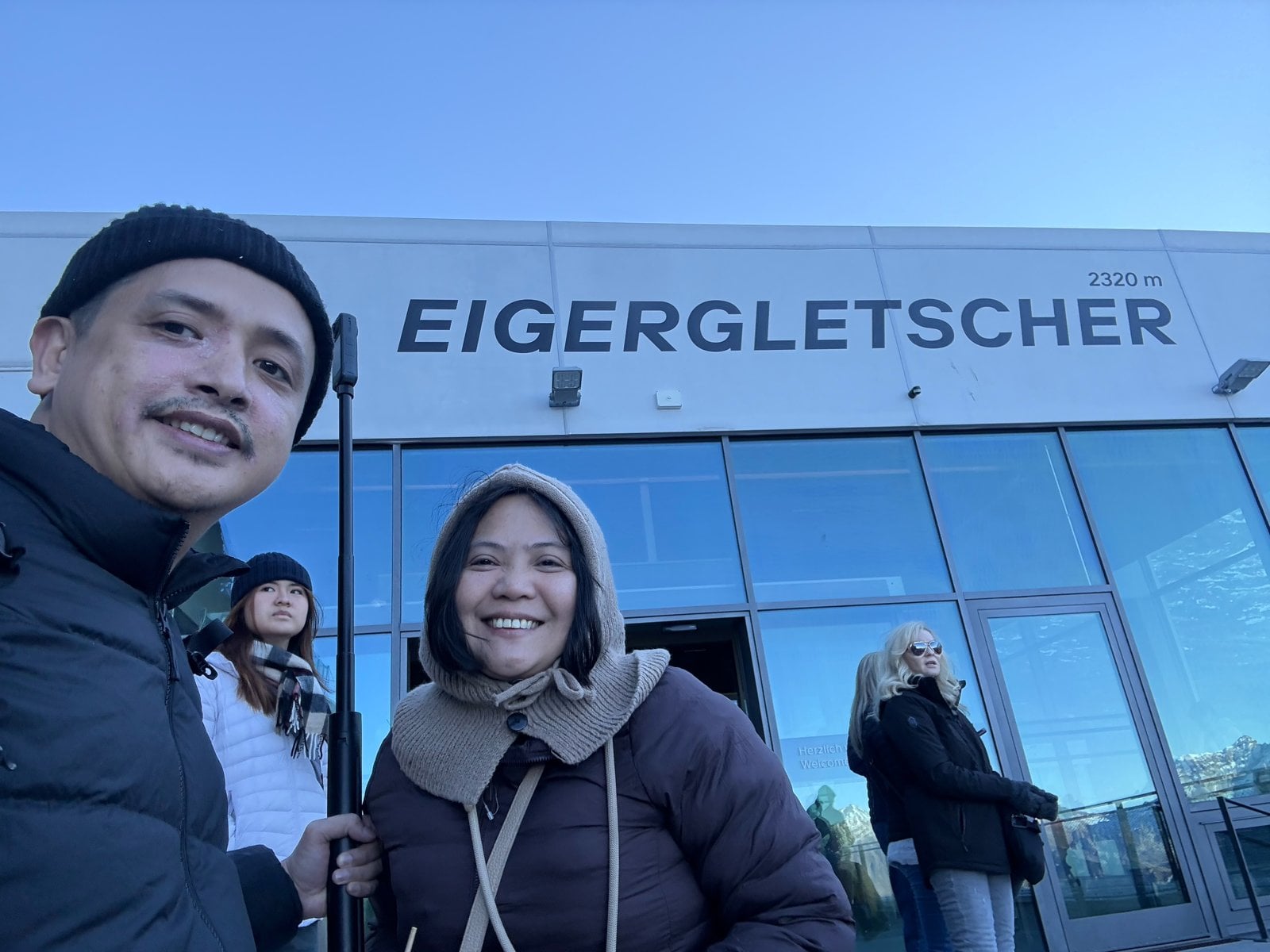
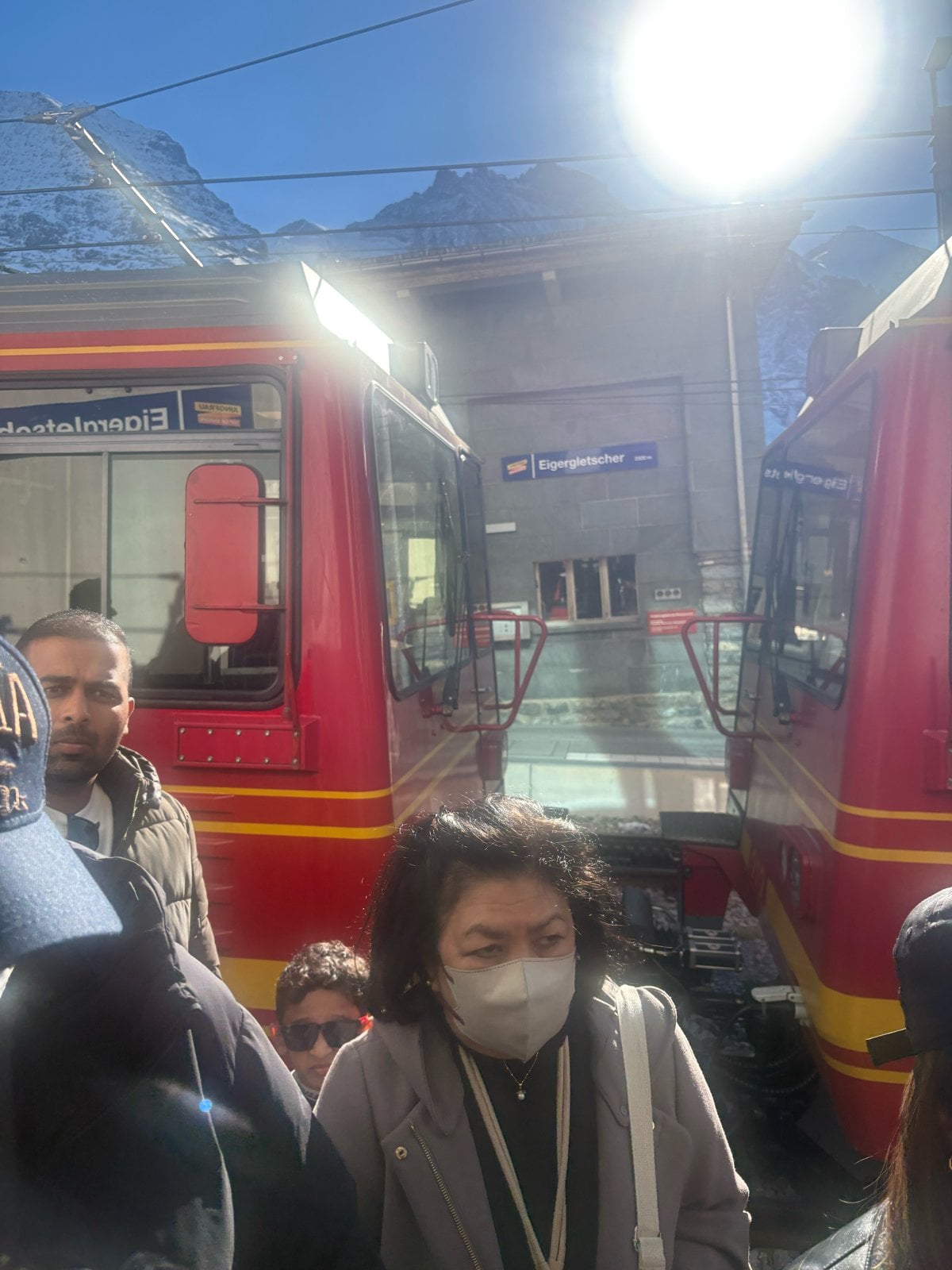
At the top is Eigergletscher station, about 2,320 m above sea level and named after the glacier nearby. We stepped out into snow, rock and cold mountain air, a different world from the green village we’d left minutes before.
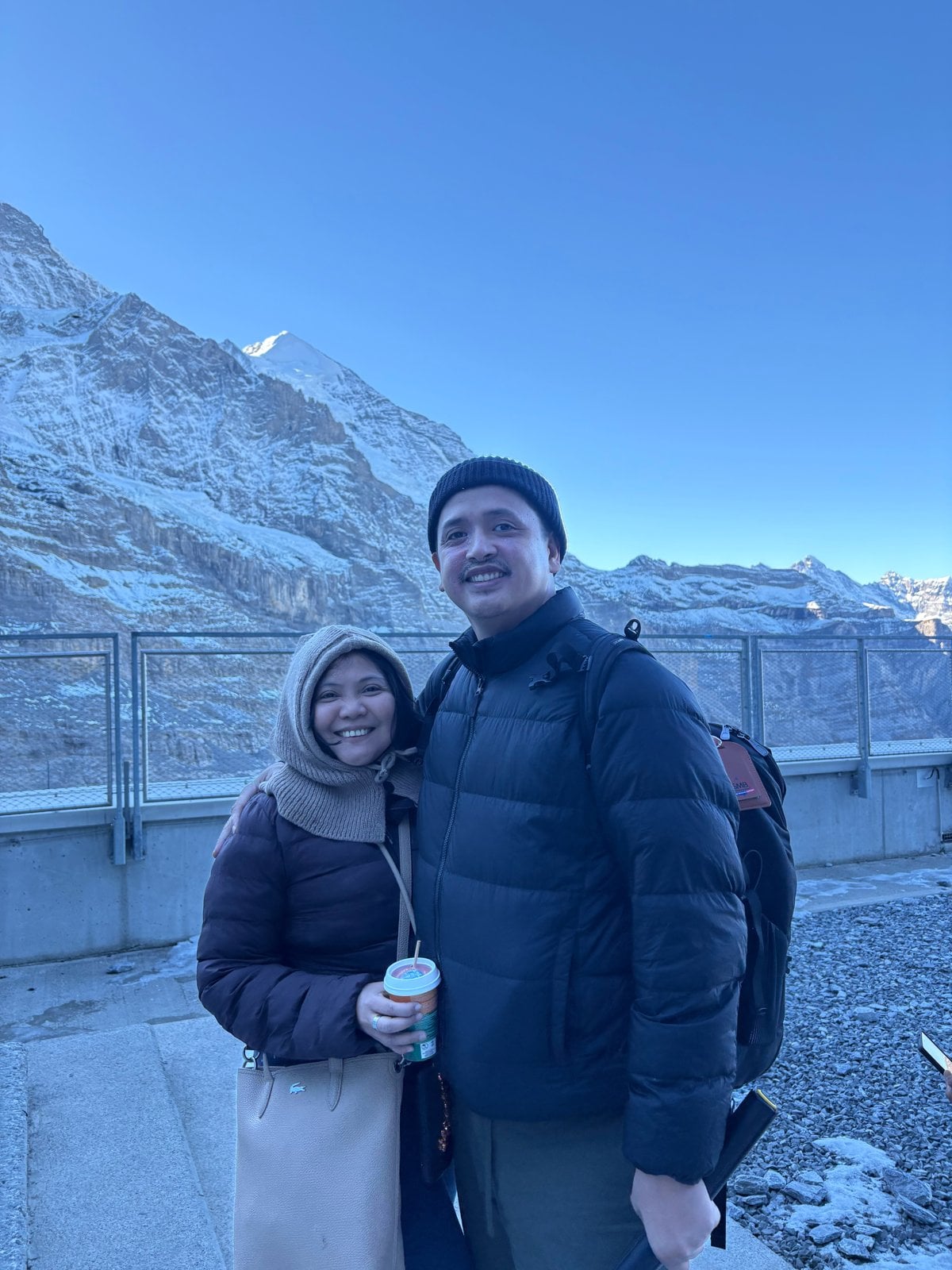
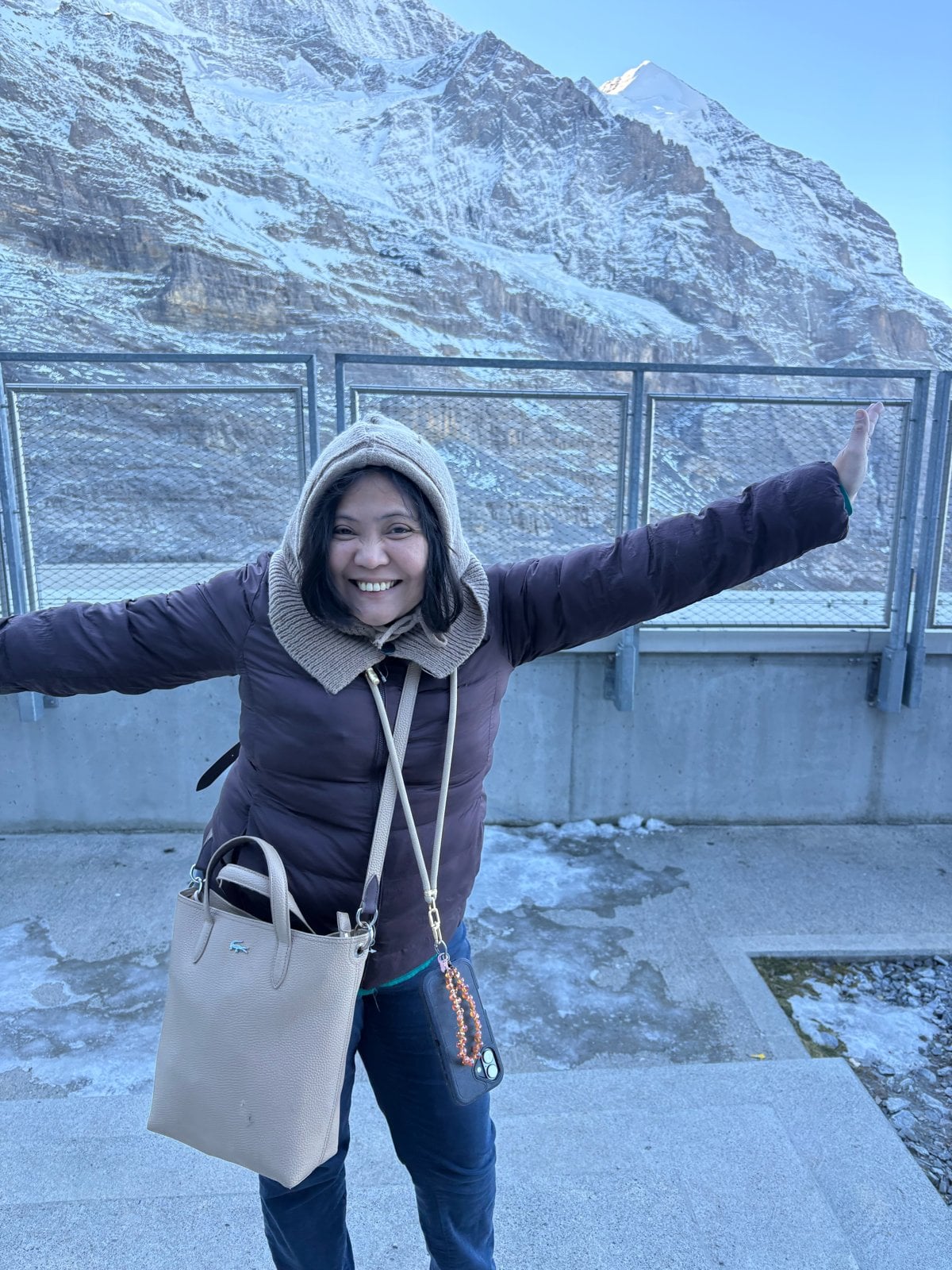
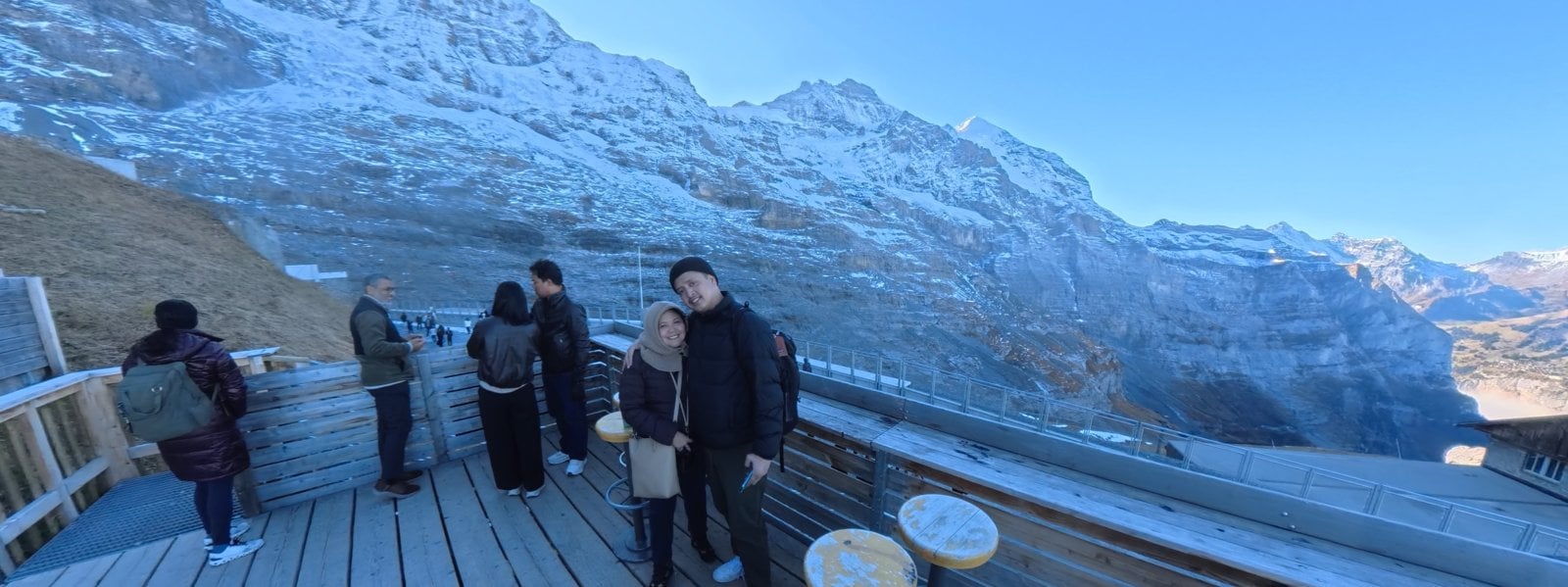
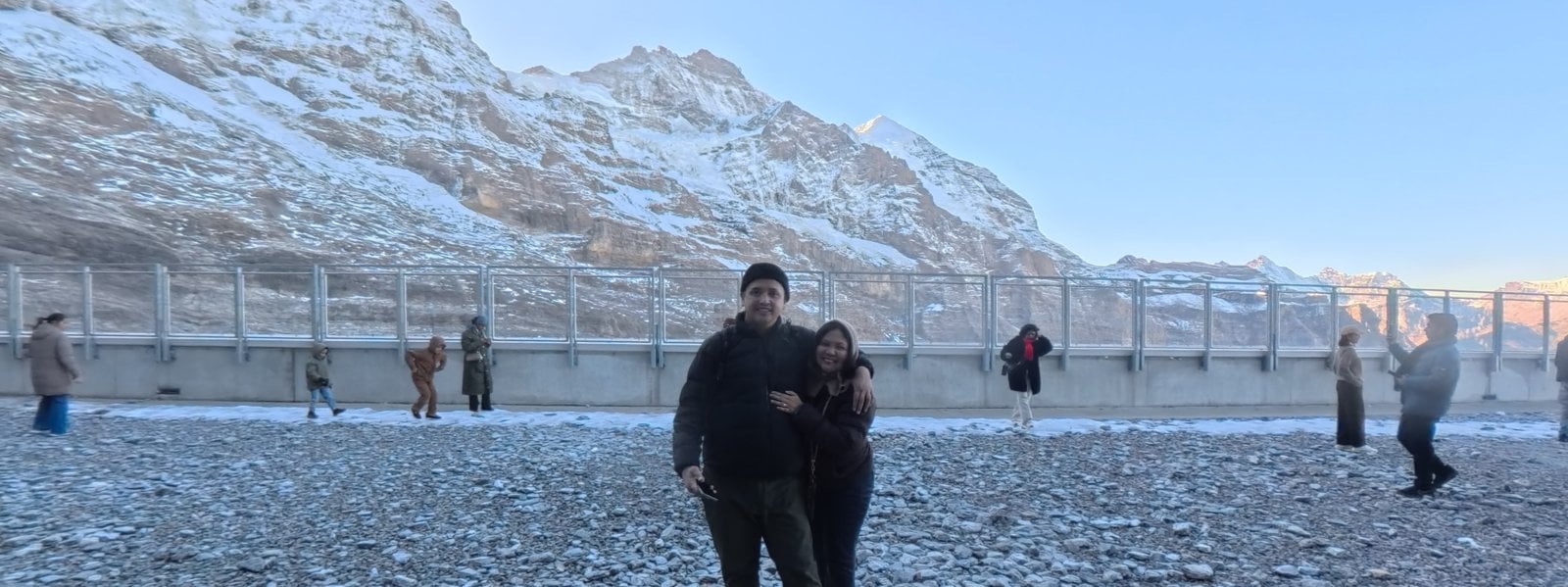
Eigergletscher is also a stop on the Jungfrau Railway, which runs from Kleine Scheidegg through tunnels inside the Eiger and the Mönch up to the Jungfraujoch, Europe’s highest railway station. Building started in 1896 and reached the Jungfraujoch in 1912, so it took 16 years, and it’s still running more than a century later.
From here, our tour went on to Kleine Scheidegg.
Going back down
After lunch and one last look at the Eiger, we took the train back up to Eigergletscher and rode the Eiger Express down to the valley. Going down is a different ride. You’re facing the valley this time, Grindelwald gets bigger and bigger, and the mountain you just stood under slowly turns back into a postcard behind you.
Good to know
- Check the weather. On a clear day you’ll see the north face up close. On a cloudy day you may be riding through the clouds.
- Bring a warm layer. It’s much colder at the top than in Grindelwald.
- Pick the Eiger side of the cabin for the best photos.
- Charge your phone. You’ll take more photos than you expect, and the cold drains batteries faster.
- Connections: Eigergletscher is where you change for the Jungfrau Railway.
- Tickets and timetables change, so check Jungfrau Railways before you go.
Next stop: Kleine Scheidegg: Our Crash Landing on You Moment in the Swiss Alps