









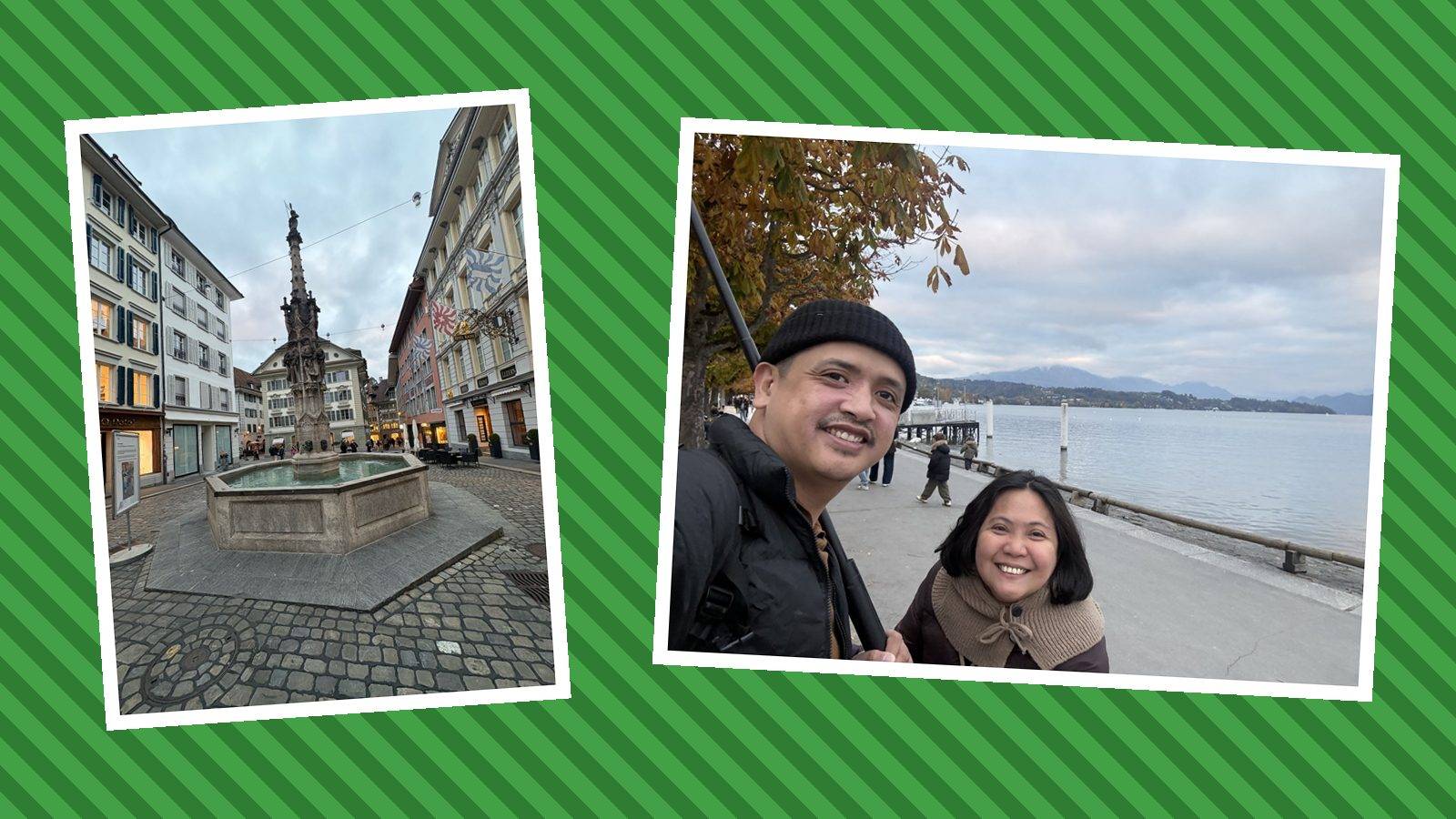
After the mountains, we swapped snow and cable cars for cobblestones and a lake. The tour bus rolled into Lucerne and dropped us right in the middle of town, and within a few steps we were already looking at the water.
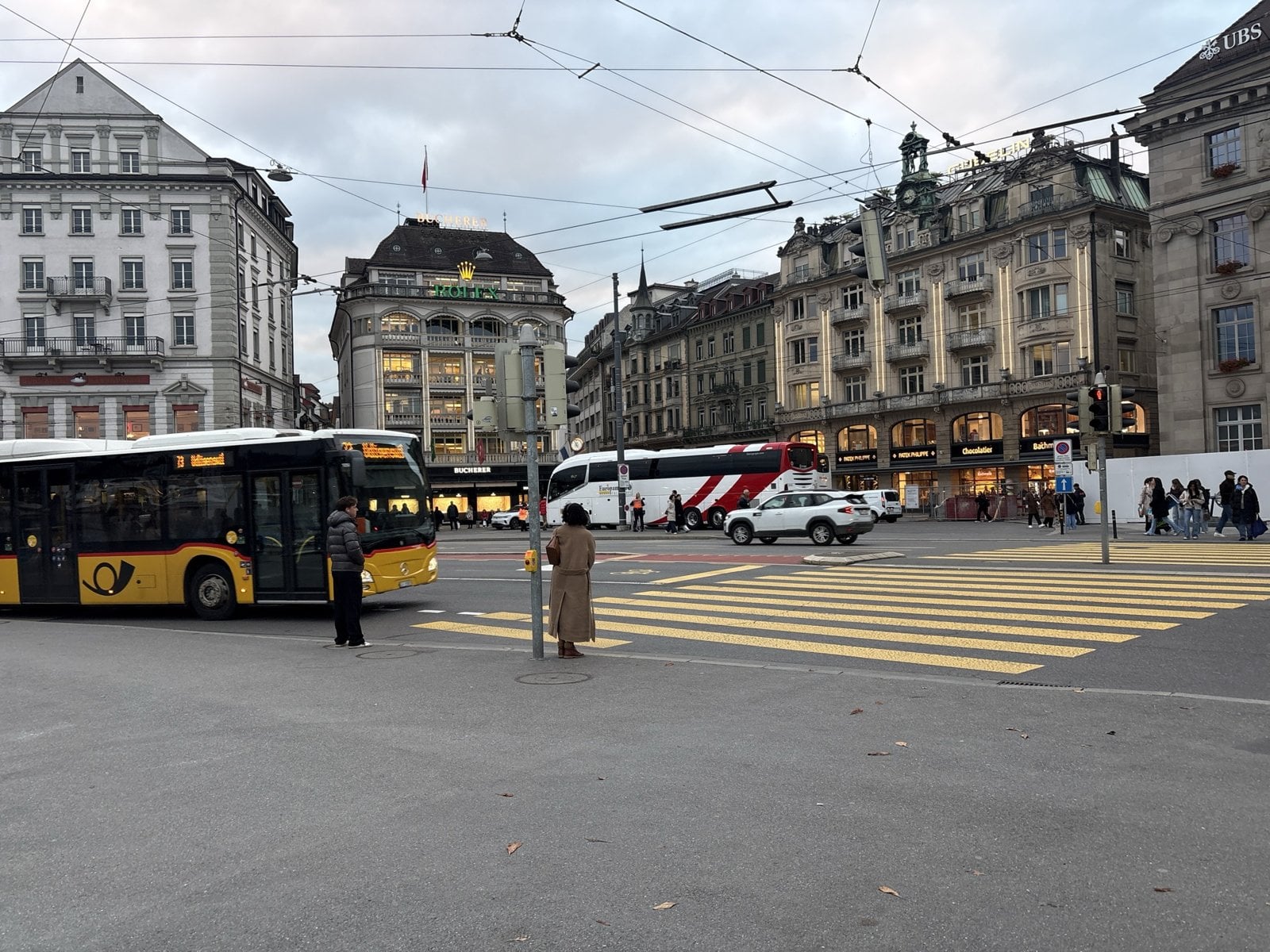
Arriving at Schwanenplatz
The bus stop was Schwanenplatz, a busy corner where the lake meets the old town. Yellow PostBuses, big tour coaches and trams all share the same few lanes, and the buildings around the square are full of watch and jewellery shops. Lucerne has been a stop for travellers since the 1800s, and you can tell. Everything here is set up for visitors who want to walk.
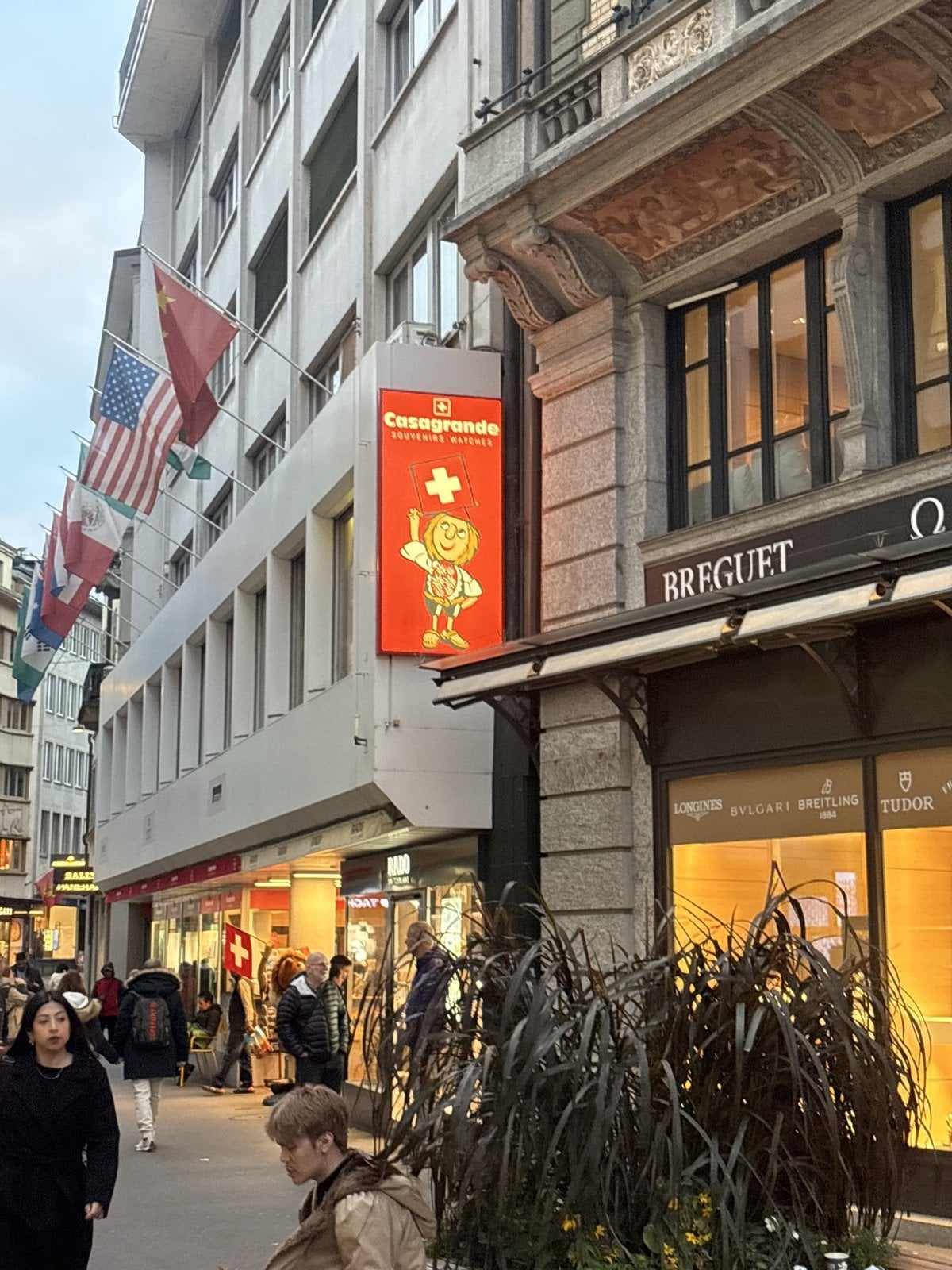
Just behind the square, the shopping streets are lined with flags from all over the world and souvenir shops selling cuckoo clocks, Swiss knives and chocolate. Window-shopping the watches is practically a Lucerne sport. Looking is free.
Weinmarkt, the heart of the Old Town
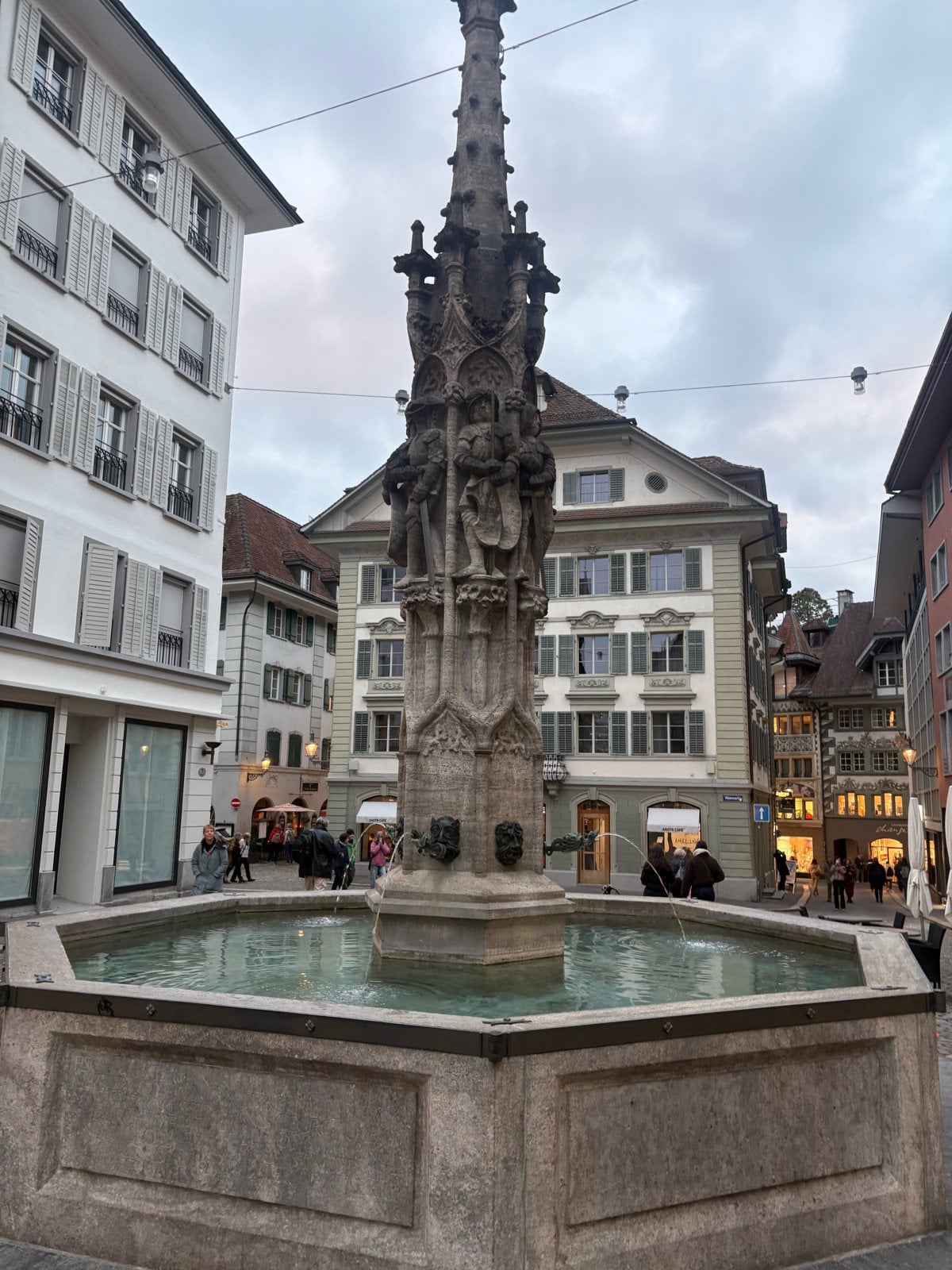
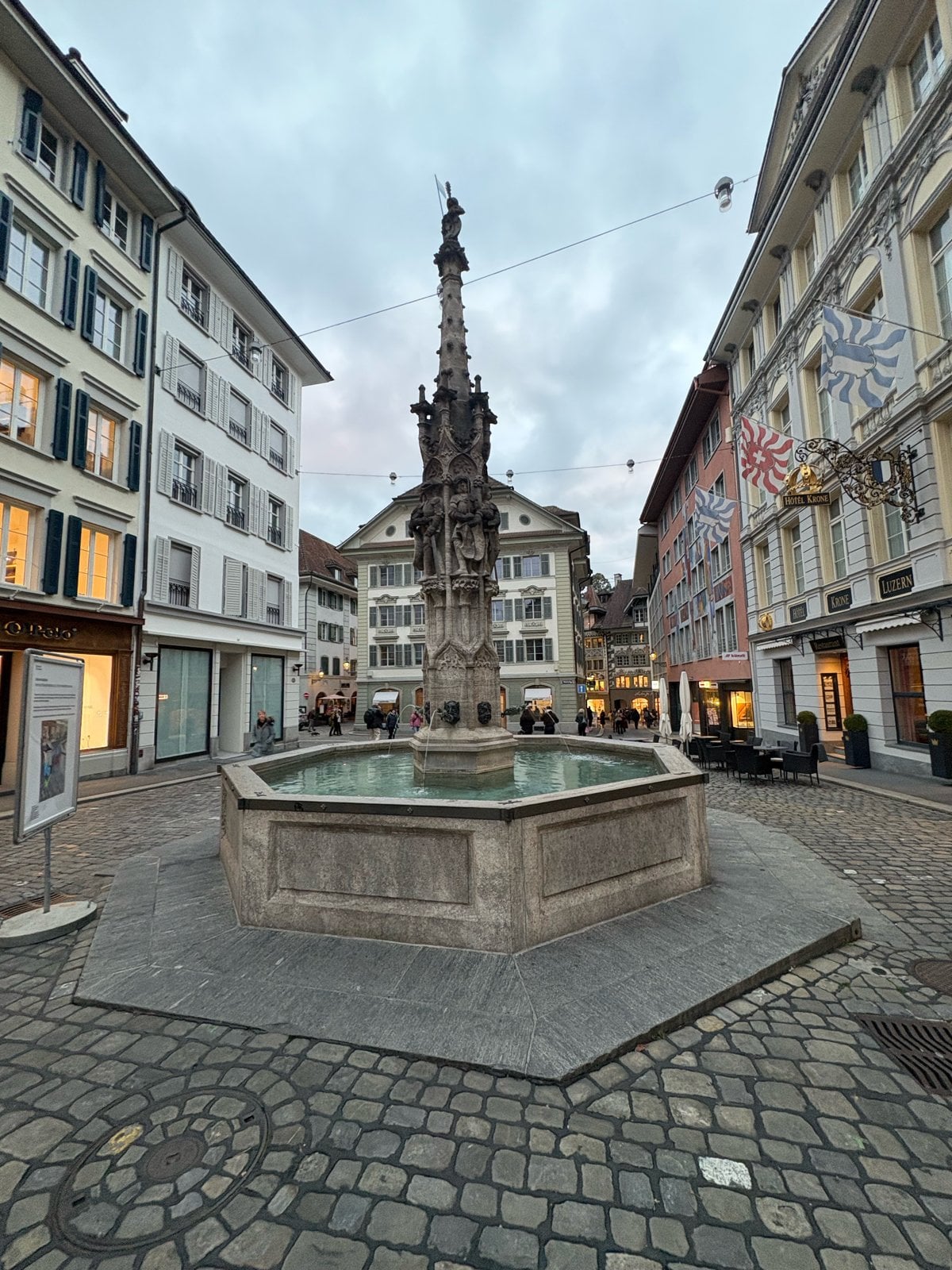
A short walk in, the streets open up into Weinmarkt, the old wine market square. Centuries ago this was where merchants traded wine and goods, and it is still the prettiest square in town, with painted façades, flags hanging from the windows and the Hotel Krone sign on the corner.
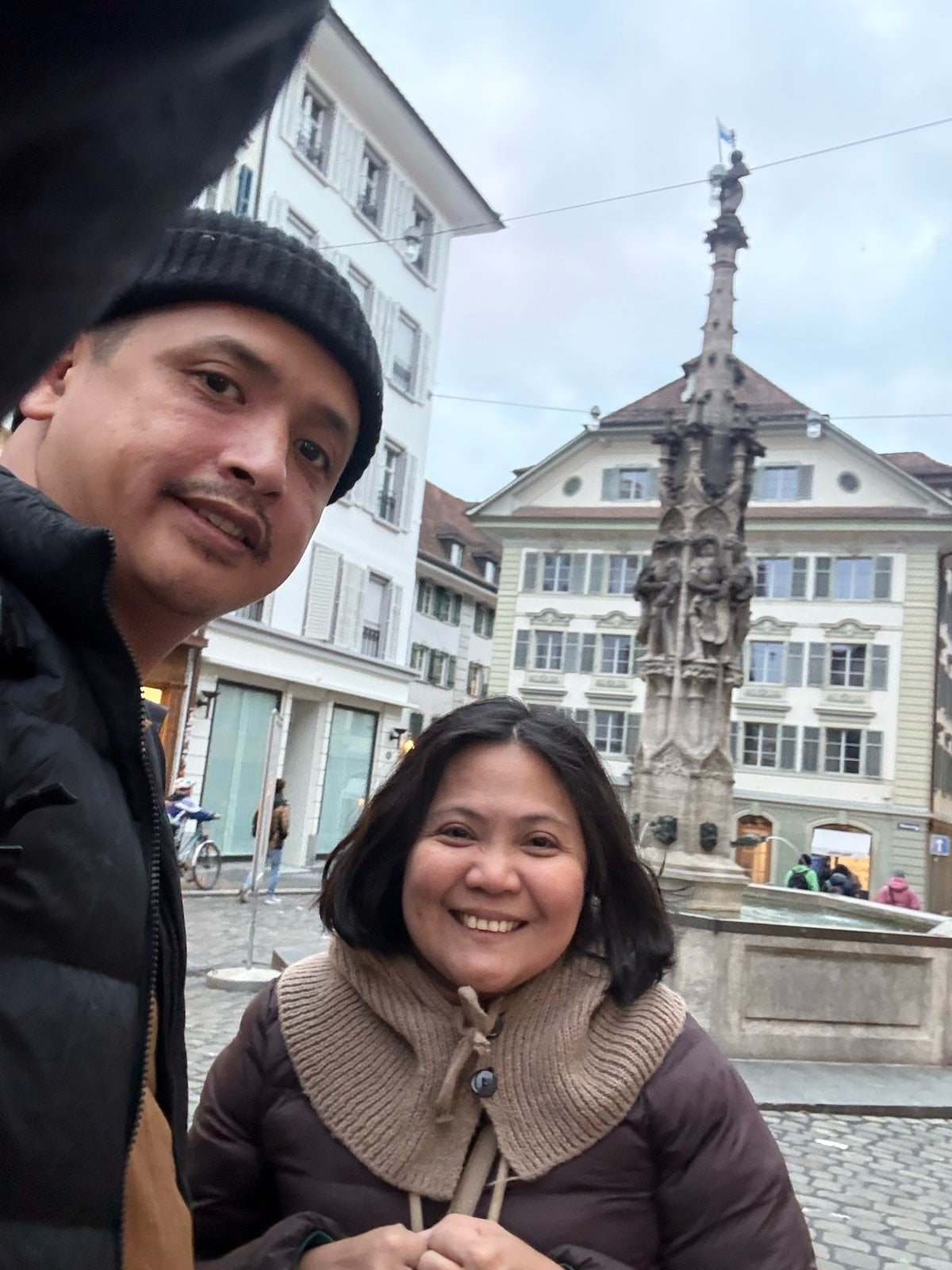
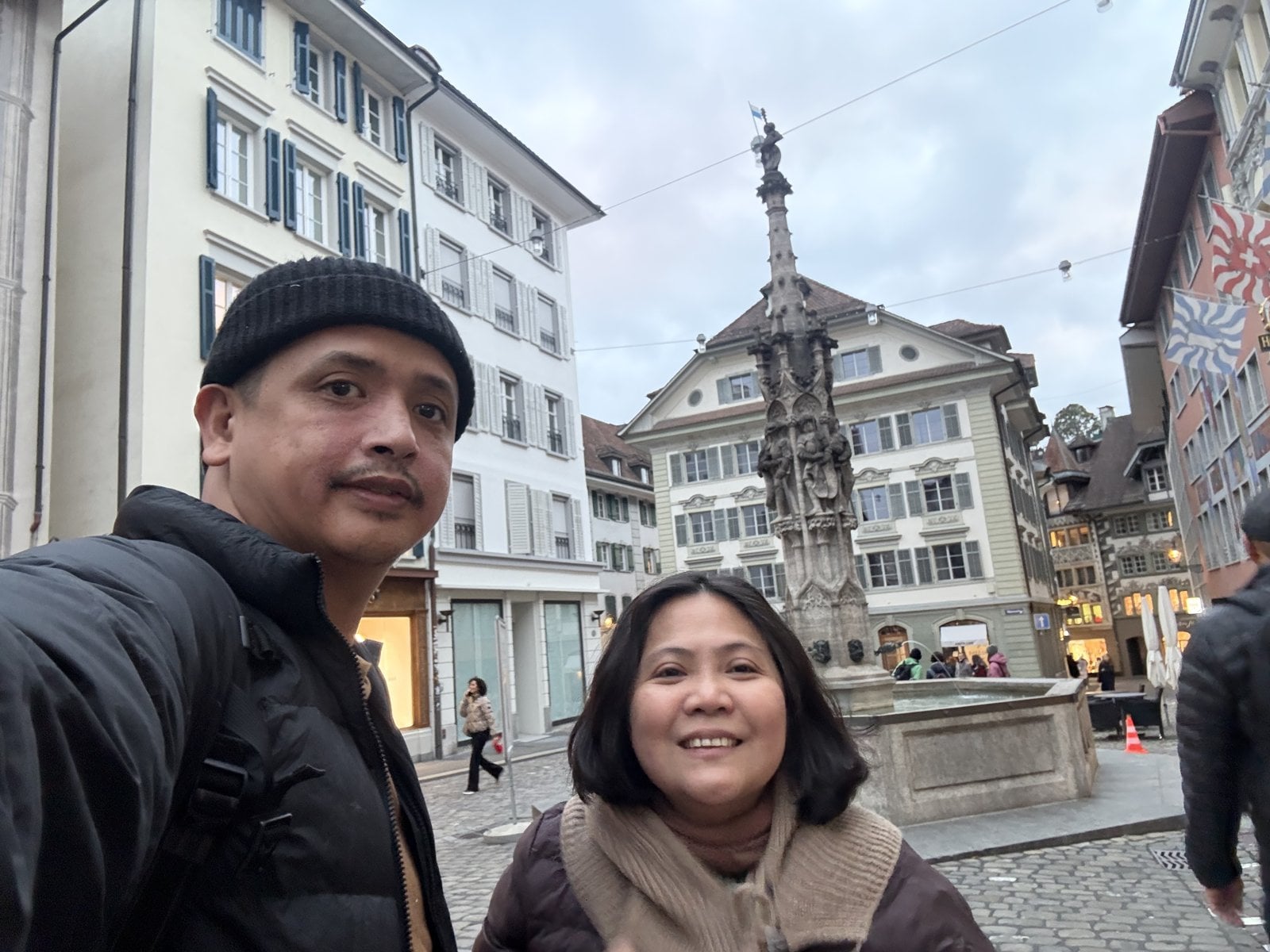
In the middle stands the Weinmarkt fountain, a tall Gothic column covered in carved warriors and saints. The original dates back to the late 1400s and is now kept safe indoors, so the one in the square is a faithful copy. It still pours fresh water from little spouts all around the base.
A walk along Lake Lucerne
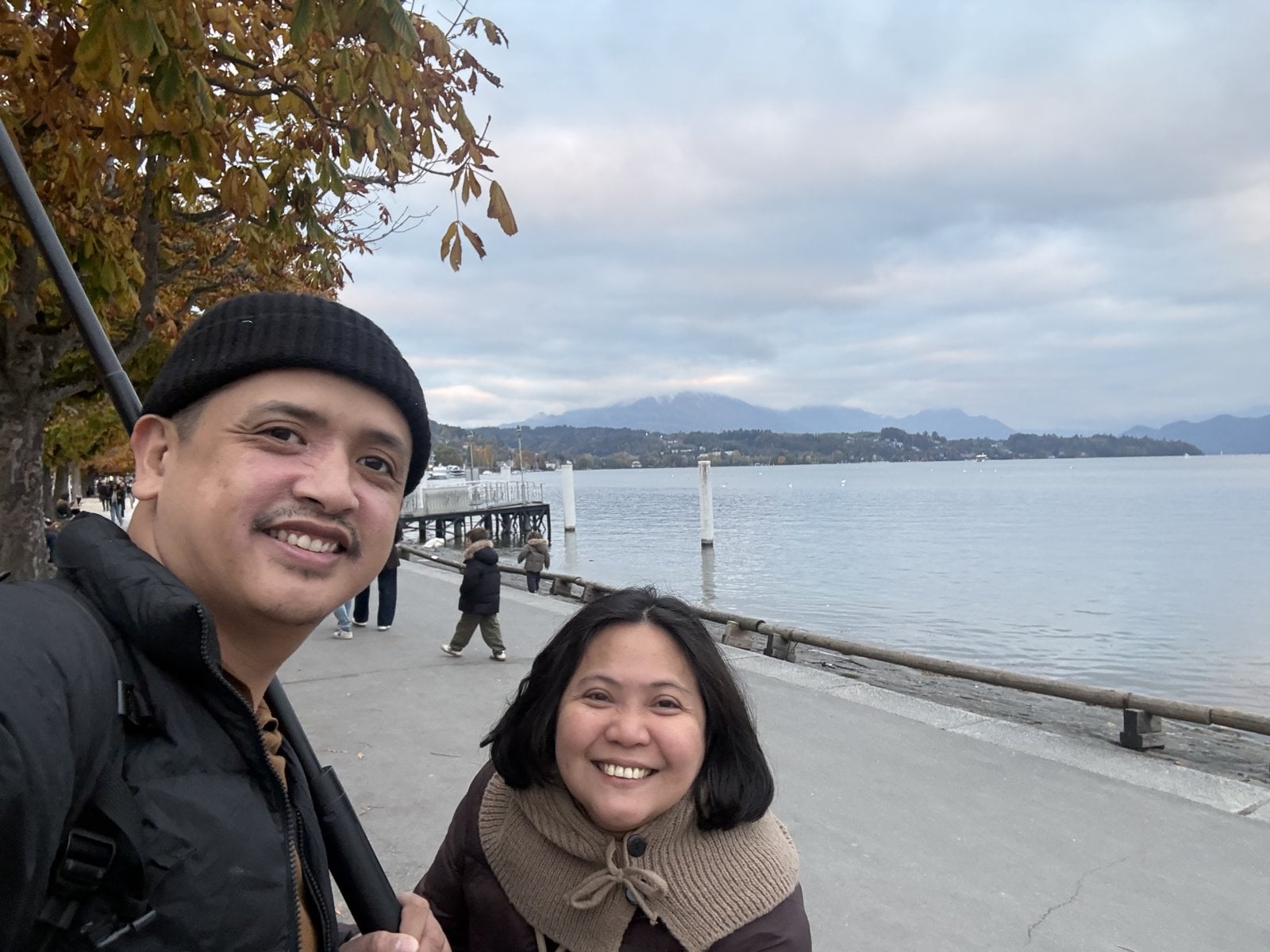
Back by the water, the lakefront promenade was lined with chestnut trees turning gold. Across the lake you can see the mountains that surround Lucerne. It was cold, but nobody minded.
The Spreuer Bridge and the Reuss
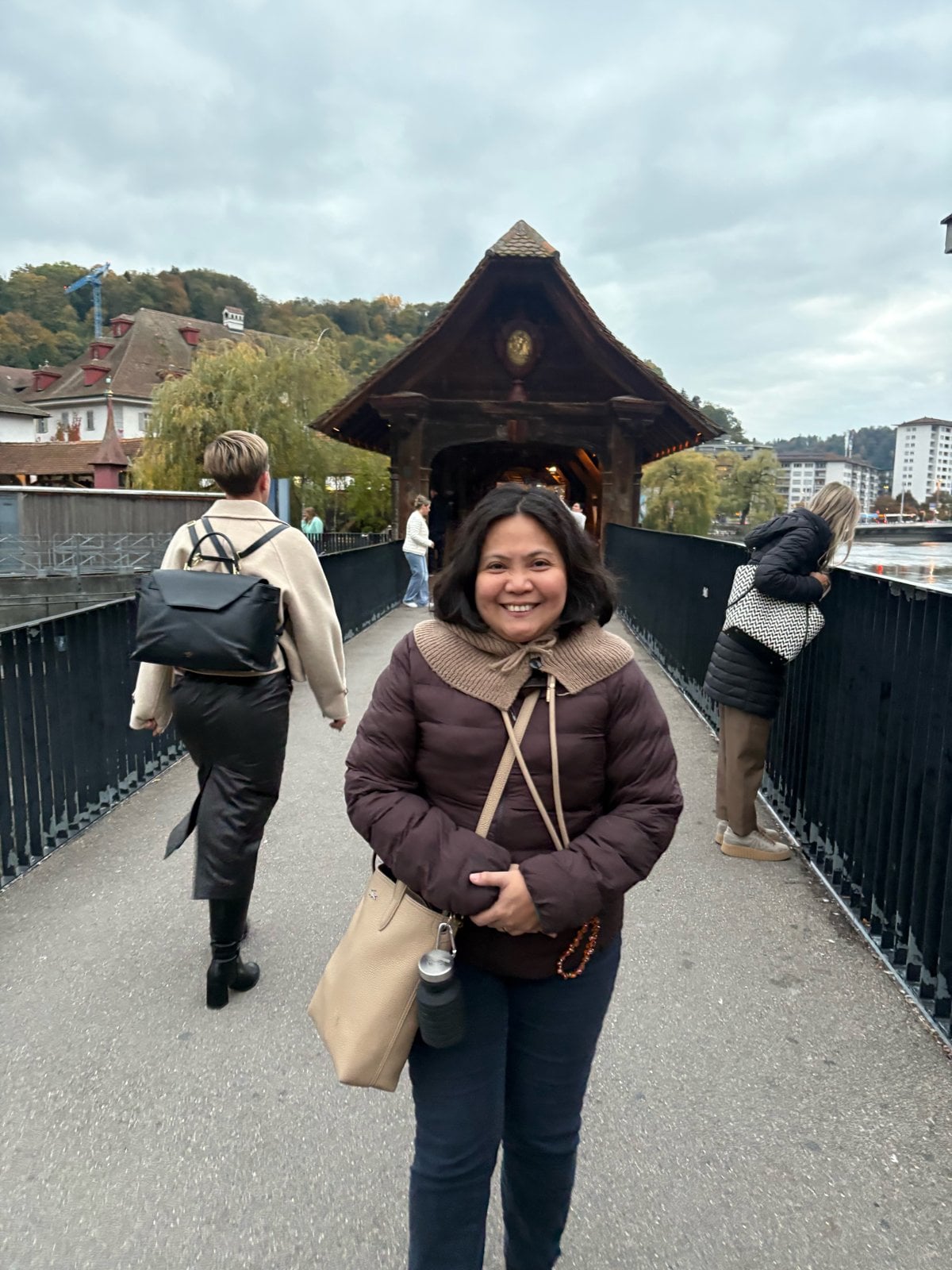
The lake drains into the Reuss river, which runs right through the old town, and two old covered wooden bridges cross it. Everyone knows the famous Chapel Bridge, but we found ourselves on the other one, the Spreuer Bridge, built in the 1400s. Its name comes from the chaff (“Spreu” in German) that millers were allowed to throw into the river only from this bridge.
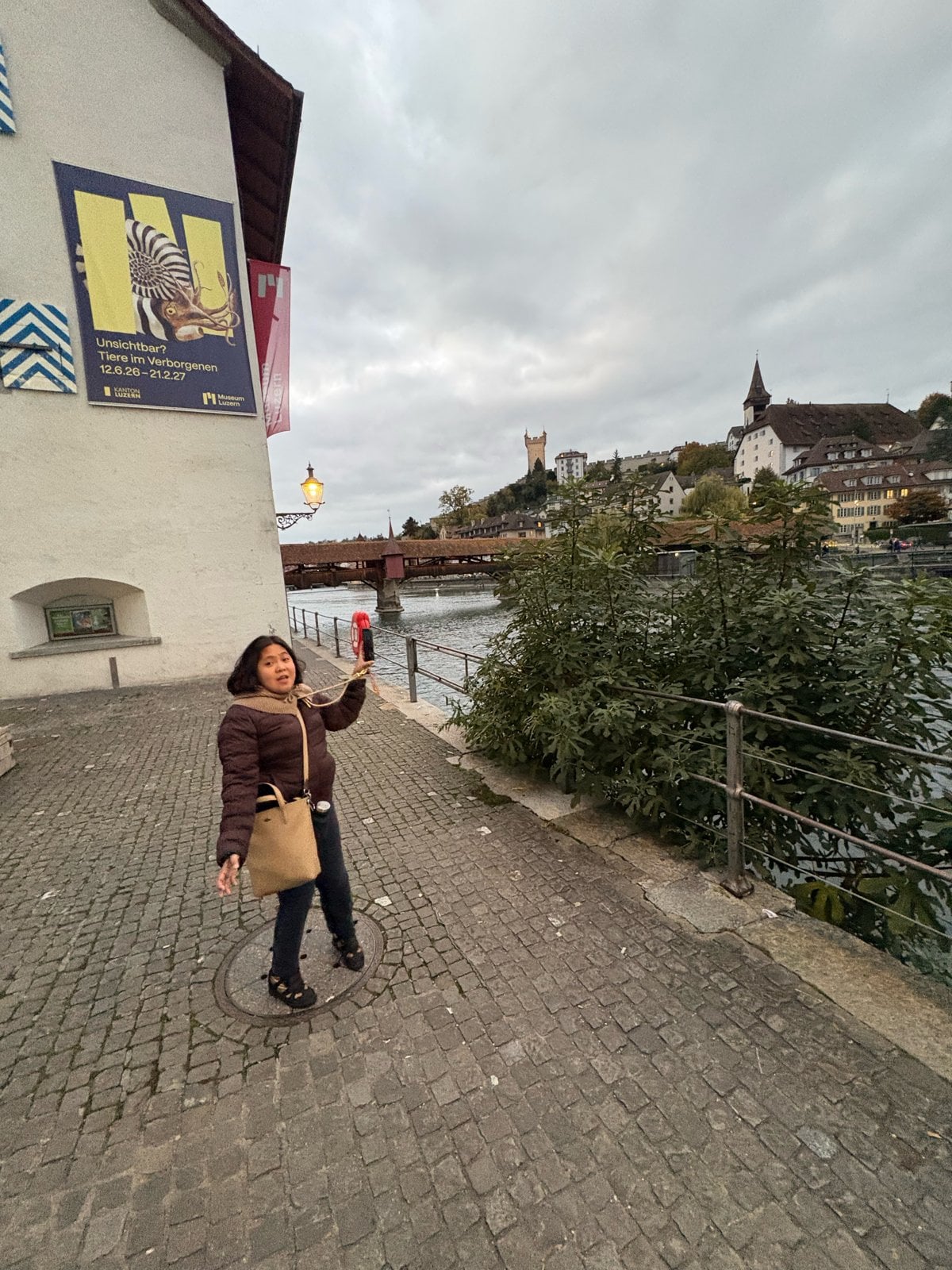
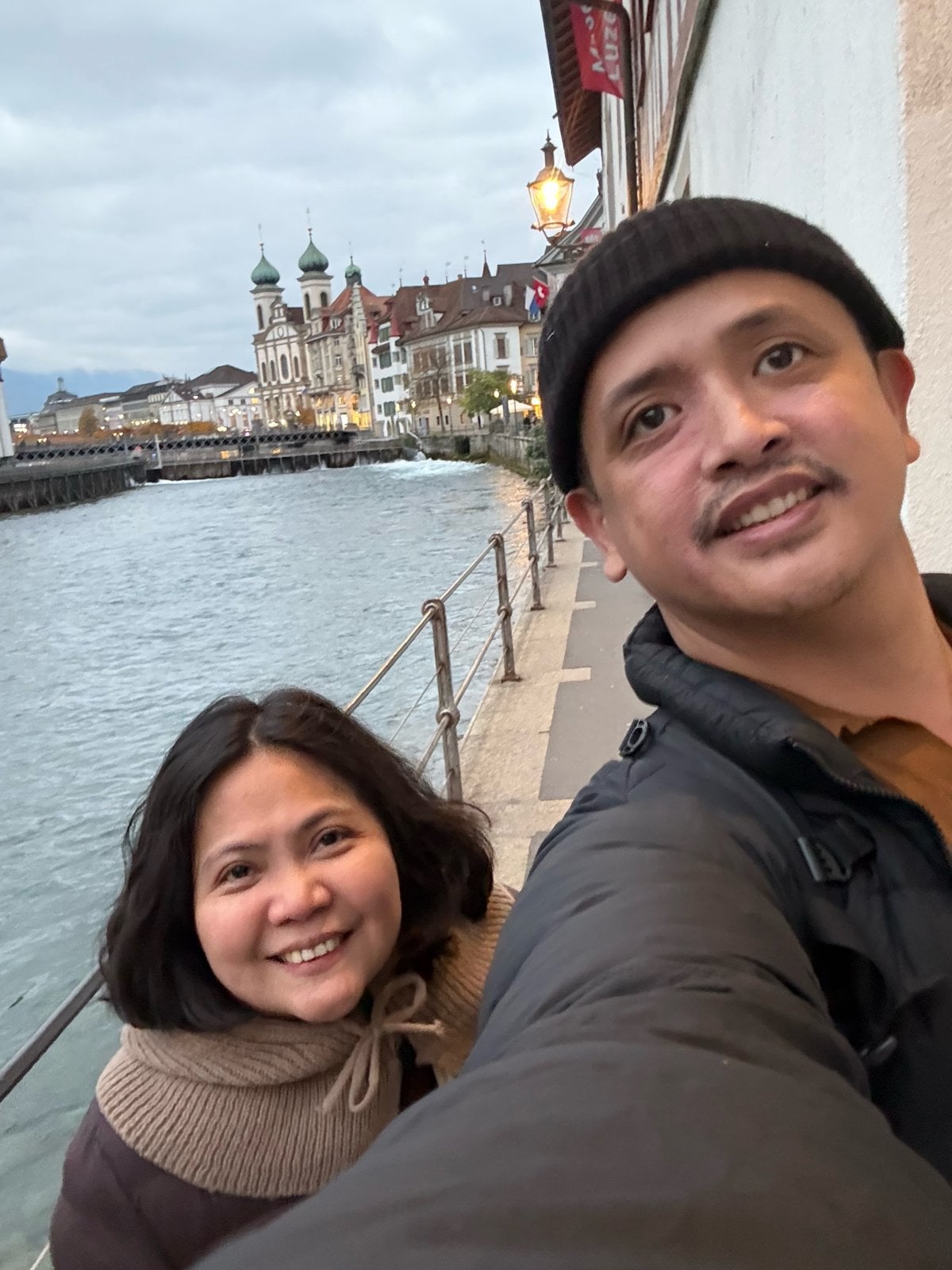
Up on the hill you can spot the towers of the Musegg Wall, part of the medieval city walls, and across the river are the green onion domes of the Jesuit Church, one of the first big Baroque churches in Switzerland.
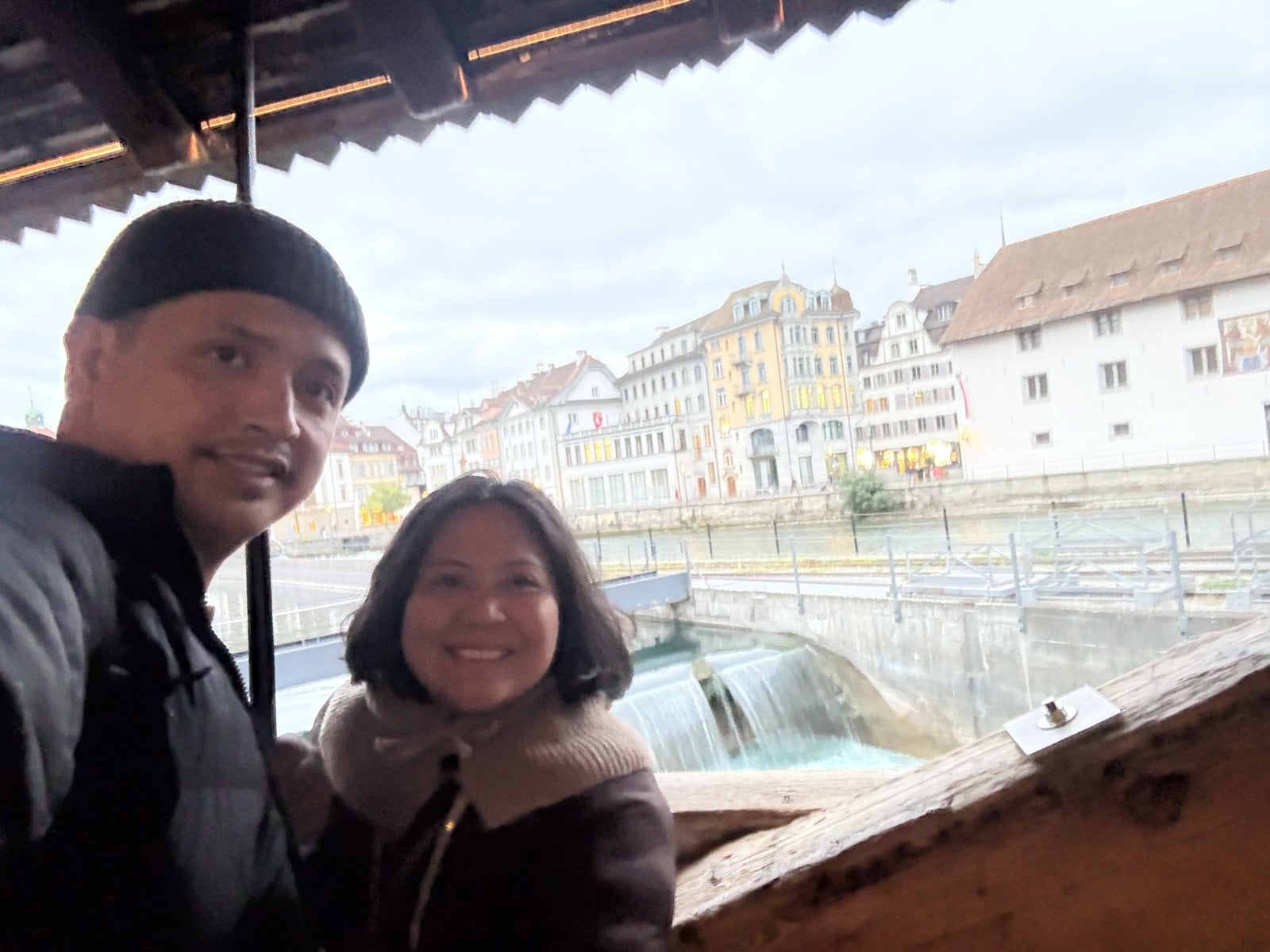
Right beside the bridge is the needle dam, a clever old system from the 1800s. Workers adjust the lake level by hand, adding or pulling out wooden “needles” to control how much water rushes through. It is still used today.
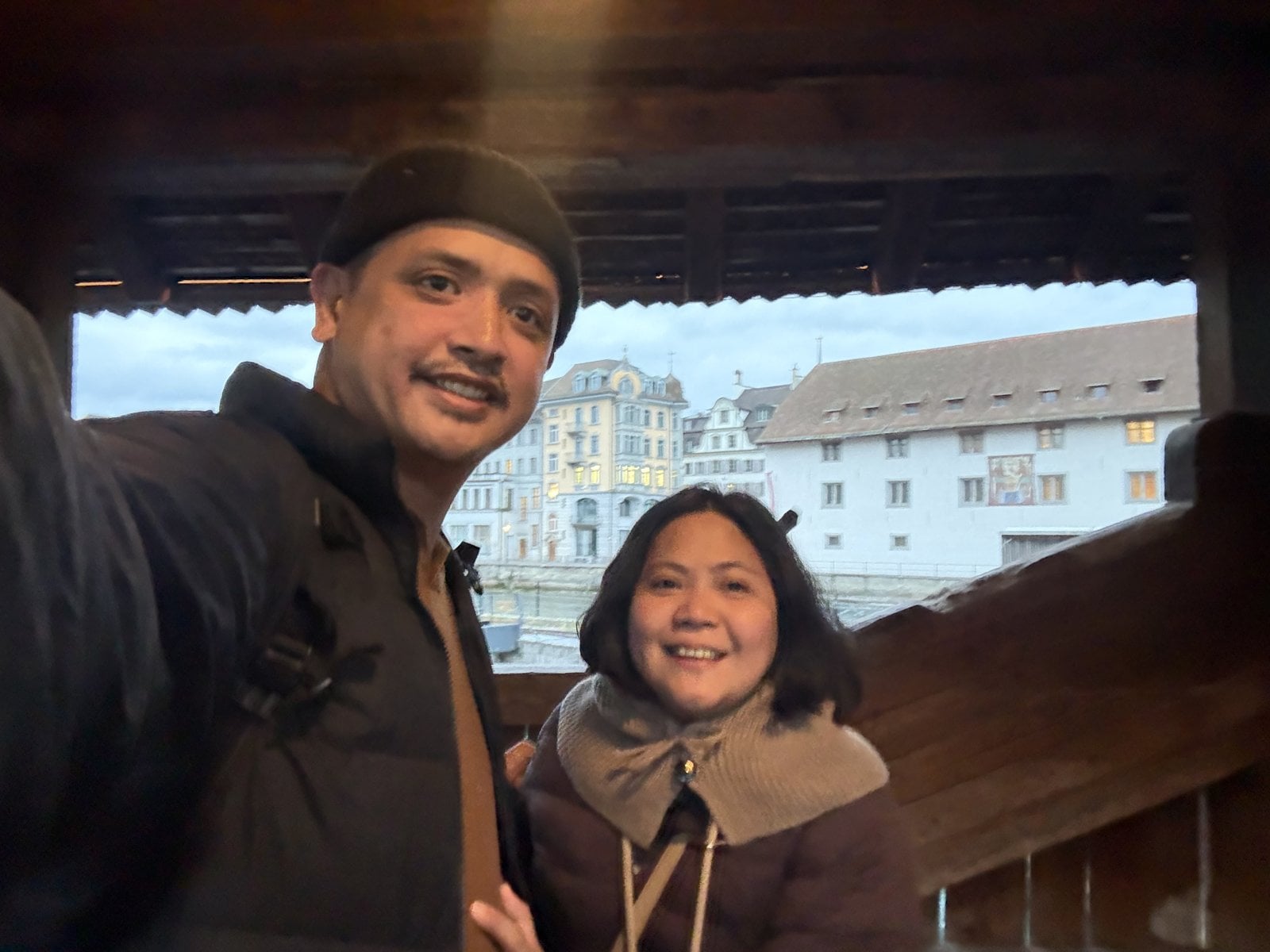
Inside, the bridge roof is lined with painted panels from the 1600s called the Dance of Death. They show Death visiting people from every walk of life, a not-so-subtle reminder to enjoy every day. We took that advice seriously.
Short on time? Lucerne still works
We only had a short window, so we didn’t make it to Chapel Bridge or anywhere else. Honestly, we didn’t mind. Schwanenplatz, Weinmarkt, the lake and the Spreuer Bridge are all close together, so even a quick stop gives you a real taste of the city. Chapel Bridge is already on our list for next time.
Good to know
- Short on time? Stick to this loop: Schwanenplatz, Weinmarkt, the lake promenade, then the Spreuer Bridge. It’s all walkable in one short visit.
- Schwanenplatz is a good starting point. Chapel Bridge, Weinmarkt and the lakefront are all within a few minutes on foot.
- The Spreuer Bridge is usually quieter than Chapel Bridge and just as old-world.
- Wear good shoes. The old town is all cobblestones.
- Walking the bridges and squares is free.