









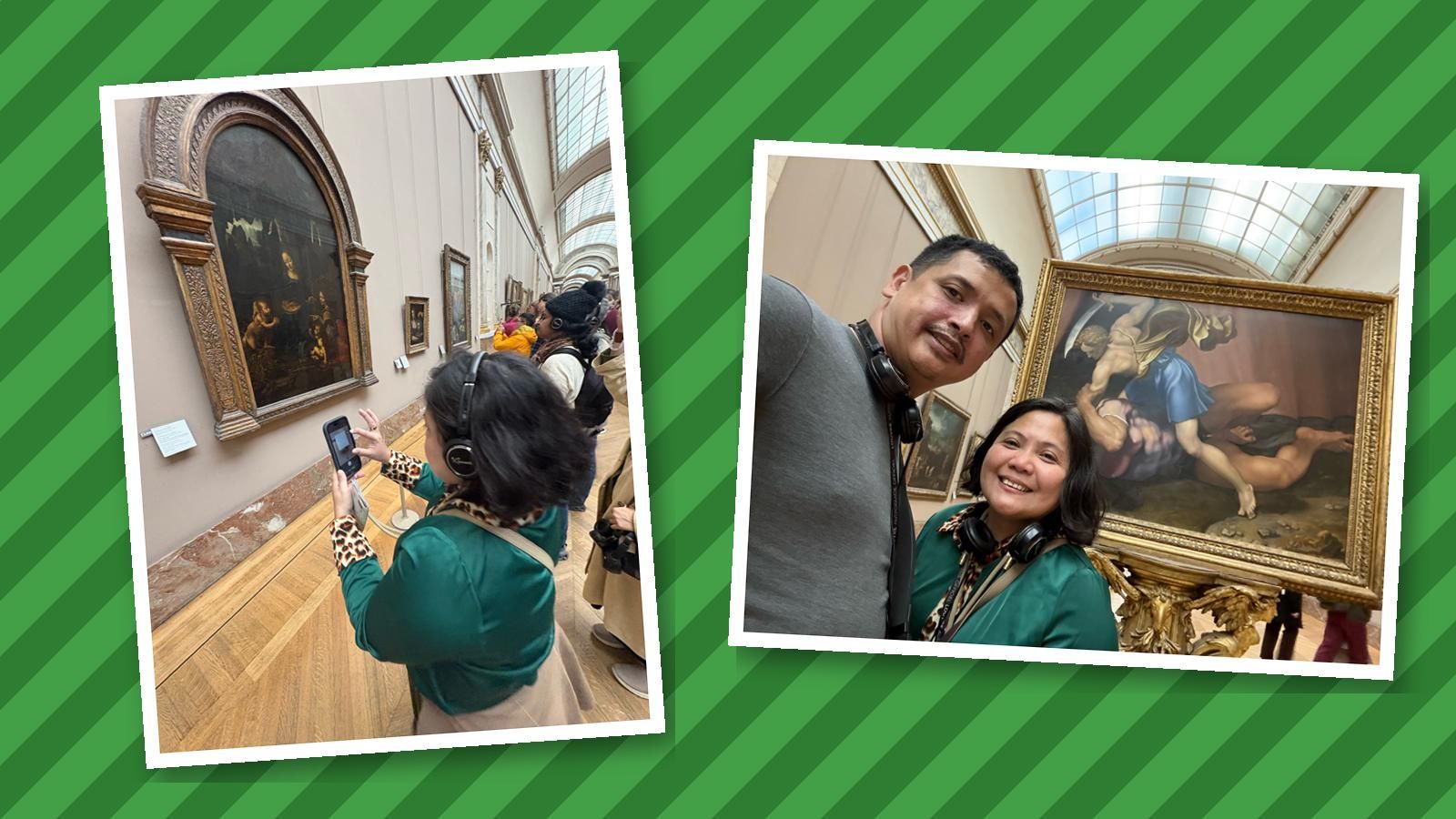
More from our Louvre day: the overview · the Sully wing
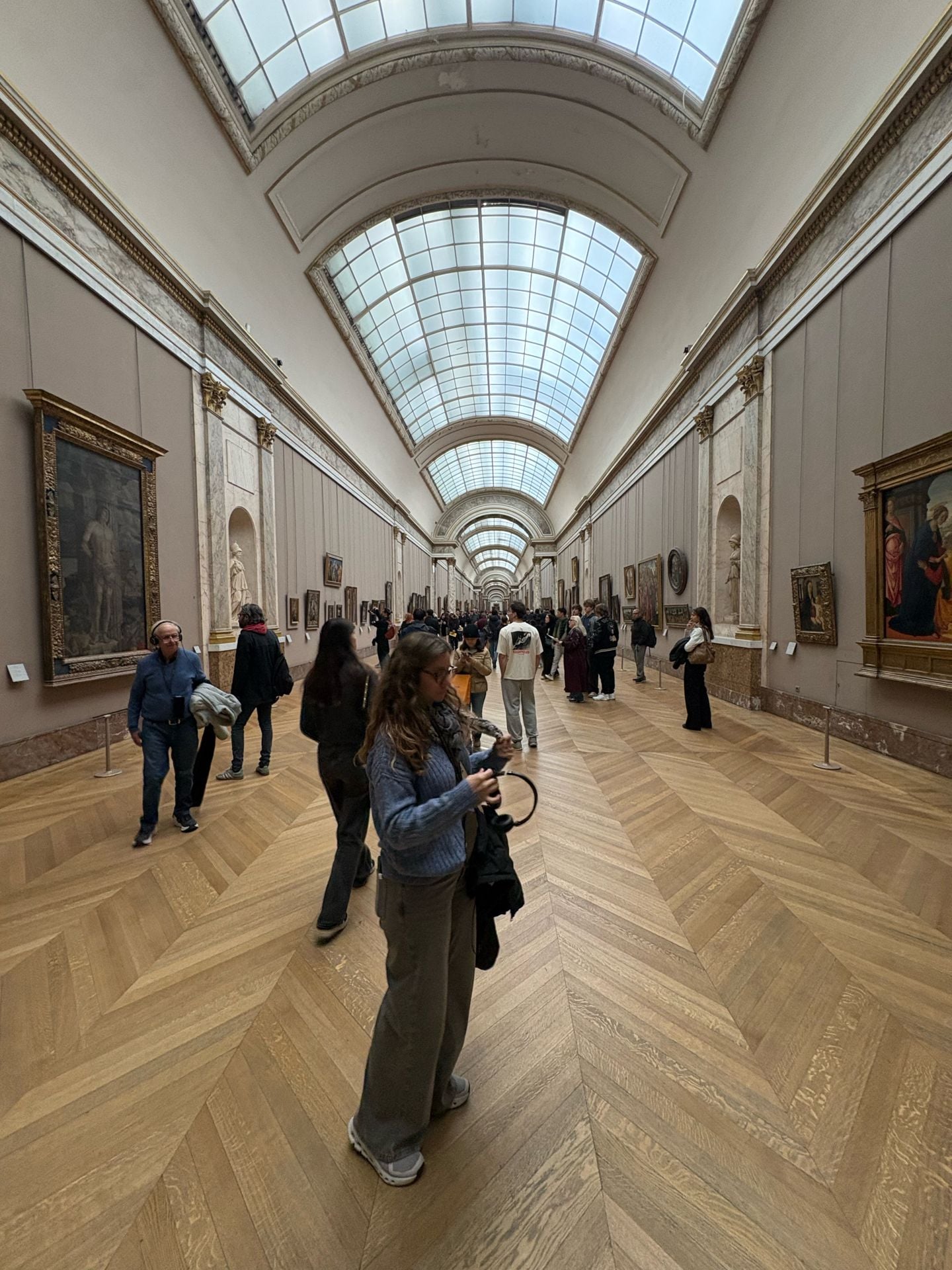
In the Louvre Denon wing, the Grande Galerie seems to go on forever, and that’s because it nearly does. Paintings line both walls and the skylights run on ahead of you.
Leonardo’s Virgin of the Rocks: painted twice
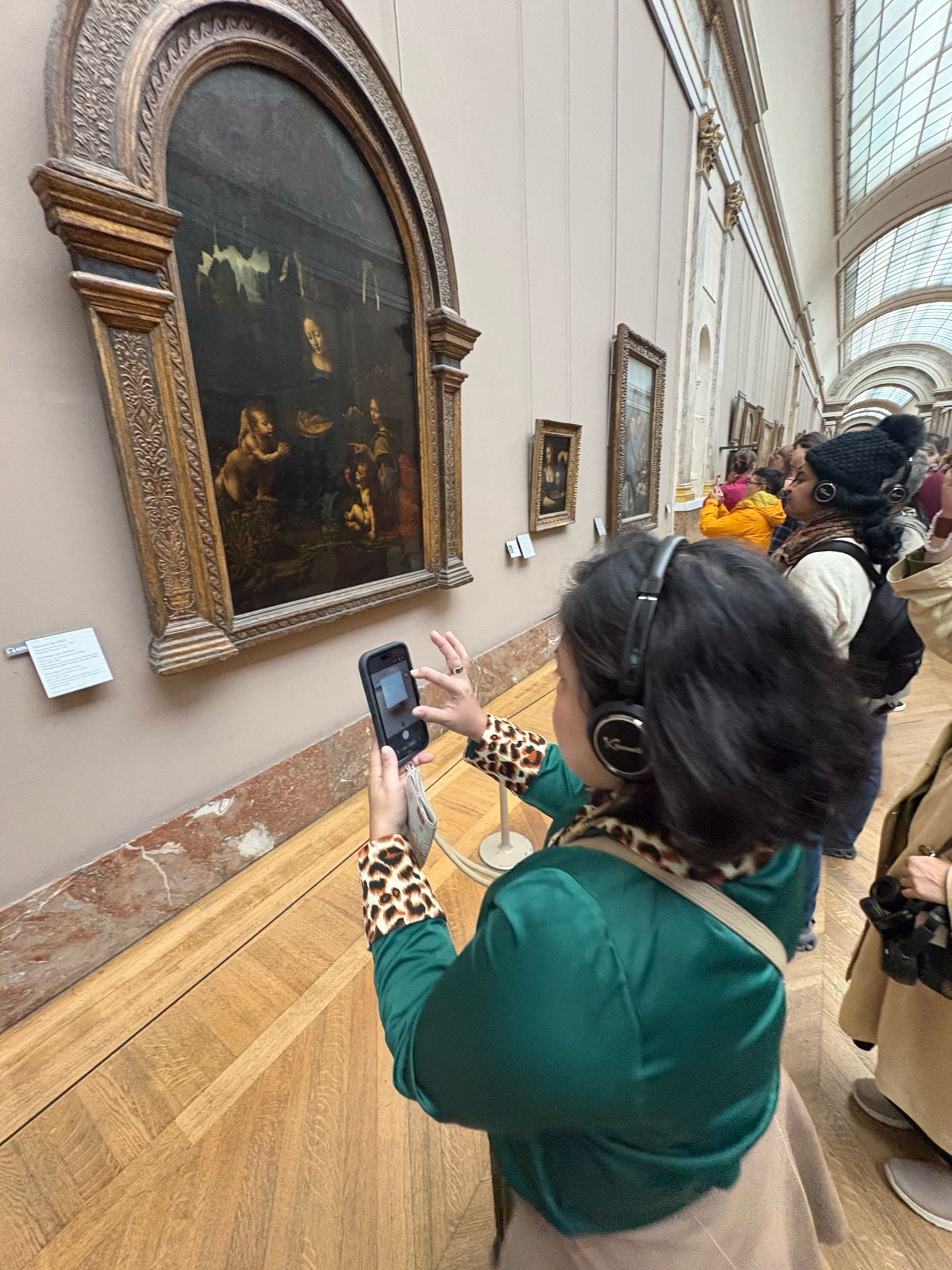
Leonardo painted this picture twice. The Louvre has the earlier version and the National Gallery in London has the later one. The easiest way to tell them apart is the angel. In the Paris version, the angel looks straight out at you and points at the infant John the Baptist. The figures sit in a shadowy grotto full of plants, and the soft, smoky edges are Leonardo’s famous sfumato.
Carpaccio’s Sermon of St Stephen: a sermon in Venice, sort of
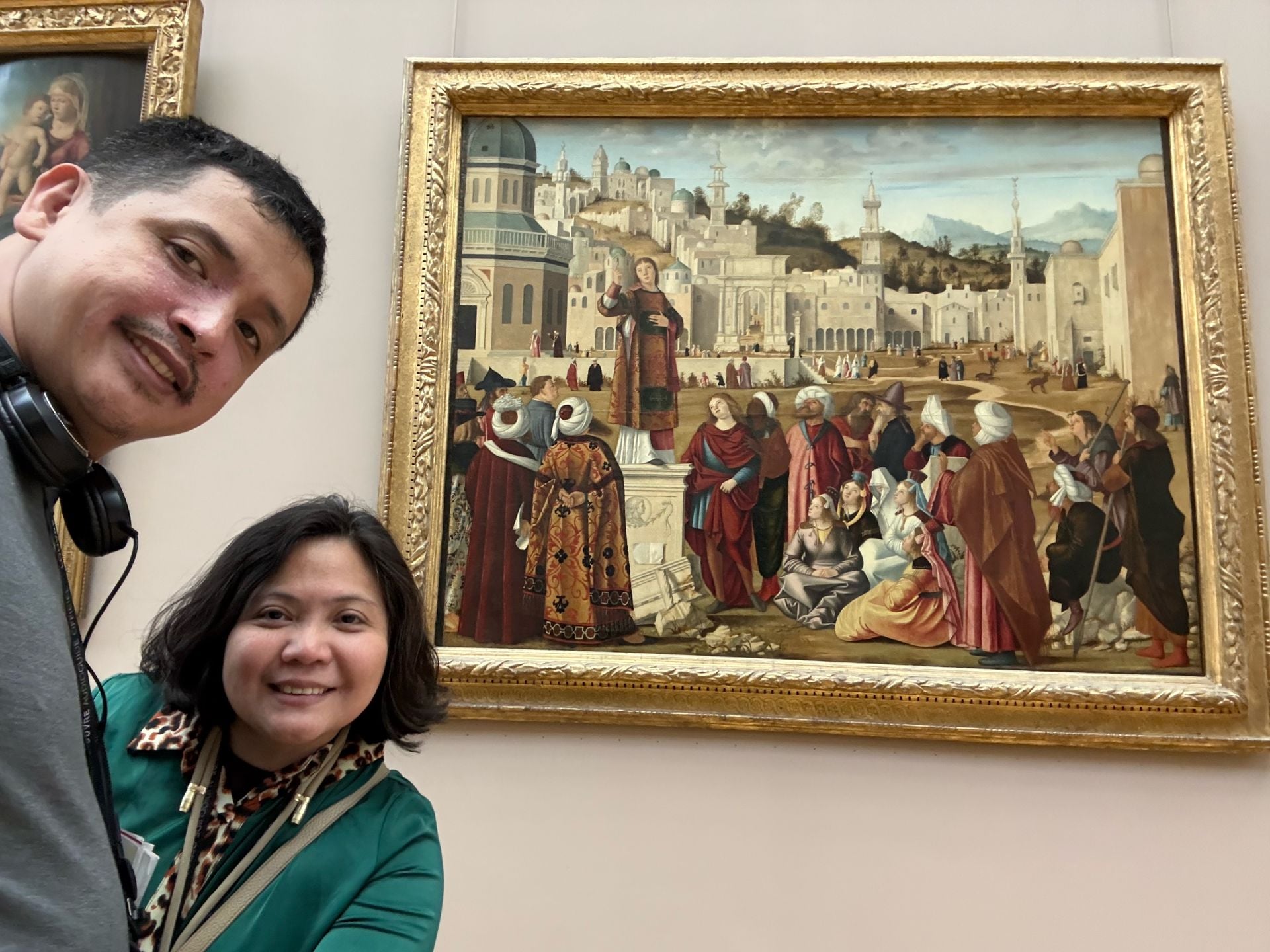
A crowd in turbans and robes, a city that looks half Jerusalem and half Venice, and Stephen preaching from a pedestal. Carpaccio painted it as one of a series of scenes from St Stephen’s life for a confraternity in Venice, the Scuola di Santo Stefano. Three other paintings from that series survive, in Berlin, Milan and Stuttgart. So this one is a single chapter from a story that’s now spread across Europe.
Daniele da Volterra’s David and Goliath: a painting with no “back”
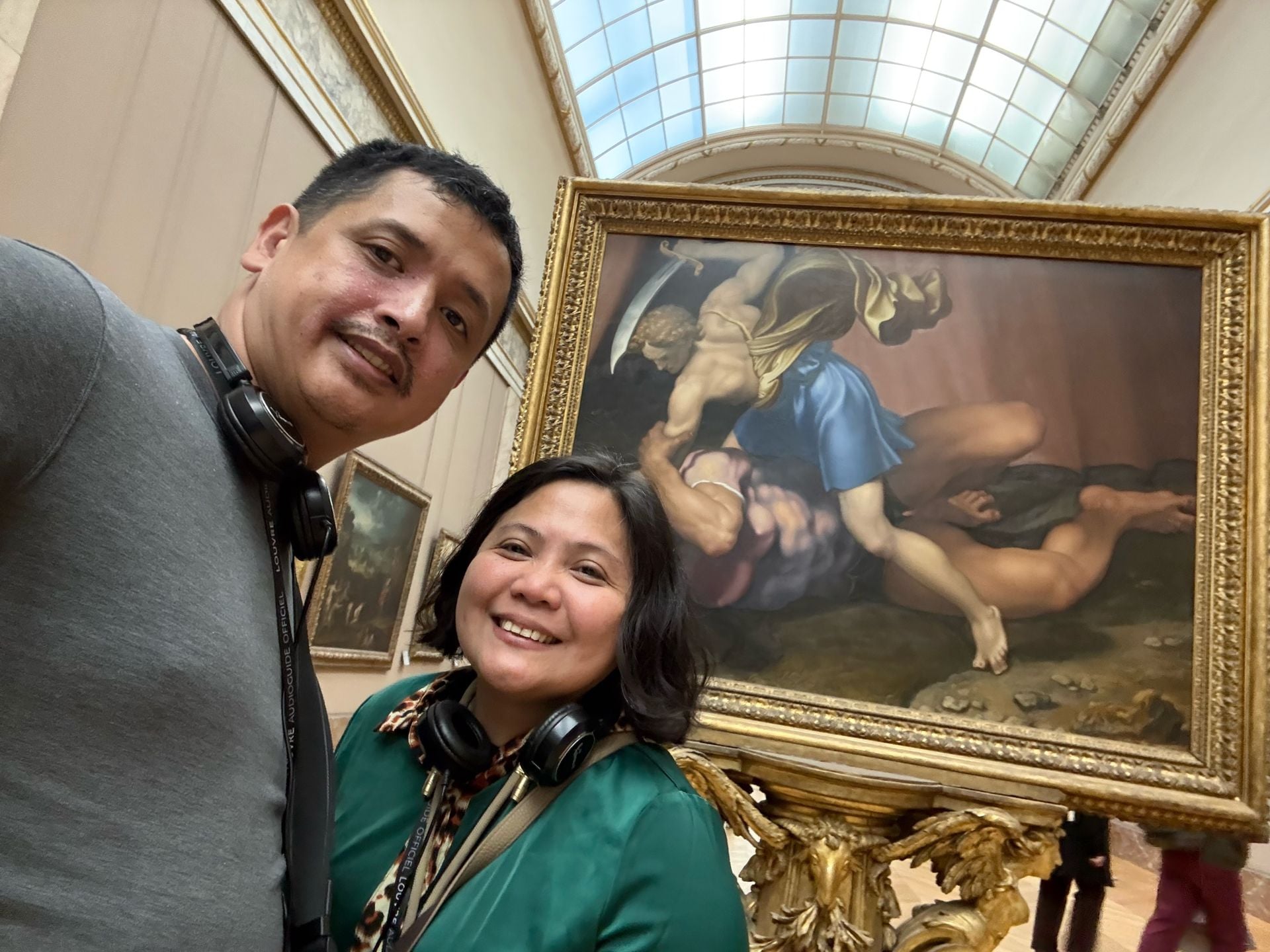
This one is painted in oil on slate, on both sides, and both sides show the same fight from different angles. Why? In the 1500s, artists argued about which was the greater art, painting or sculpture. Sculpture’s big boast was that you could walk around it. Daniele’s answer was to paint the scene twice so you could walk around it too. The slate even cracked while he was working on it and had to be repaired. It was once attributed to Michelangelo, which makes sense, because Daniele was his friend.
The Mona Lisa and the Wedding at Cana: face to face
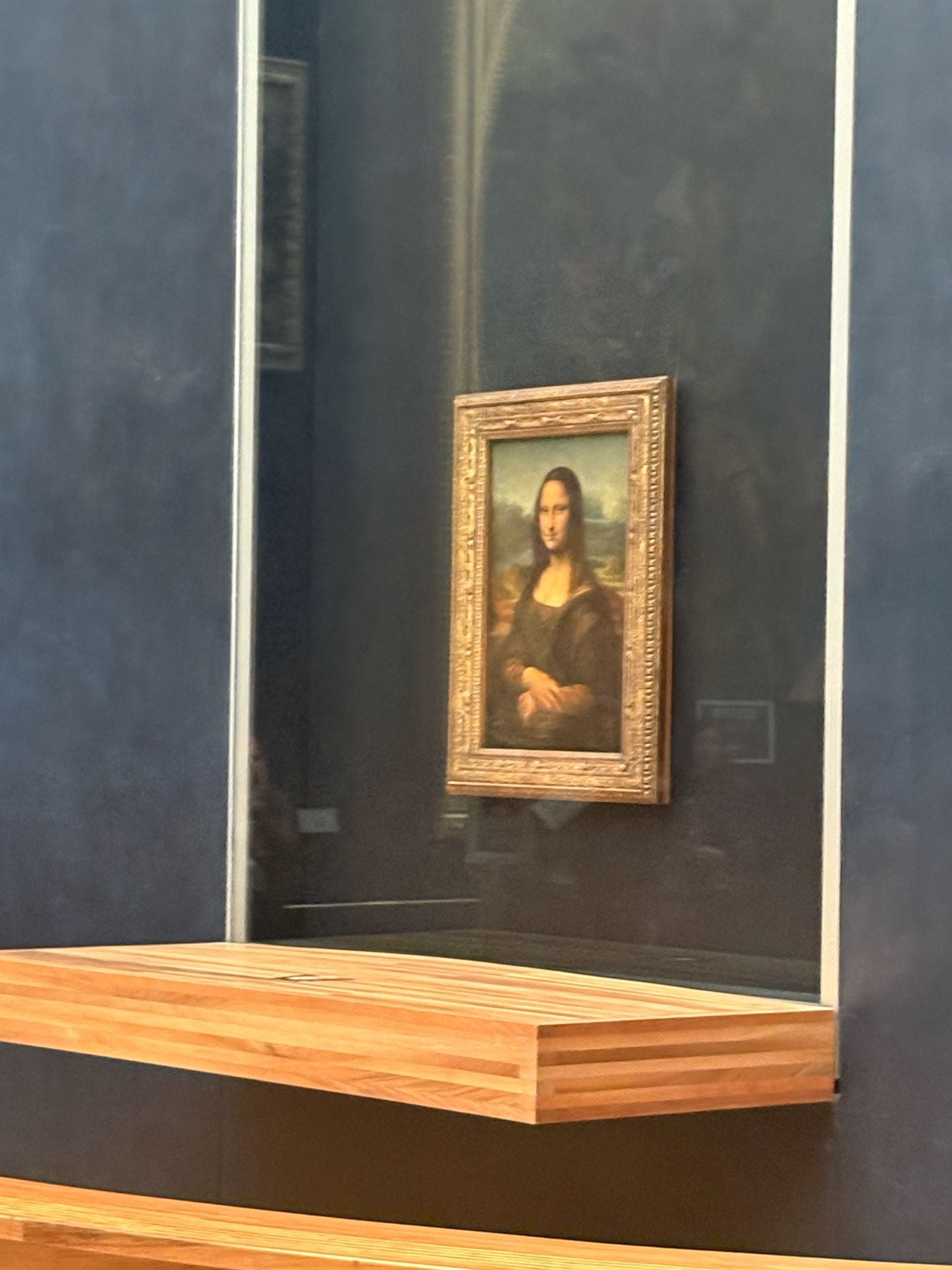
The Mona Lisa hangs in the Salle des États, the largest room in the palace, inside a glass case that controls temperature and humidity. She’s Lisa Gherardini, wife of a Florentine silk merchant, which is where the names La Gioconda and La Joconde come from. Leonardo’s sfumato gives her that soft, smoky look. He seems to have treasured her, because he never parted with the painting. In 1911 an Italian museum worker stole her, saying he wanted to return her to her homeland, and the press went into a frenzy. The theft only made her more famous.
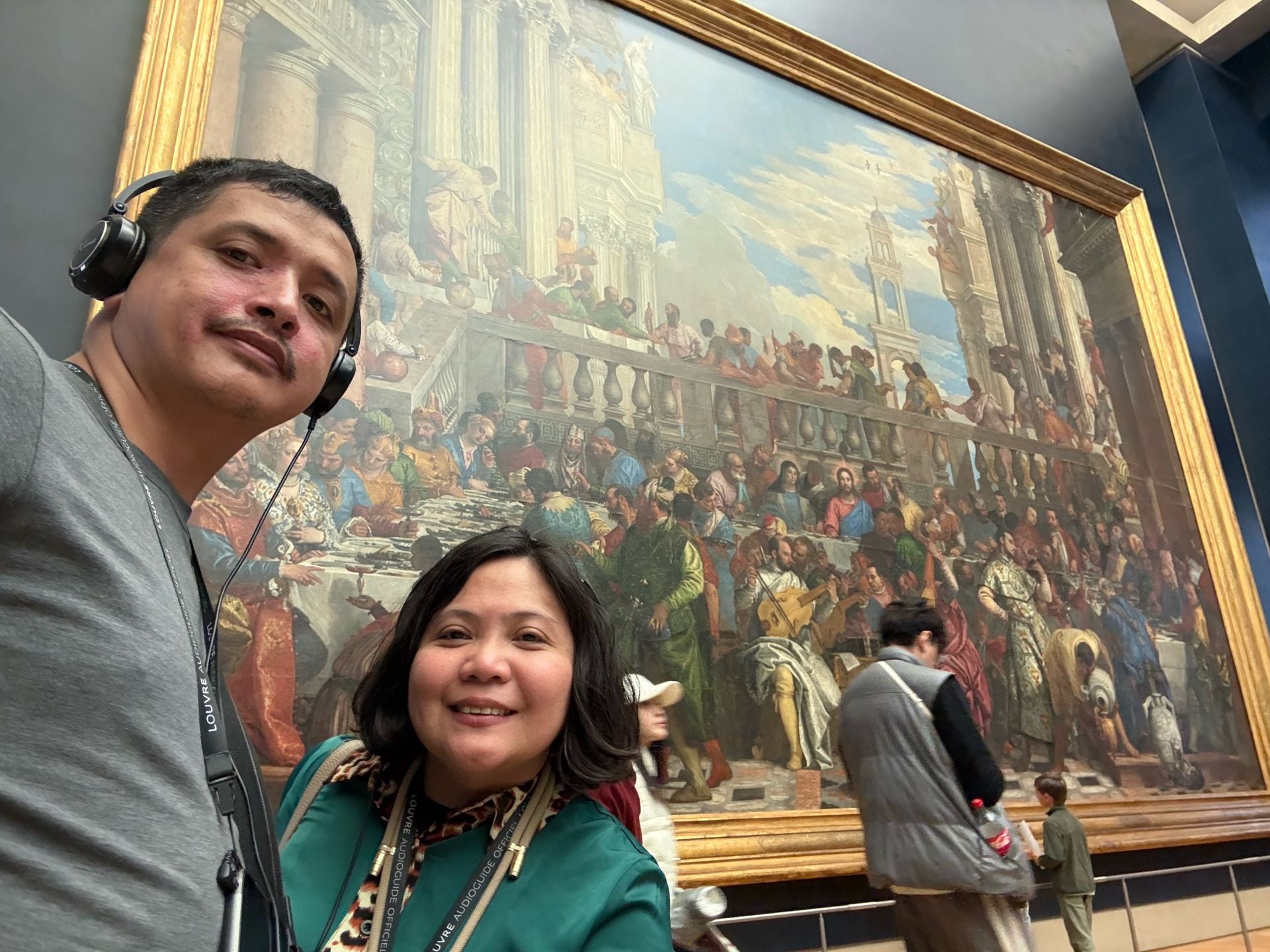
Turn around and you get Veronese’s Wedding Feast at Cana, the biggest painting in the Louvre, hanging right opposite the Mona Lisa. The Louvre’s own tip: while you queue for the Mona Lisa, turn around and look at this one. Veronese moved a biblical wedding into a Venetian banquet. Napoleon’s troops took it in 1797, rolled up the huge canvas and shipped it to Paris. It stayed because people feared it wouldn’t survive the trip back.
The Winged Victory, at the top of the Daru staircase
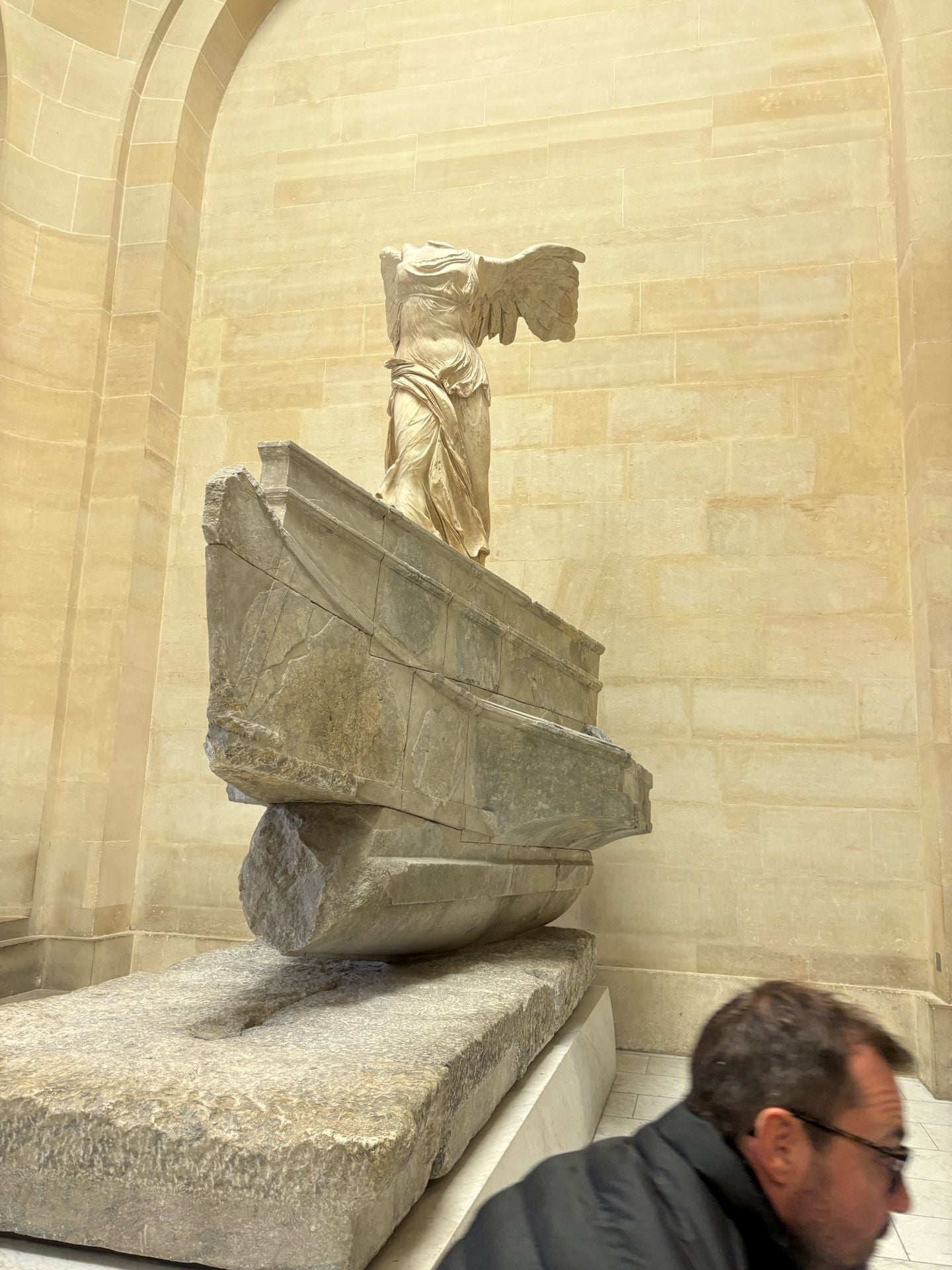
She was made for a sanctuary on the Greek island of Samothrace, set up high so she could be seen from afar. That’s why the Louvre puts her at the top of the Daru staircase. Nike, the goddess of victory, is shown just about to land on the prow of a ship. She was found on Samothrace in 1863, in pieces, with no head and no arms. The man who found her went back years later to look for them. He didn’t find them, but he did find the stone ship she stands on.
The Galerie d’Apollon: Louis XIV’s sun-king showpiece
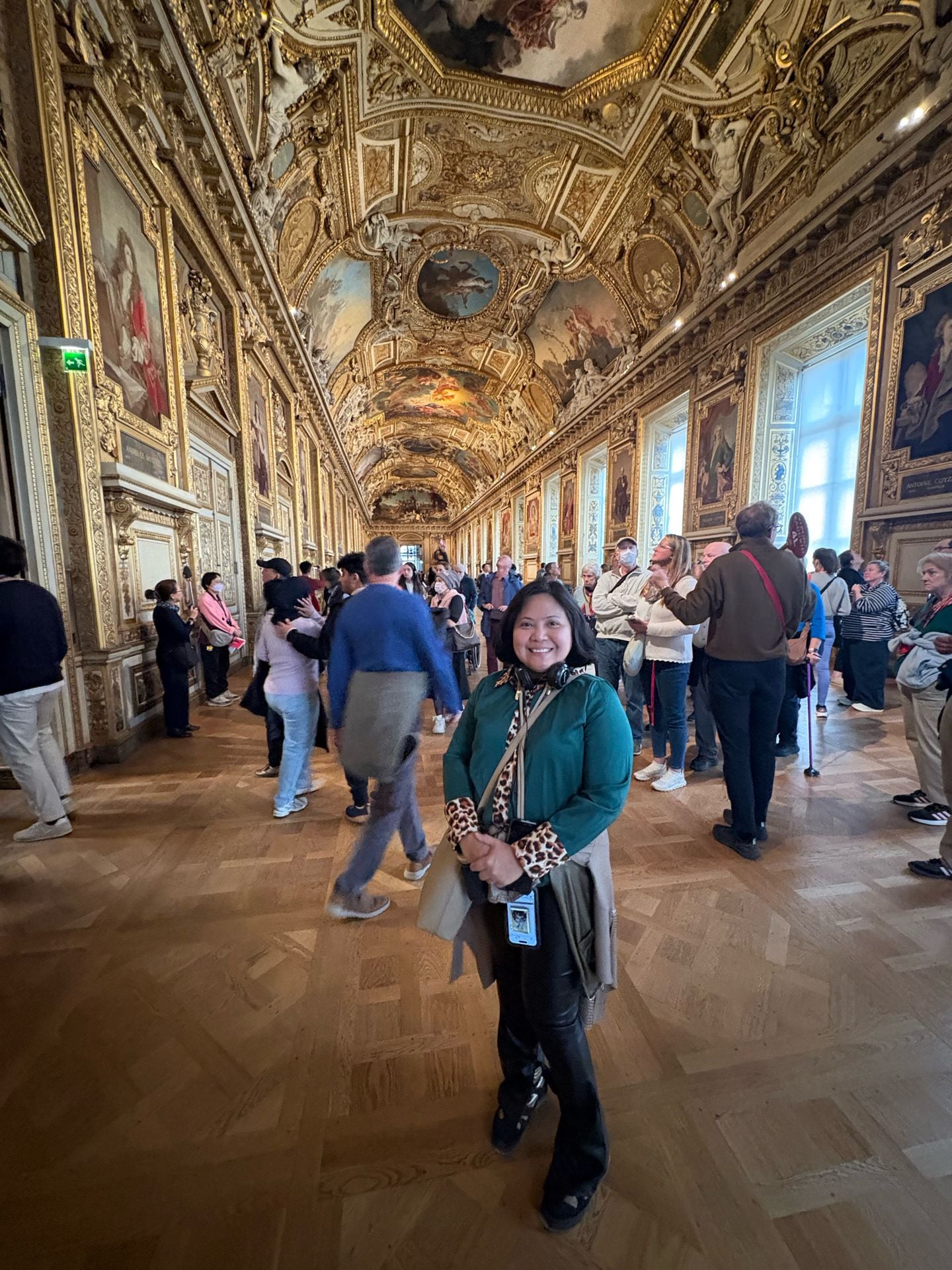
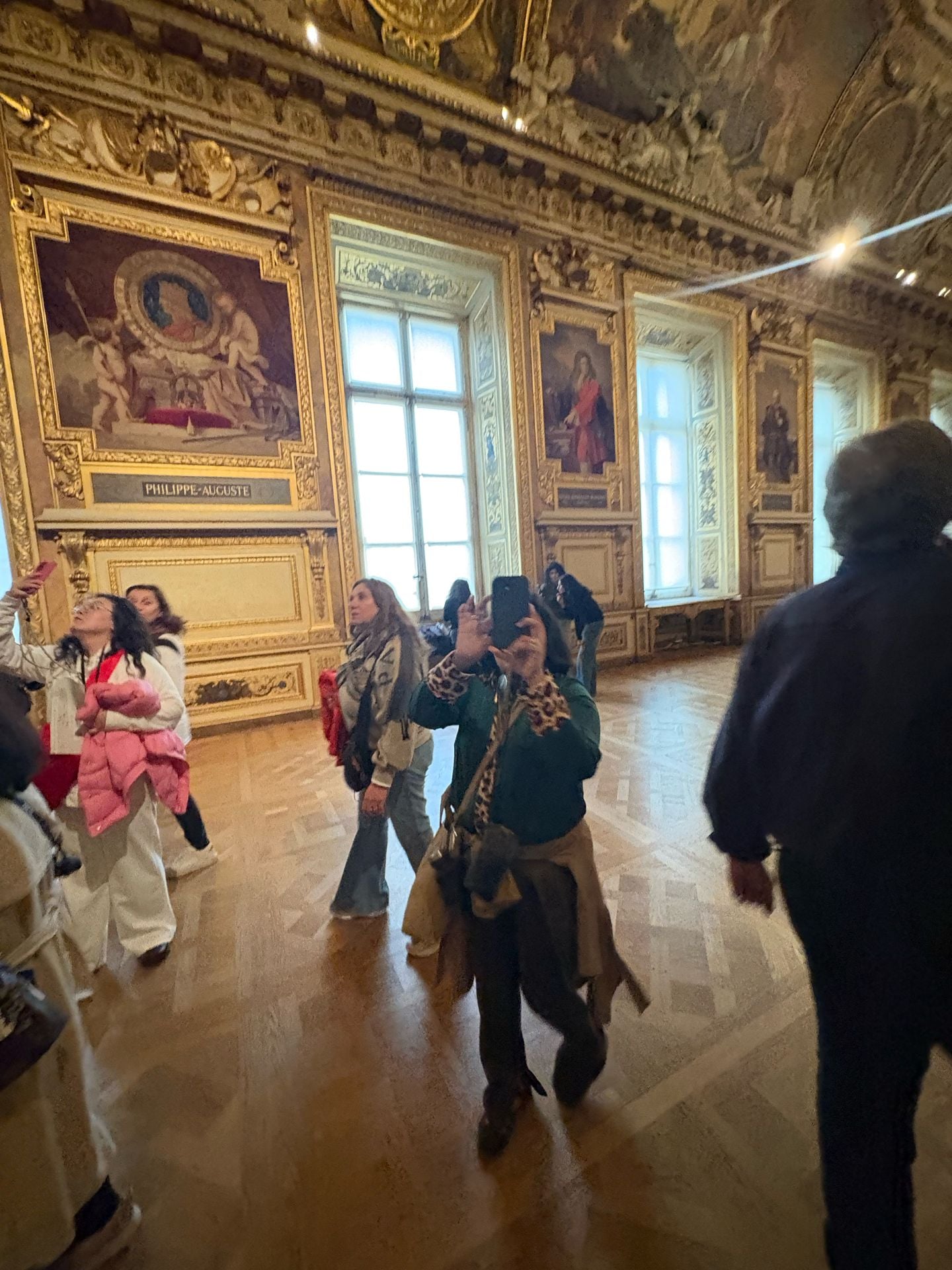
After a fire in 1661, Charles Le Brun redecorated this gallery around Apollo, the sun god Louis XIV had just picked as his symbol. Look up: the ceiling runs through the hours, months and seasons, and it was a forerunner of Versailles’ Hall of Mirrors. Once the palace became a museum, this gallery also held some unexpected guests, including the Bayeux Tapestry for a while, and later jewels from the old French royal collection. In October 2025, burglars broke into the gallery and stole 19th-century jewels. It reopened in summer 2026 as a gallery to walk through.
FAQ
Is the Louvre’s Virgin of the Rocks the original?
Both versions are by Leonardo. The Louvre’s is the earlier one, and London’s is the later one.
What’s special about Daniele da Volterra’s David and Goliath?
It’s painted in oil on slate on both sides, as a reply to the old argument over whether painting or sculpture was the greater art.
Where is the Winged Victory of Samothrace?
At the top of the Daru staircase in the Denon wing.
Where is Carpaccio’s Sermon of St Stephen?
In the Italian paintings on the first floor of the Denon wing.
Keep reading: the overview · the Sully wing