









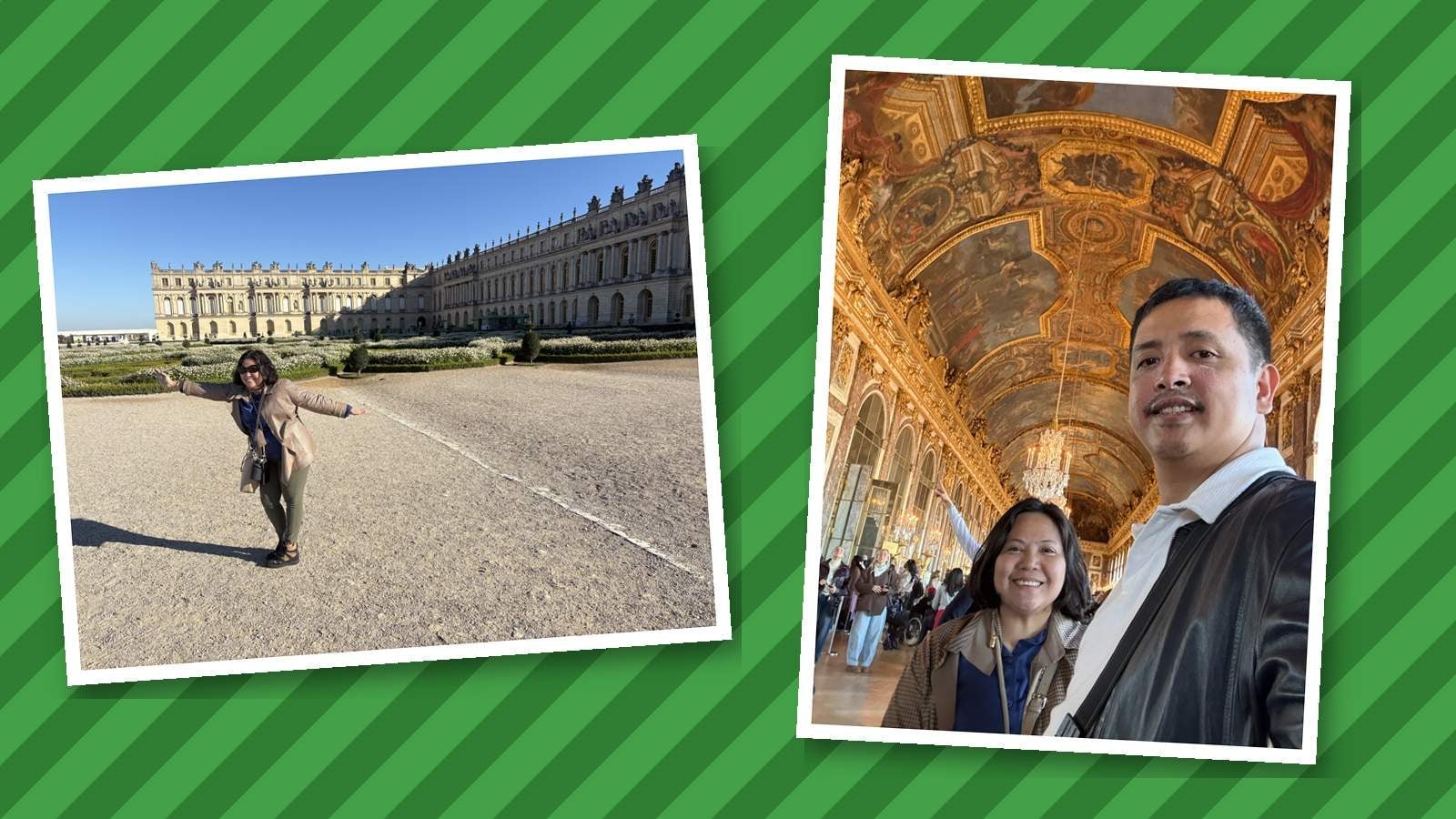
In our last post, we watched the sun come up over Paris from the steps of Sacré-Cœur (read it here). I promised Versailles next, so here it is: the day Dimple, Tin and I raced through the home of the Sun King. We were with a tour group and had to be back by late morning, so this was Versailles at full speed: see it, snap it, keep moving.
Ever tried to see a palace built for a king in one quick morning? Spoiler: you can’t, but we gave it our best shot, and we loved every rushed minute.
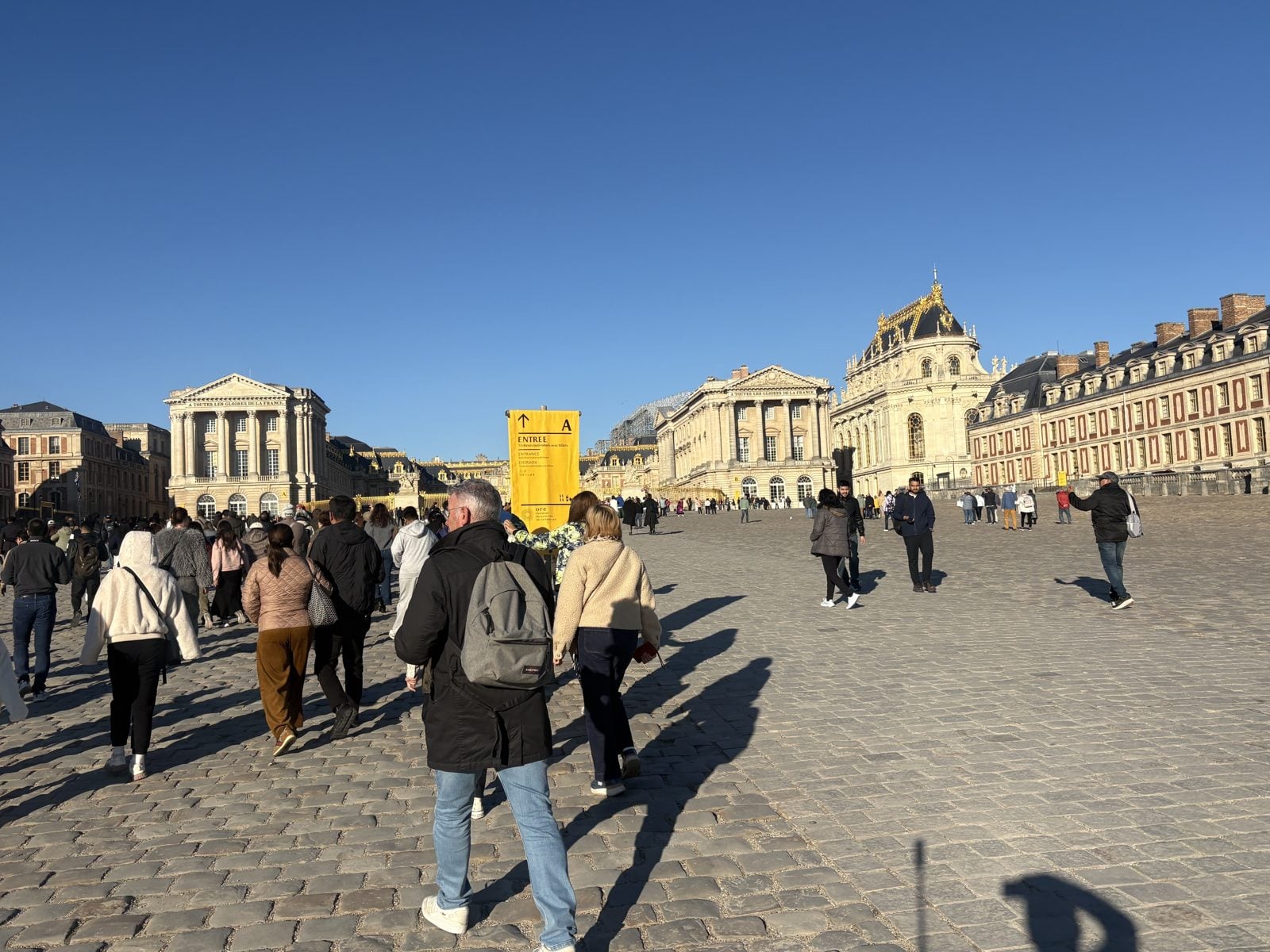
First stop: the golden gates
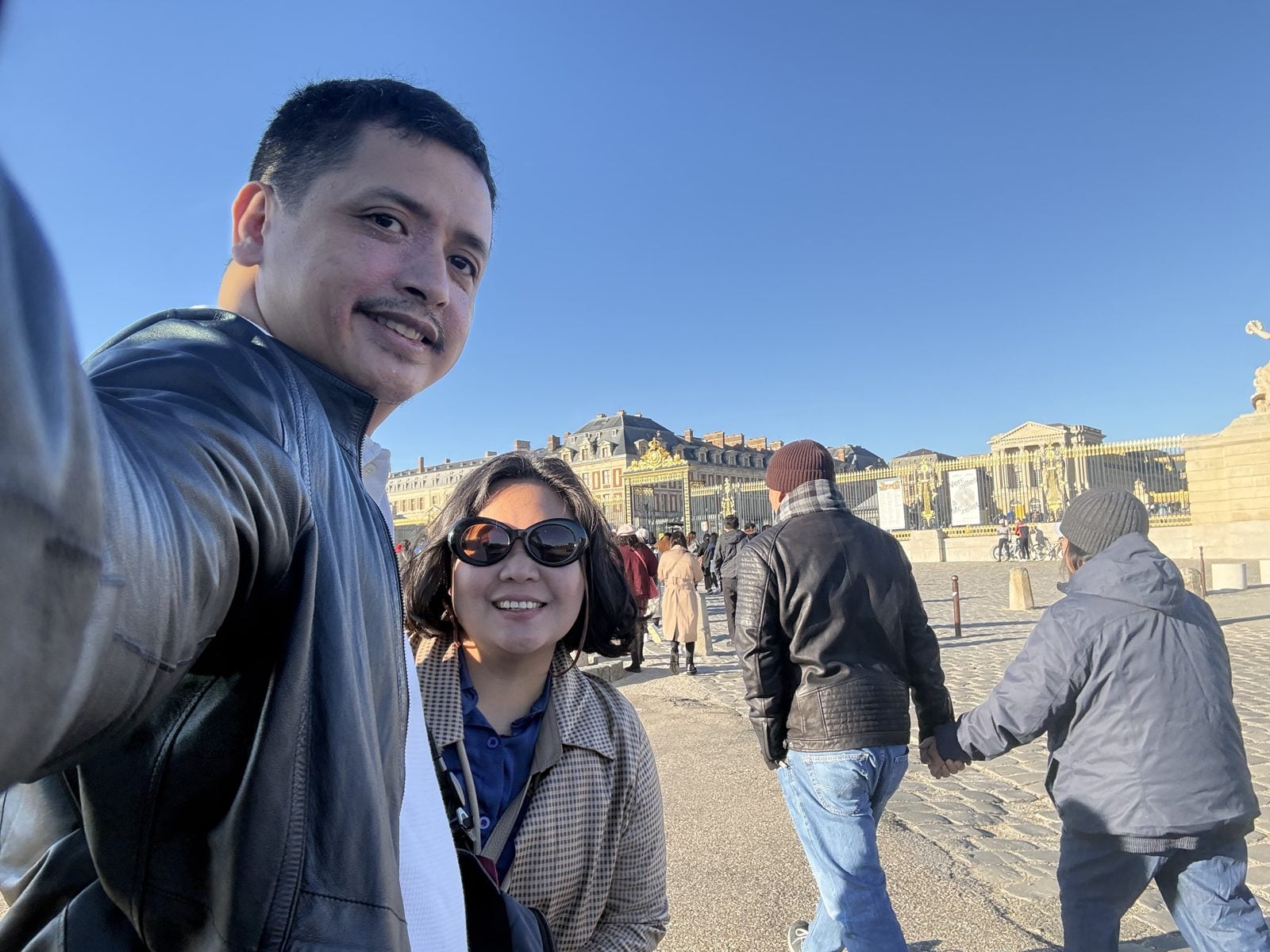
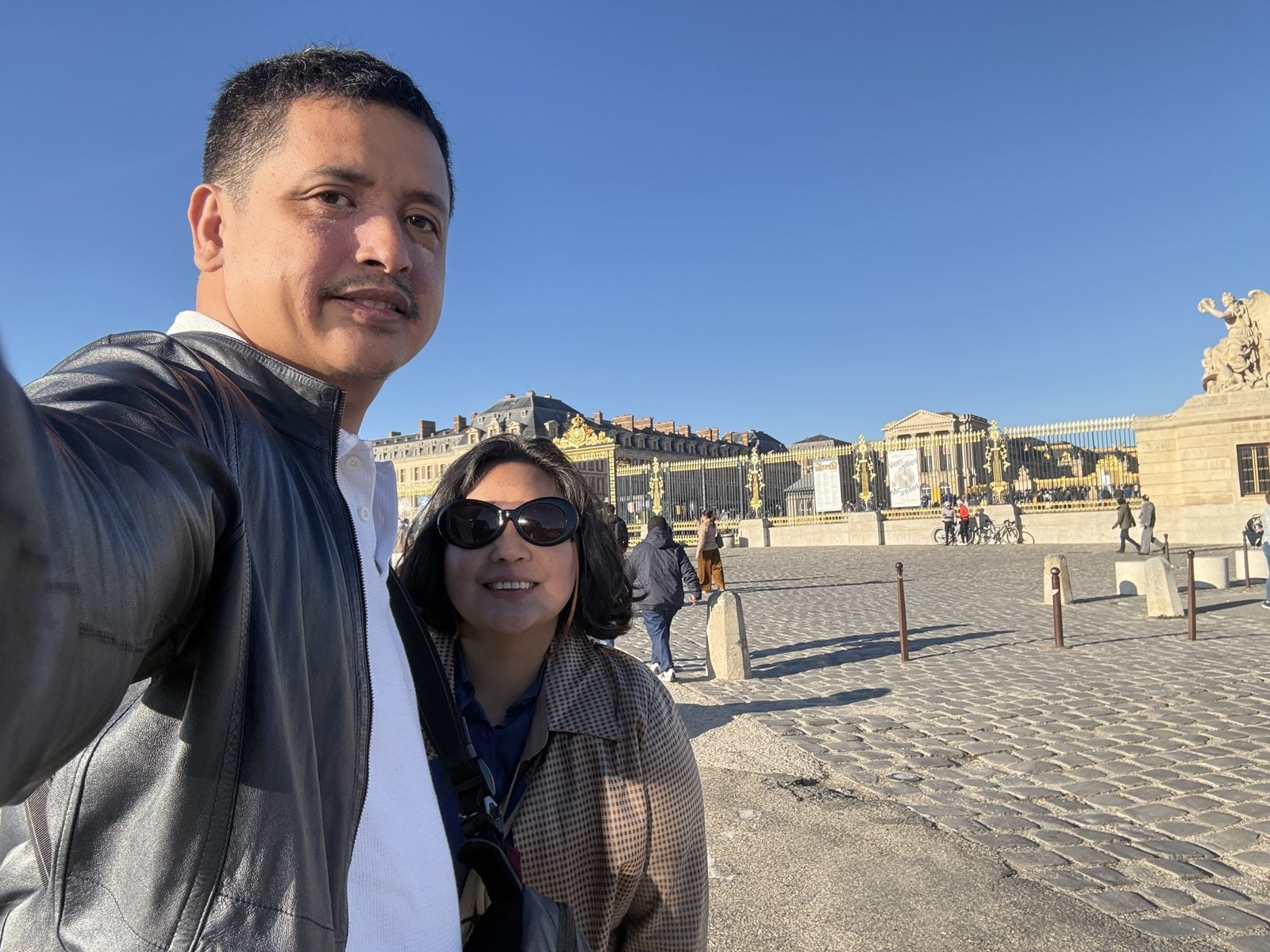
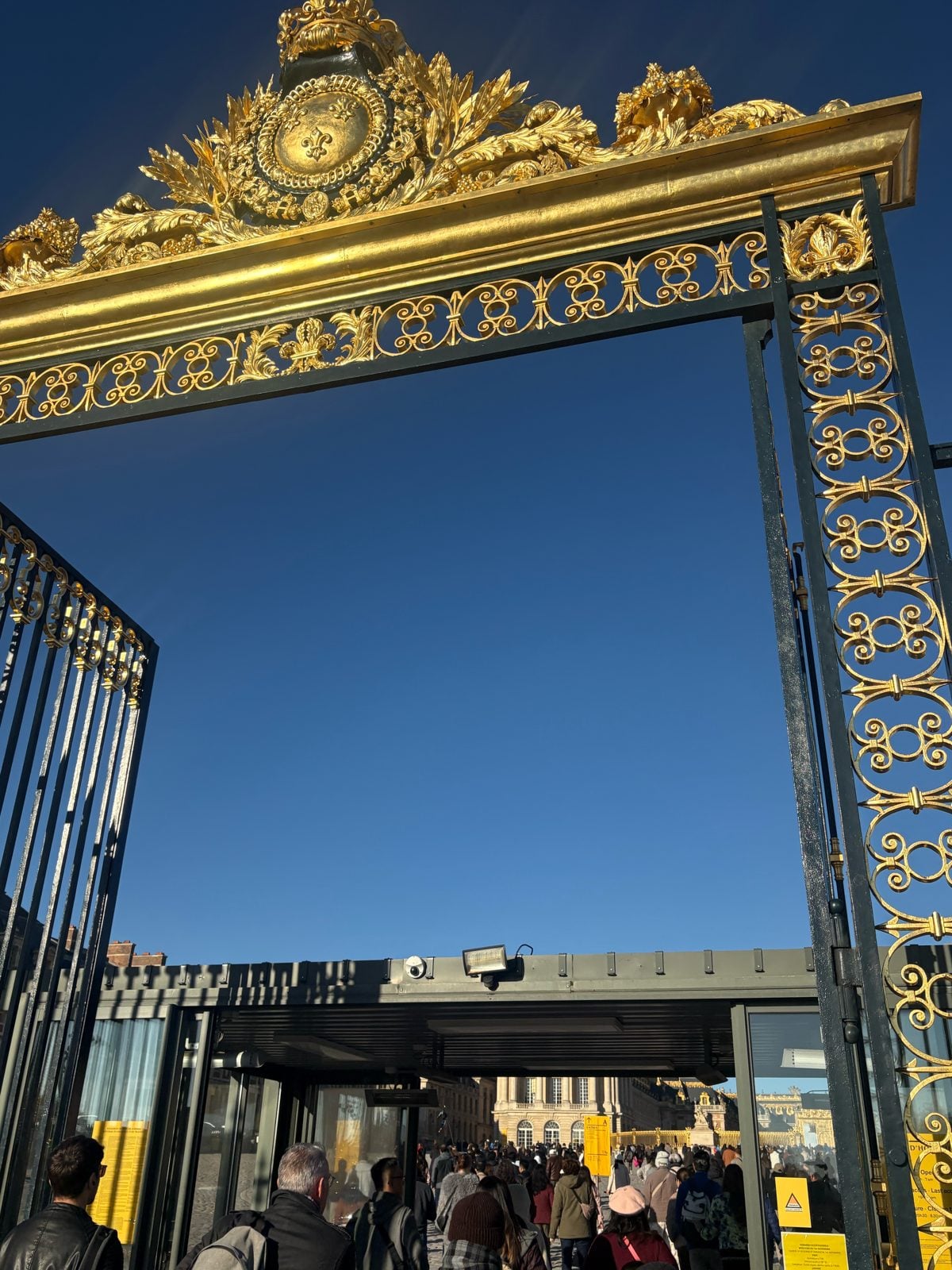
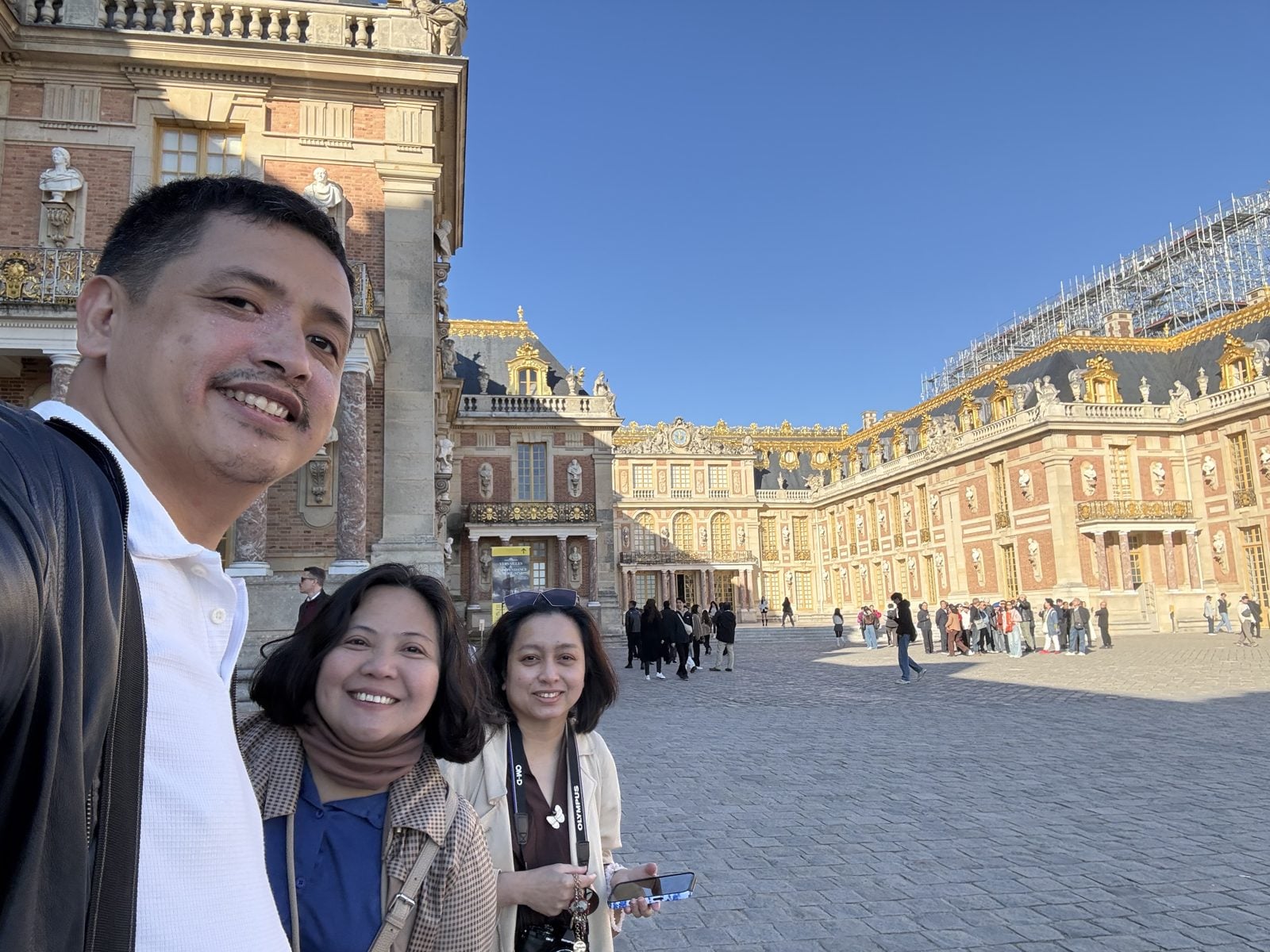
The first thing you see is gold. Lots of it. The gates shine in the morning sun, and the cobbled courtyard behind them is huge. We did what everyone does: stopped, stared, and took selfies.
Quick history: why Versailles?
Versailles started small. It was a hunting lodge for Louis XIII. His son, Louis XIV, saw much more in it. He turned it into a palace that showed off his power, because he believed glory came not only from war but also from buildings.
In 1682, Louis XIV made Versailles the main home of the French court and government. Paris stayed the official capital, but Versailles was the real centre of the kingdom until 1789. Nobles moved in too, and they spent fortunes just to stay close to the king. Smart move: it’s hard to plot against a king when you live in his house.
The gardens: Le Nôtre’s masterpiece
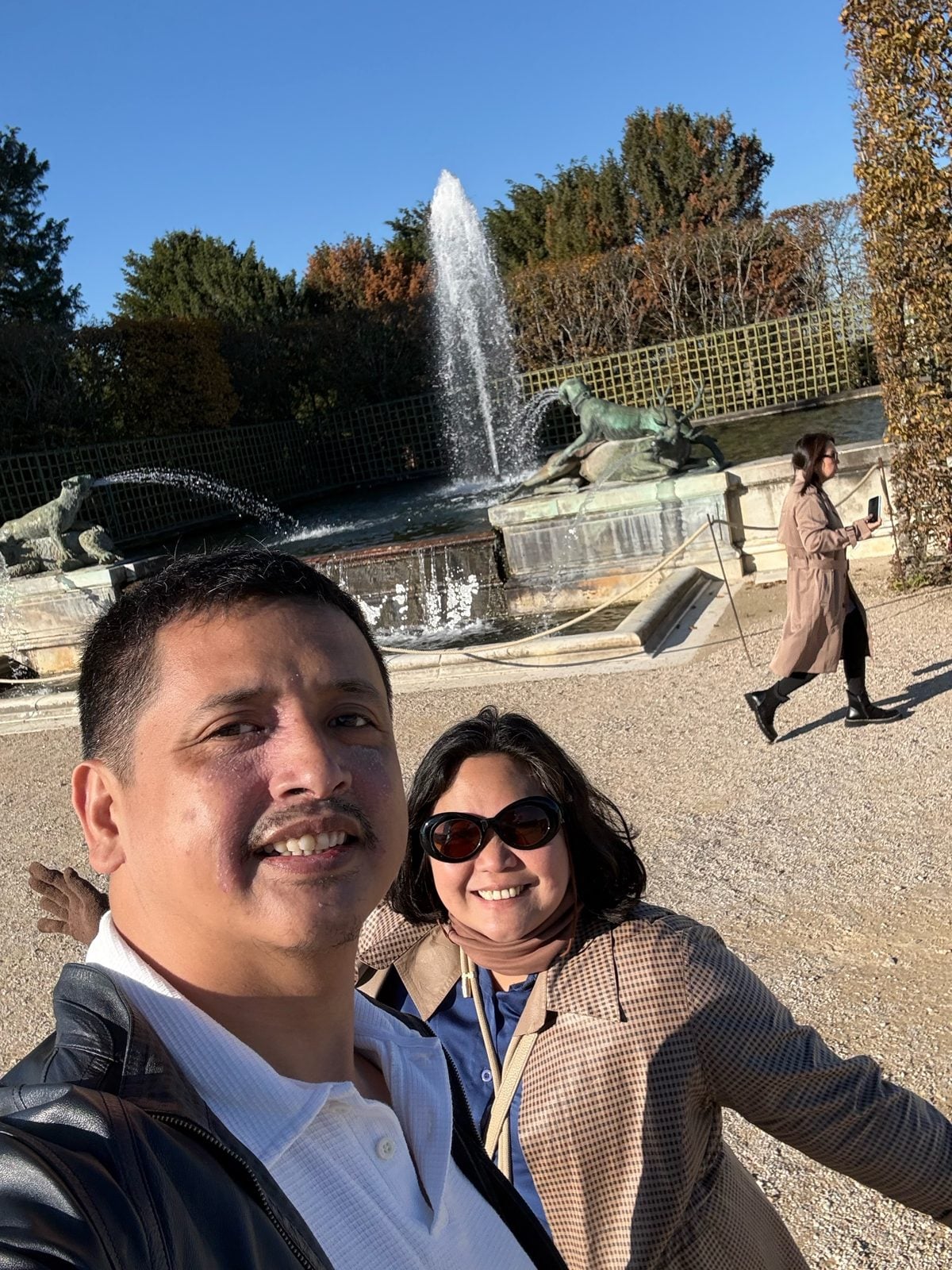
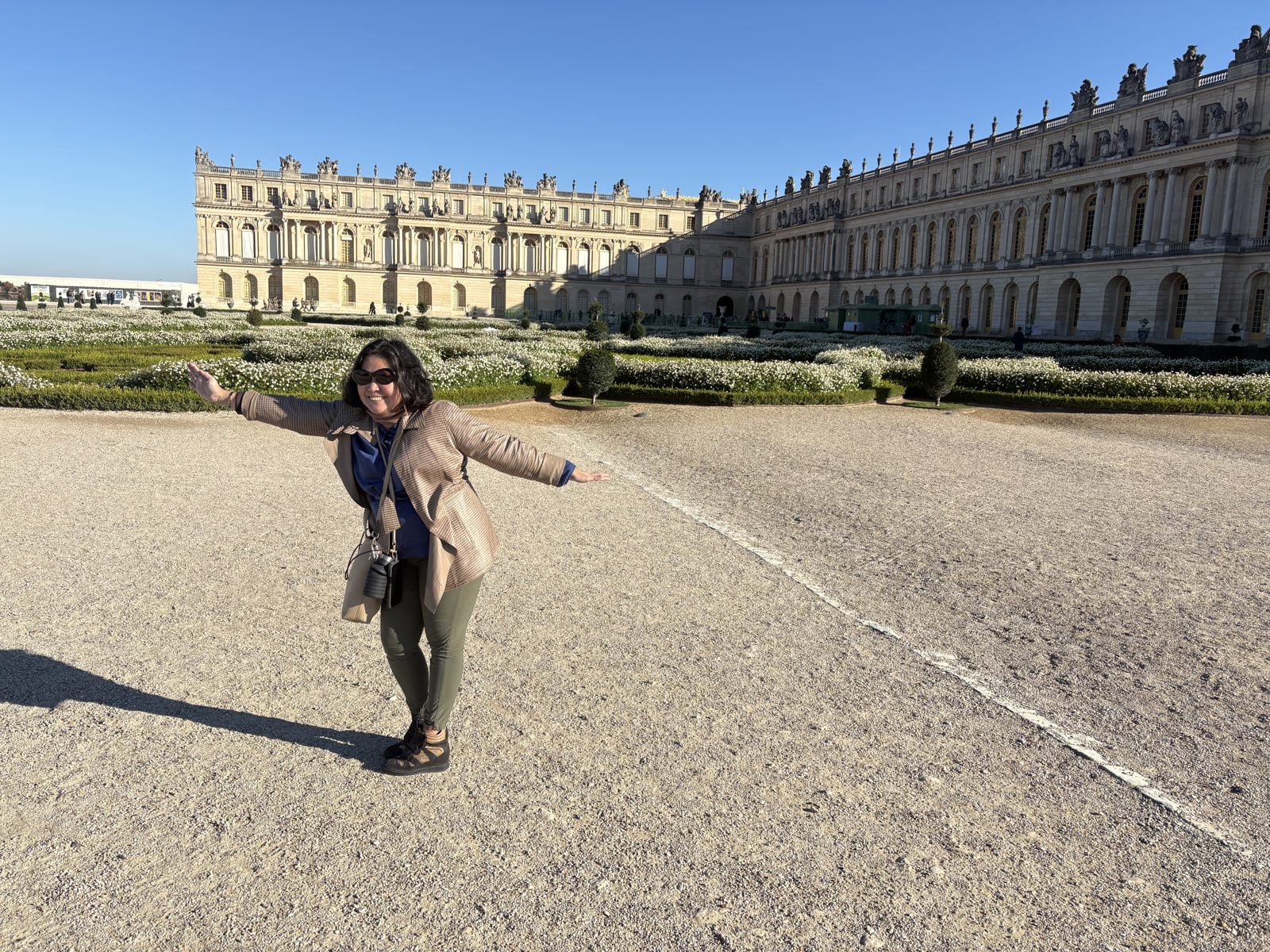
Behind the palace, the gardens just keep going, which is a problem when you’re on the clock. We speed-walked, stopped for a photo, and speed-walked again. In 1661, Louis XIV asked André Le Nôtre to create them, and he saw them as just as important as the palace. The work lasted about 40 years. Le Nôtre tamed woods and marshes and levelled the land to build a garden "in the French manner": neat lines, perfect symmetry, and nature told exactly where to stand.
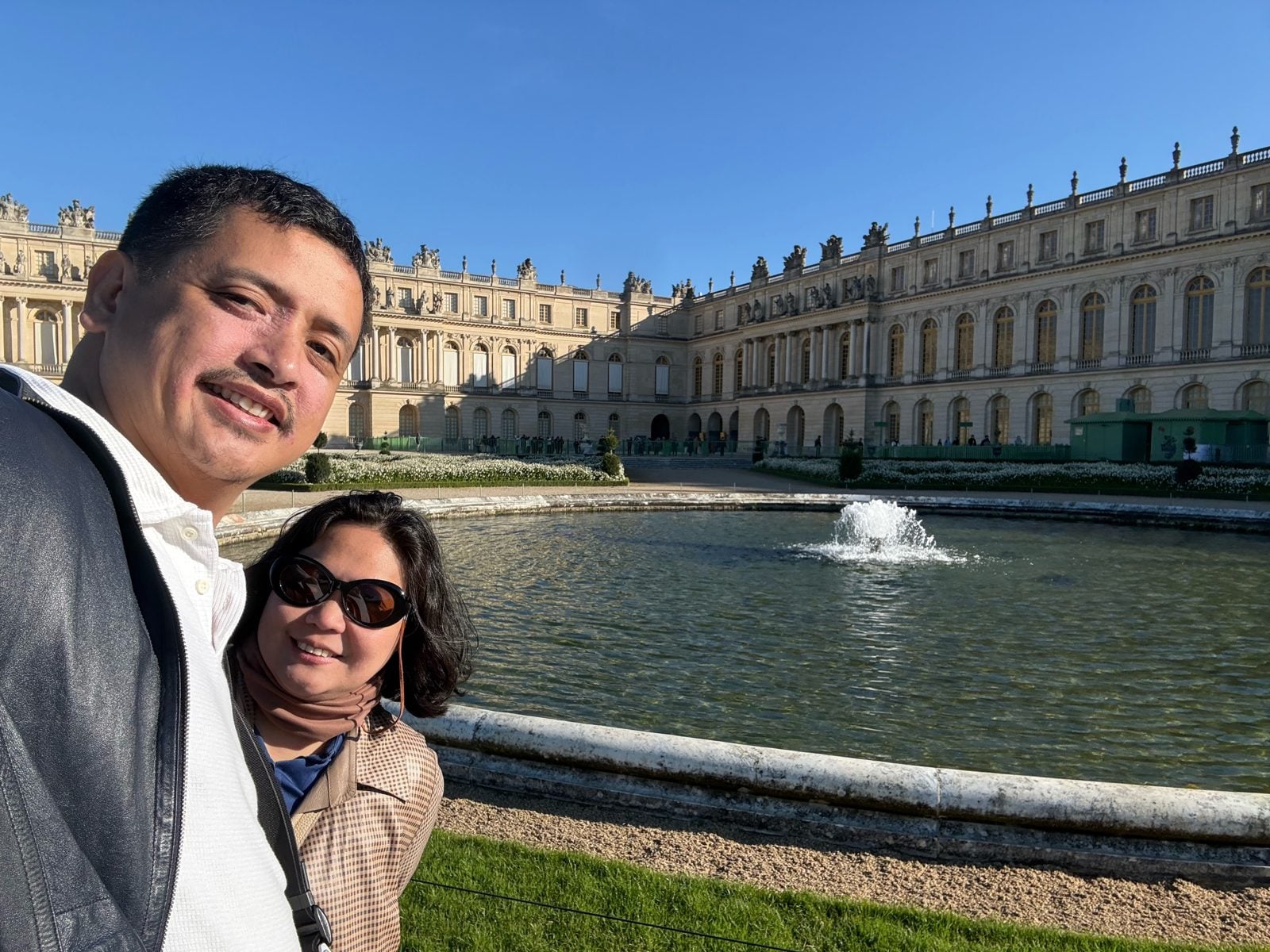
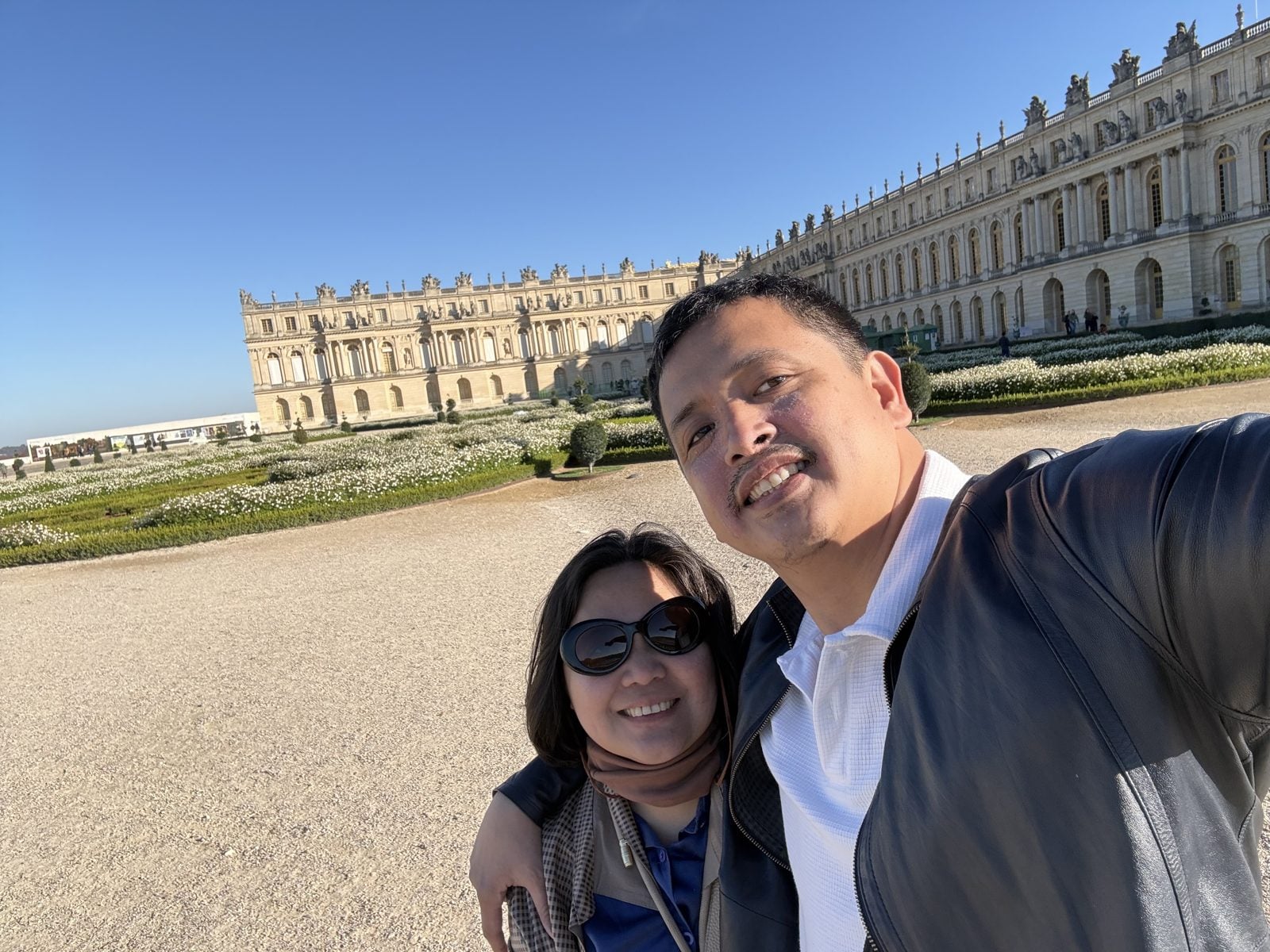
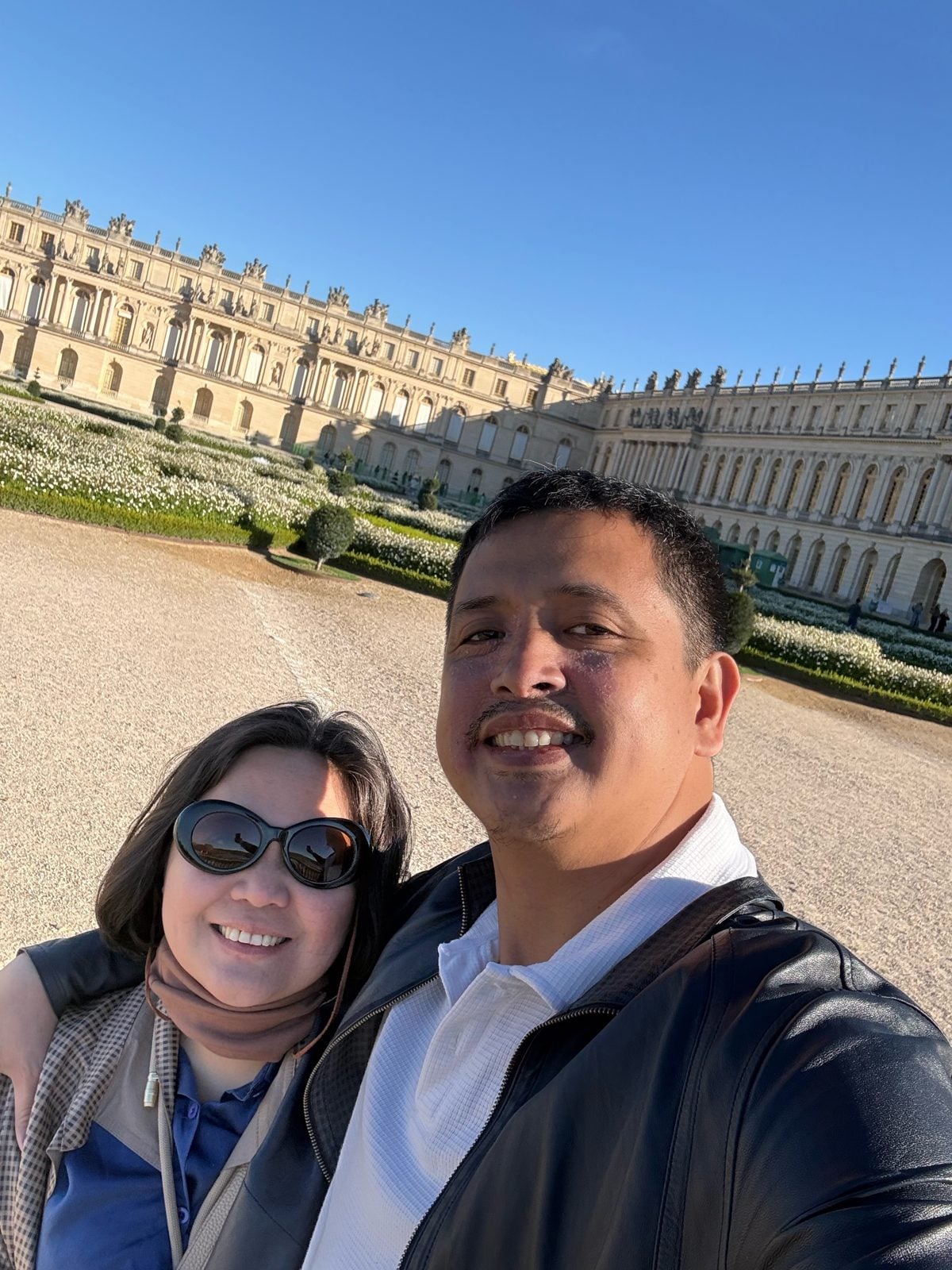
The Water Parterre
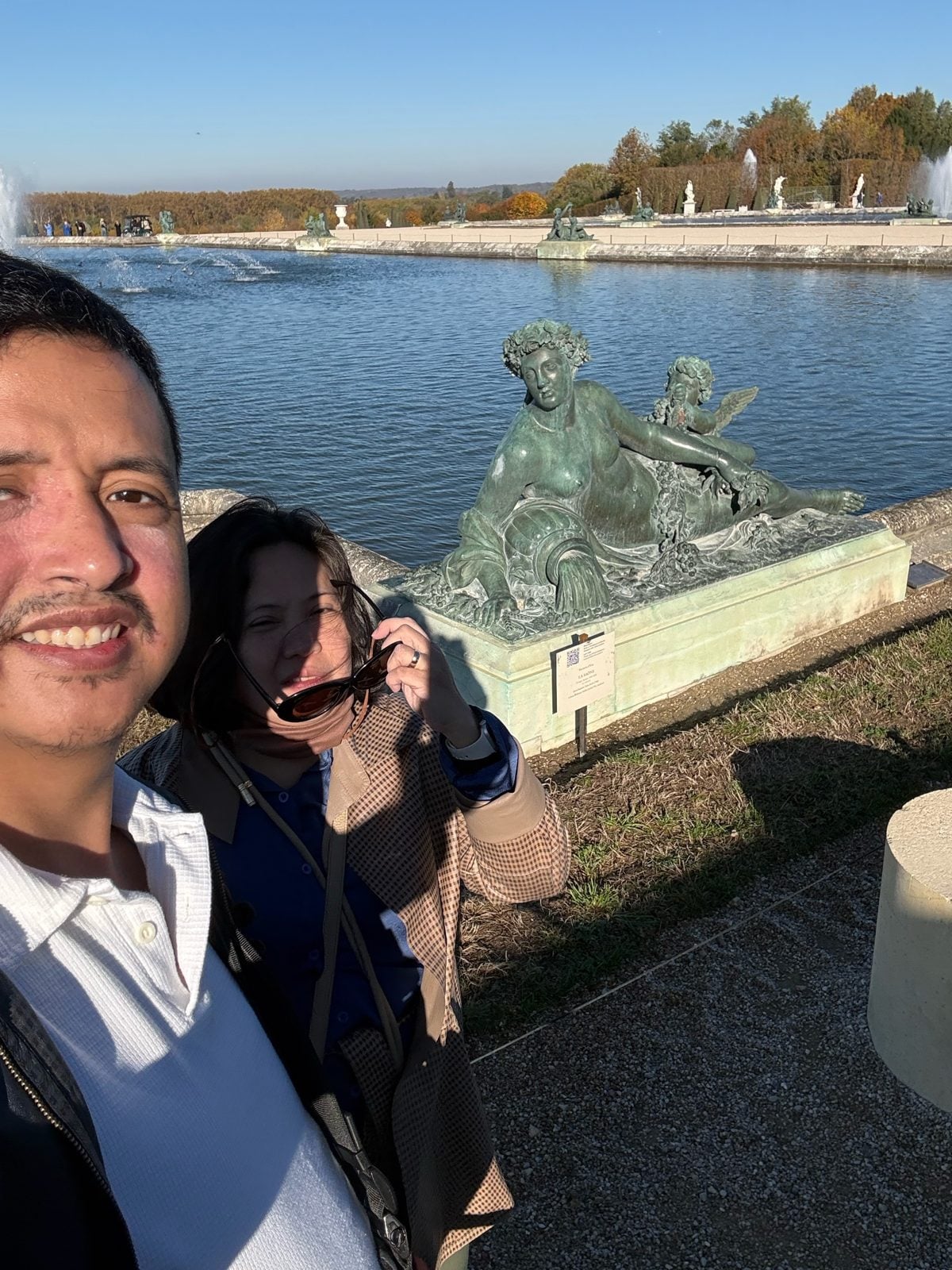
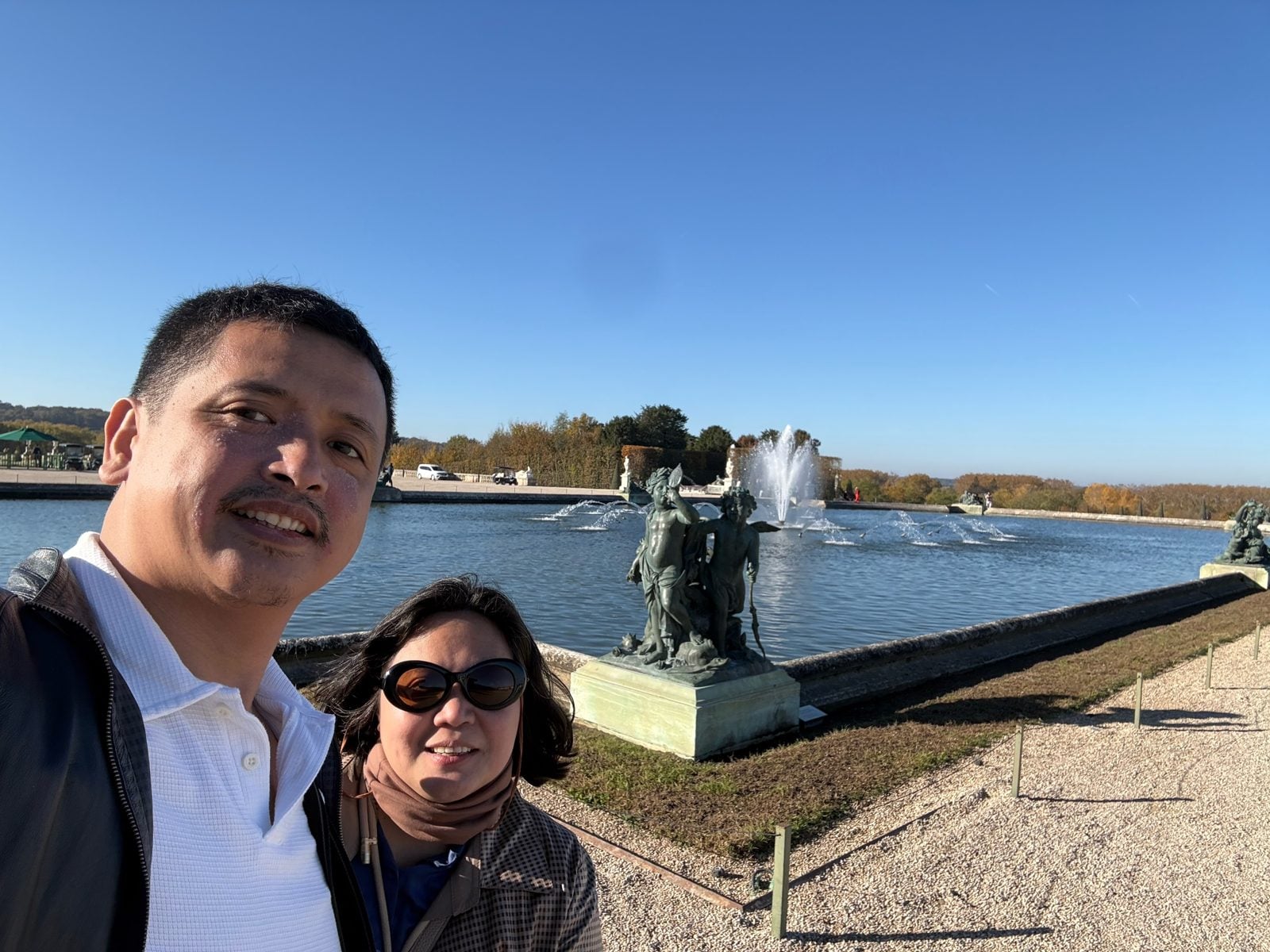
Right below the palace are big, calm pools that reflect the sky, with bronze statues along the edges. They look like giant mirrors laid on the ground. We took a lot of photos here.
Latona’s Fountain and the Grand Canal
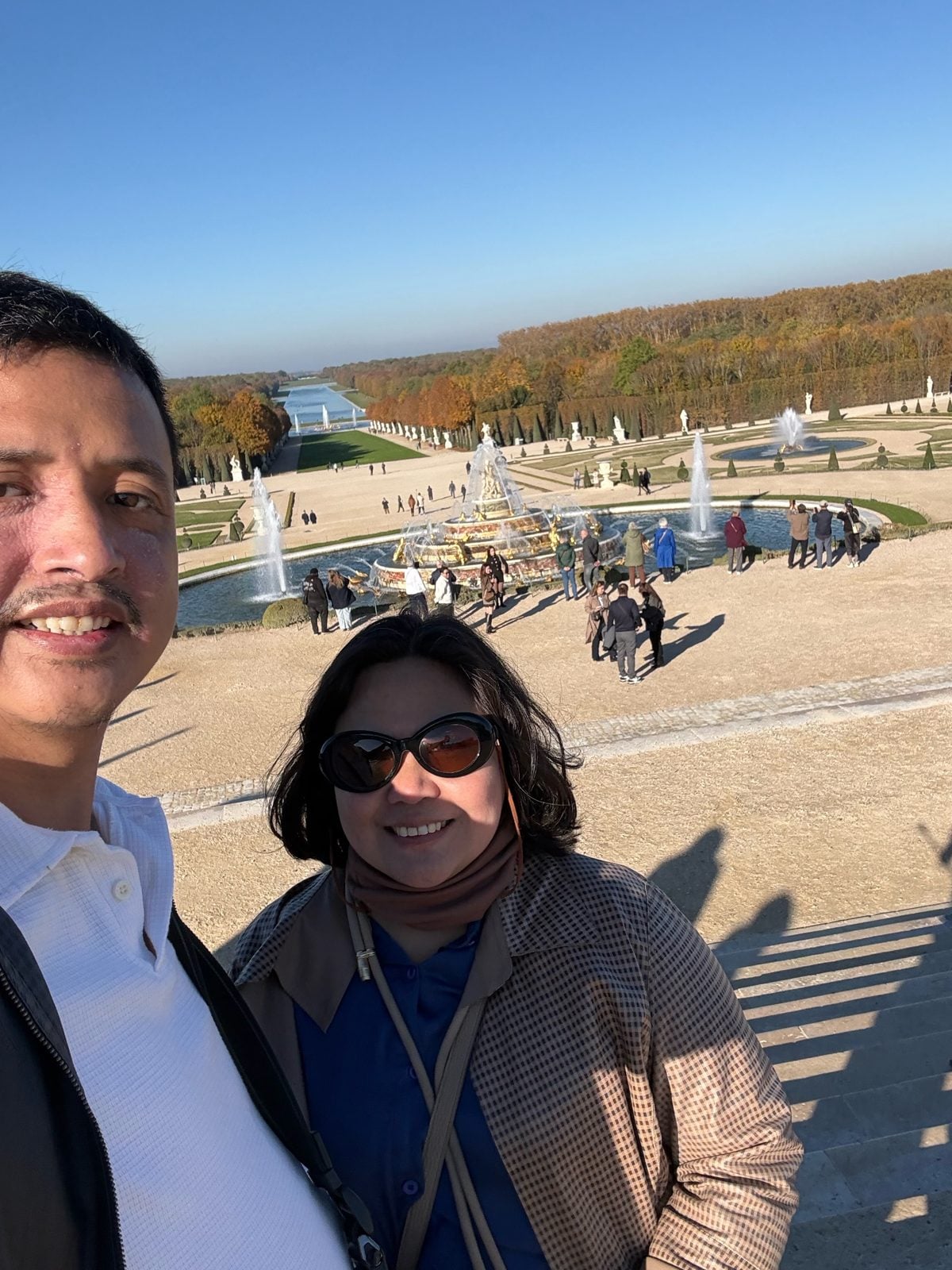
Look down the main path and you see Latona’s Fountain, with the Grand Canal stretching far behind it. Le Nôtre had the canal dug between 1668 and 1679. The story: Latona (Leto), mother of Apollo and Diana, asked Jupiter to punish some peasants who would not let her children drink. He turned them into frogs. That’s why there are frogs and half-frog people all over the fountain. The marble group of Latona and her children at the top was carved by the Marsy brothers in 1670. Louis XIV linked himself to Apollo, the sun god, which is why you’ll spot sun symbols everywhere.
The Orangery and the Swiss Pond
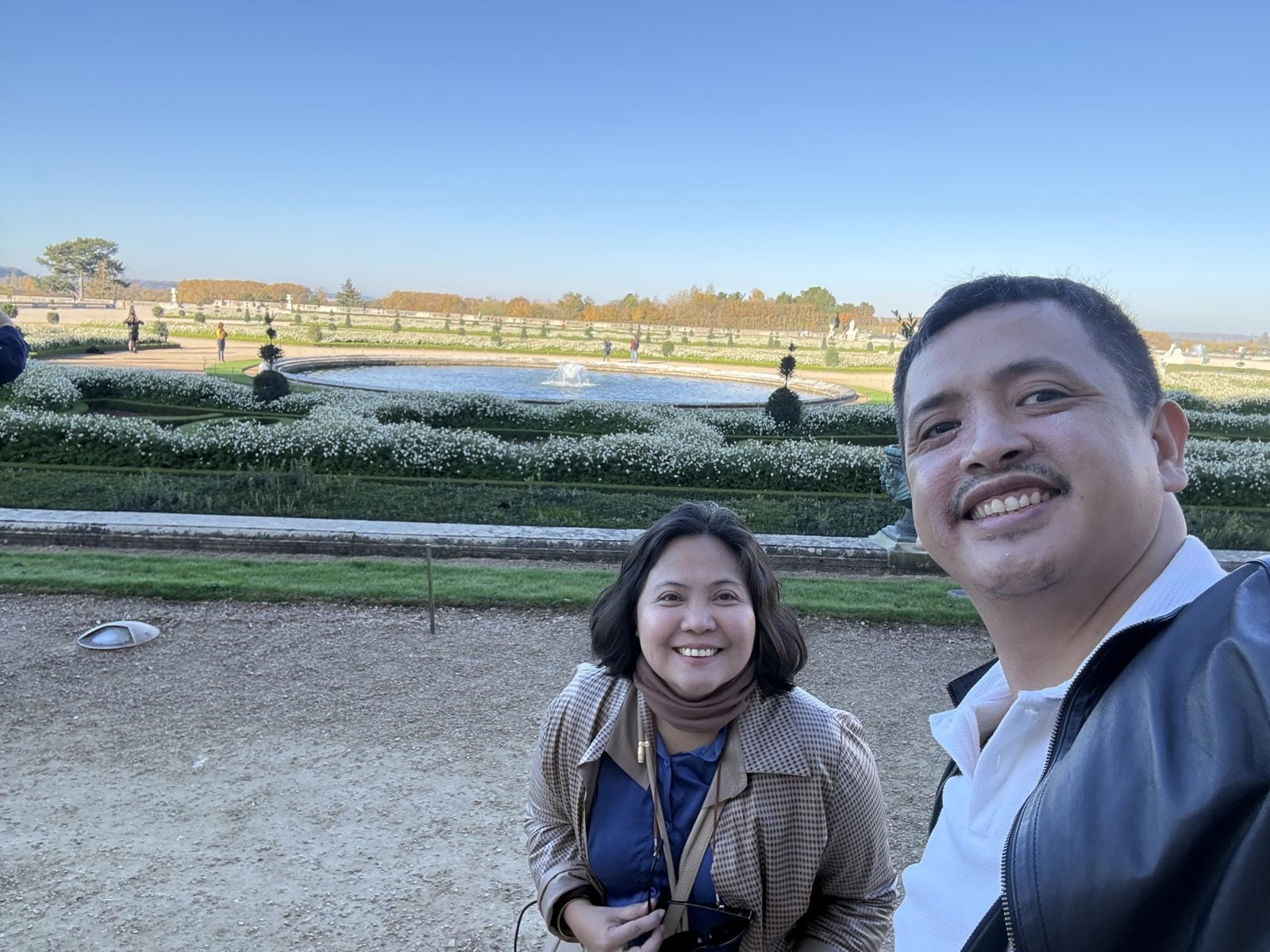
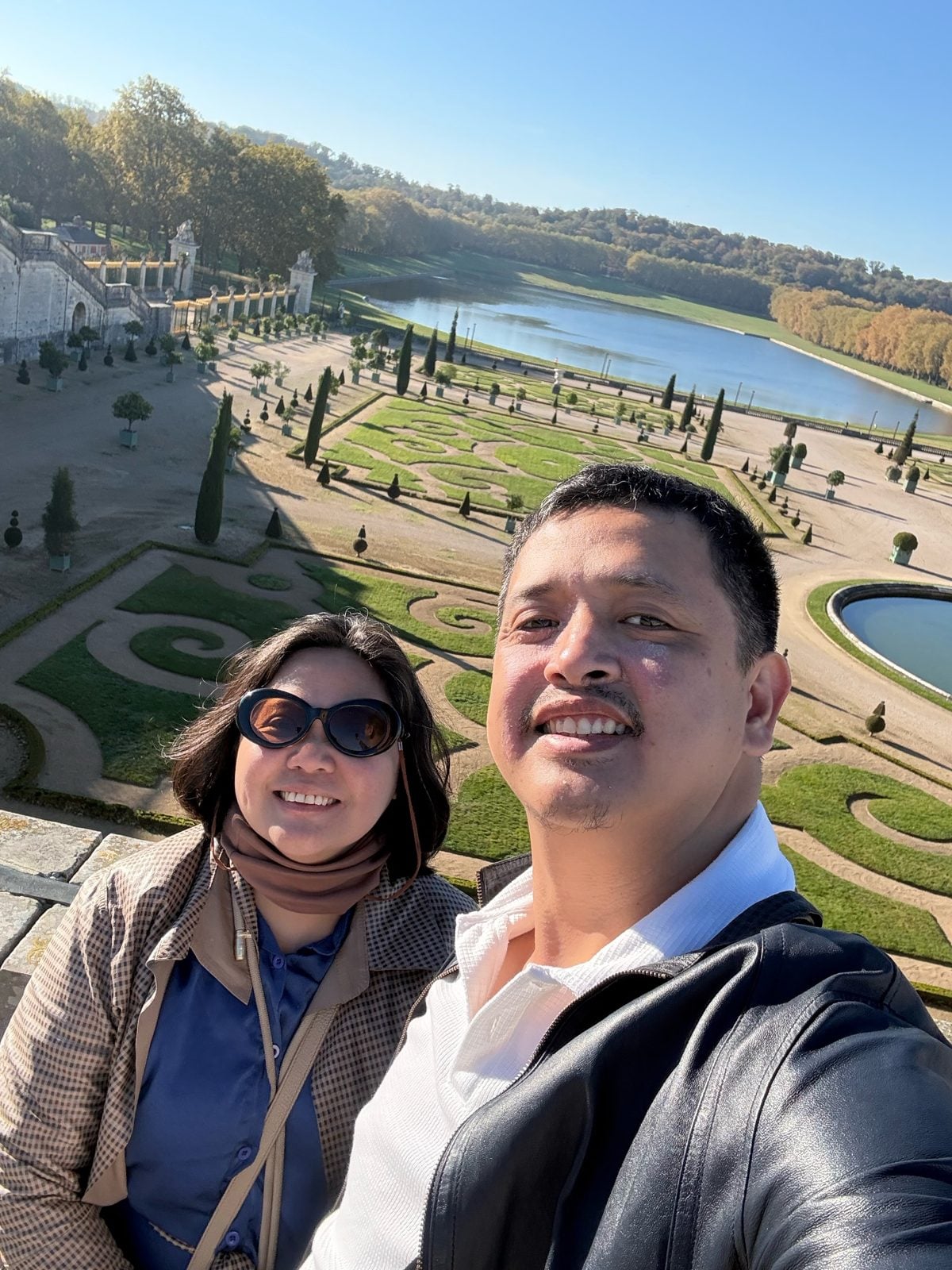
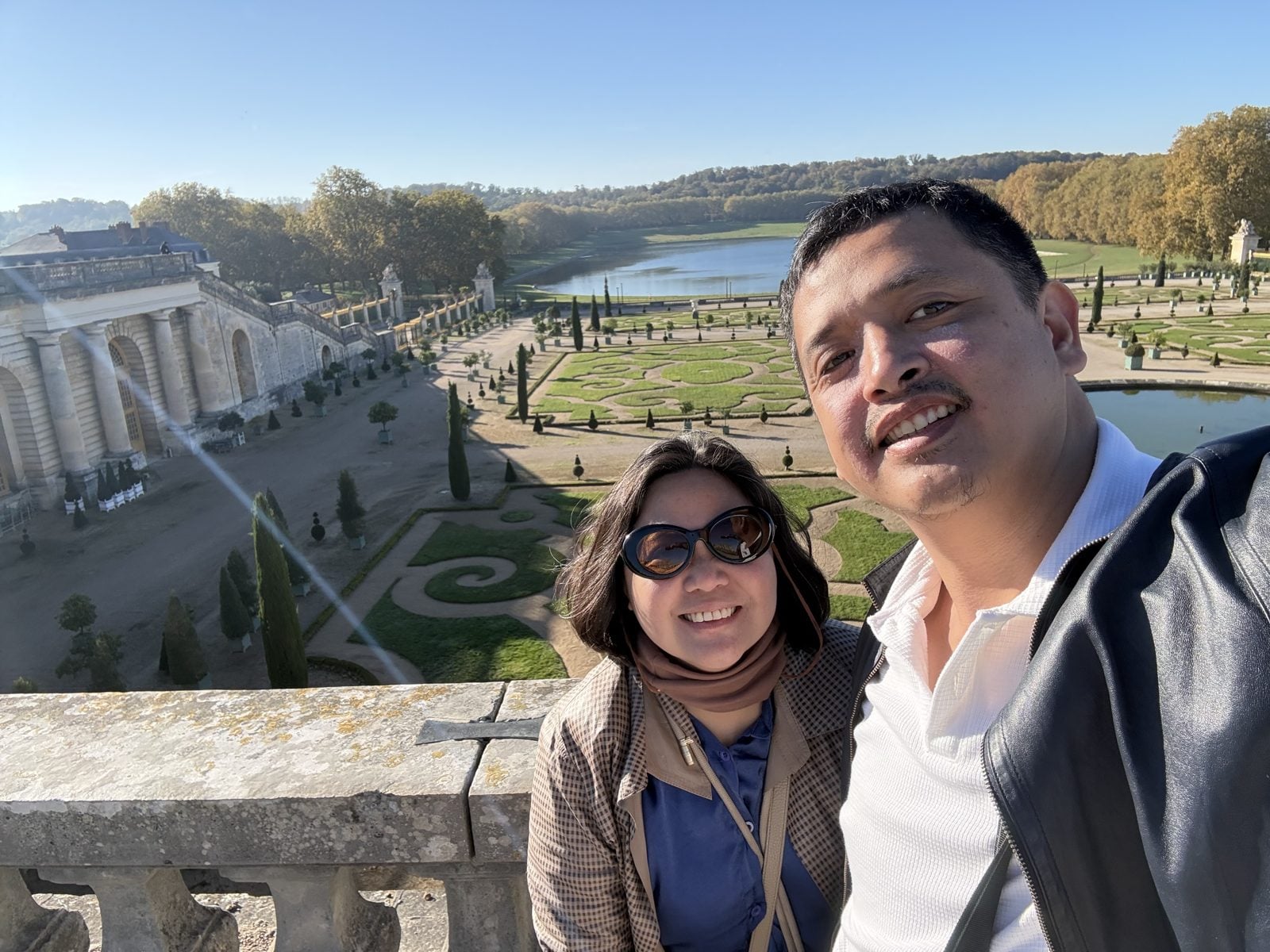
From the balustrade, you look down on the Orangery parterre with its swirly patterns. The Orangery itself was designed by Jules Hardouin-Mansart, and from May to October potted citrus, pomegranate and oleander trees are set out here. Beyond it lies the long Lake of the Swiss Guard. Fun fact: the lake replaced a marsh people called the "stinking pond". It was later enlarged by the Swiss Guards, which is how it got its name.
Dimple’s happy moment
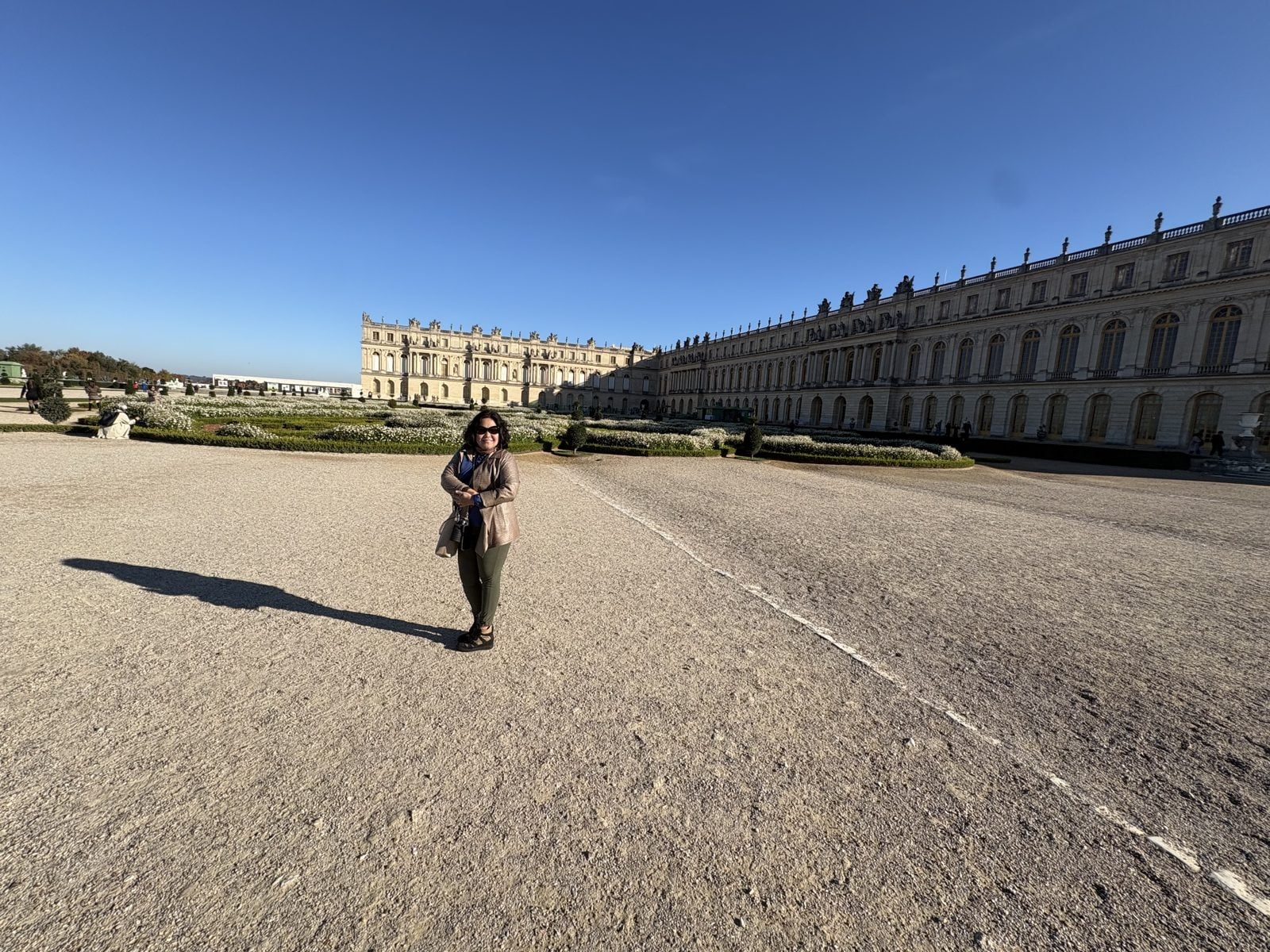
And then there’s this. Dimple, arms wide open, palace behind her, big smile. No caption needed. That’s Dimple when something takes her breath away, and these gardens did exactly that.
Inside the palace
We went back in through the Marble Courtyard, the oldest-looking part of the palace, with its red brick, gold trim and black-and-white marble floor. Tin made it into this one.
The painting galleries
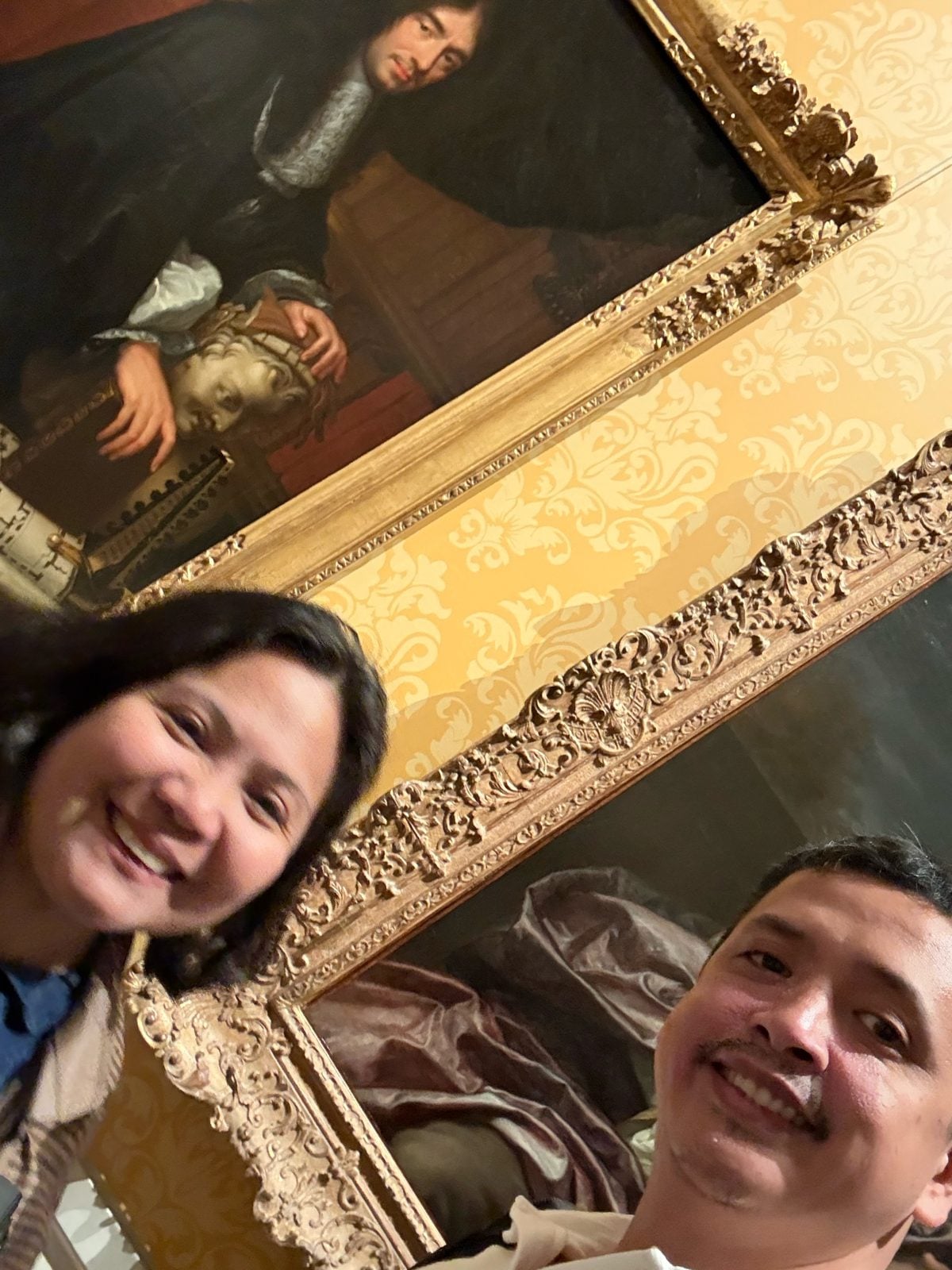
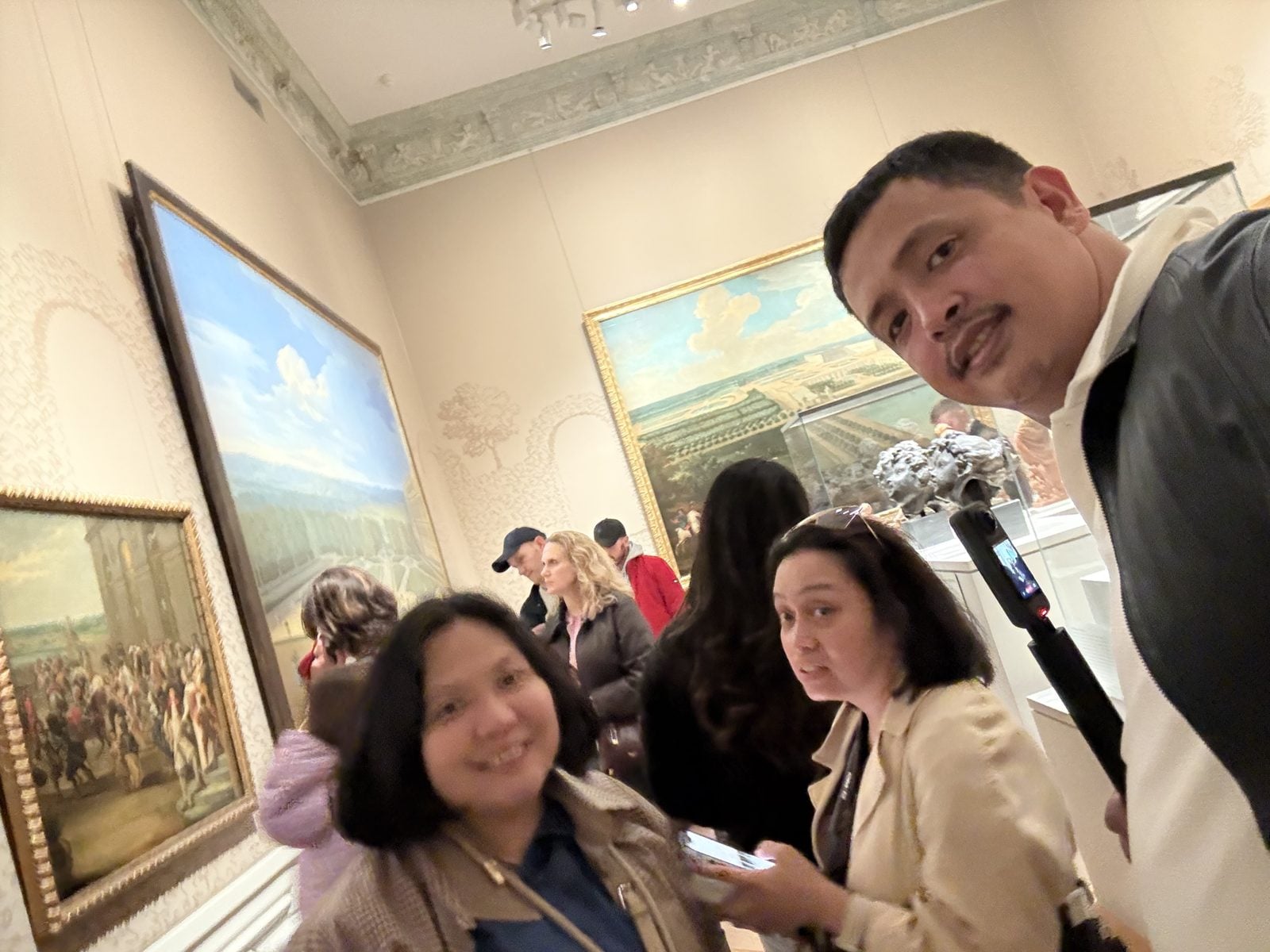
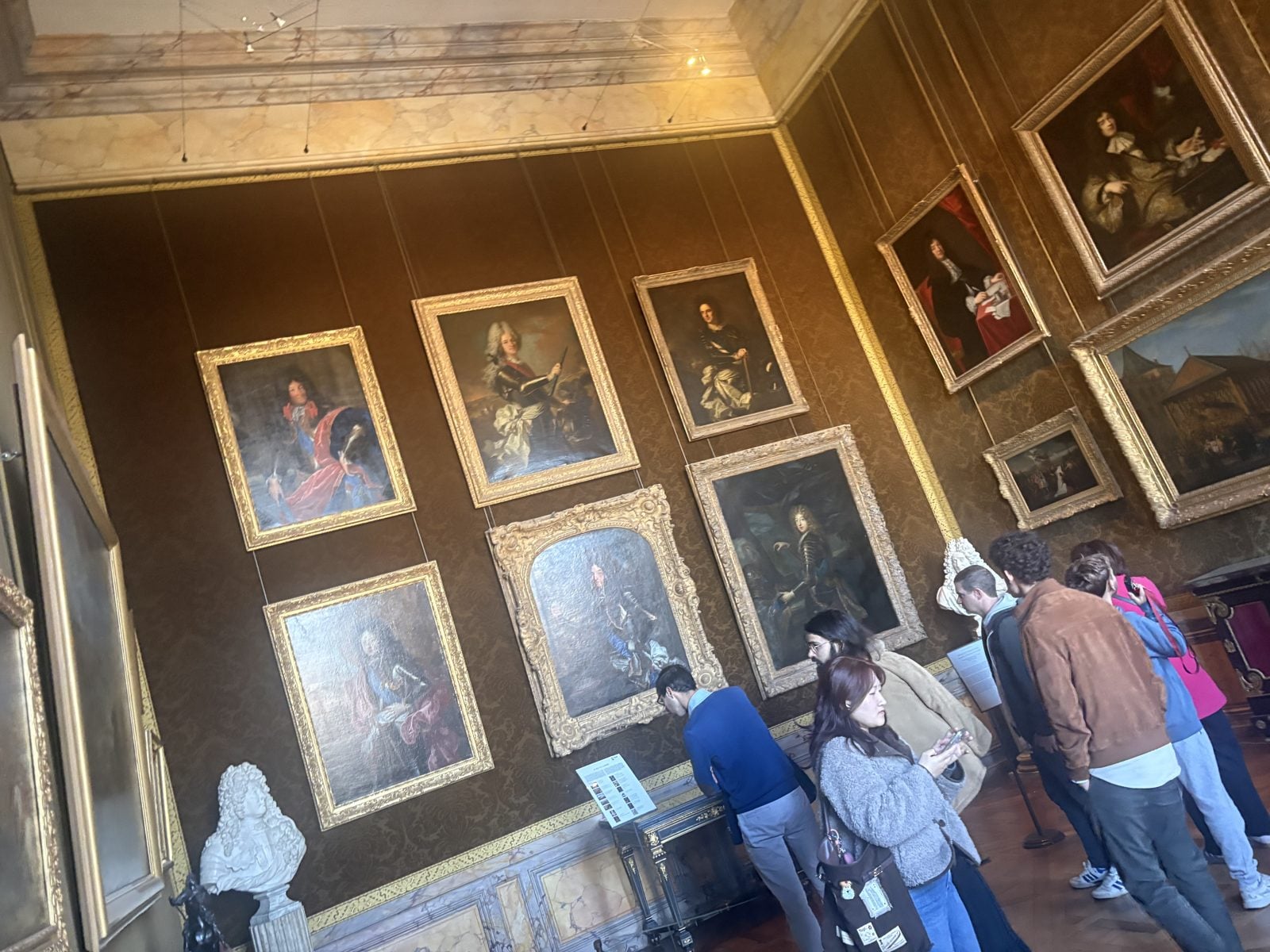
Inside, the walls are covered with huge paintings in heavy gold frames: royal portraits, battles and big historic scenes. We kept leaning in for selfies with kings. One of them shows Louis-Philippe, the last king to rule France, with his family.
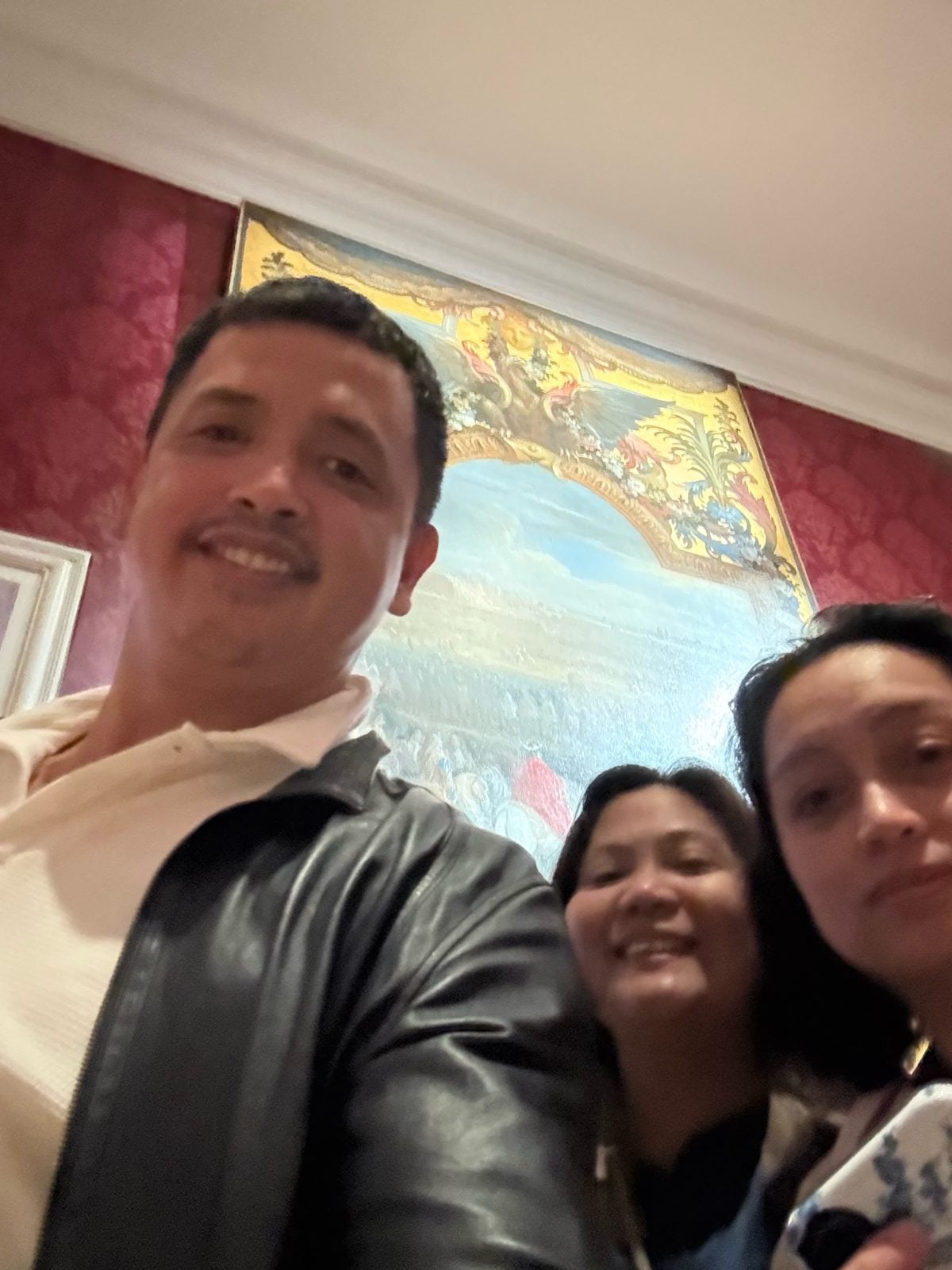
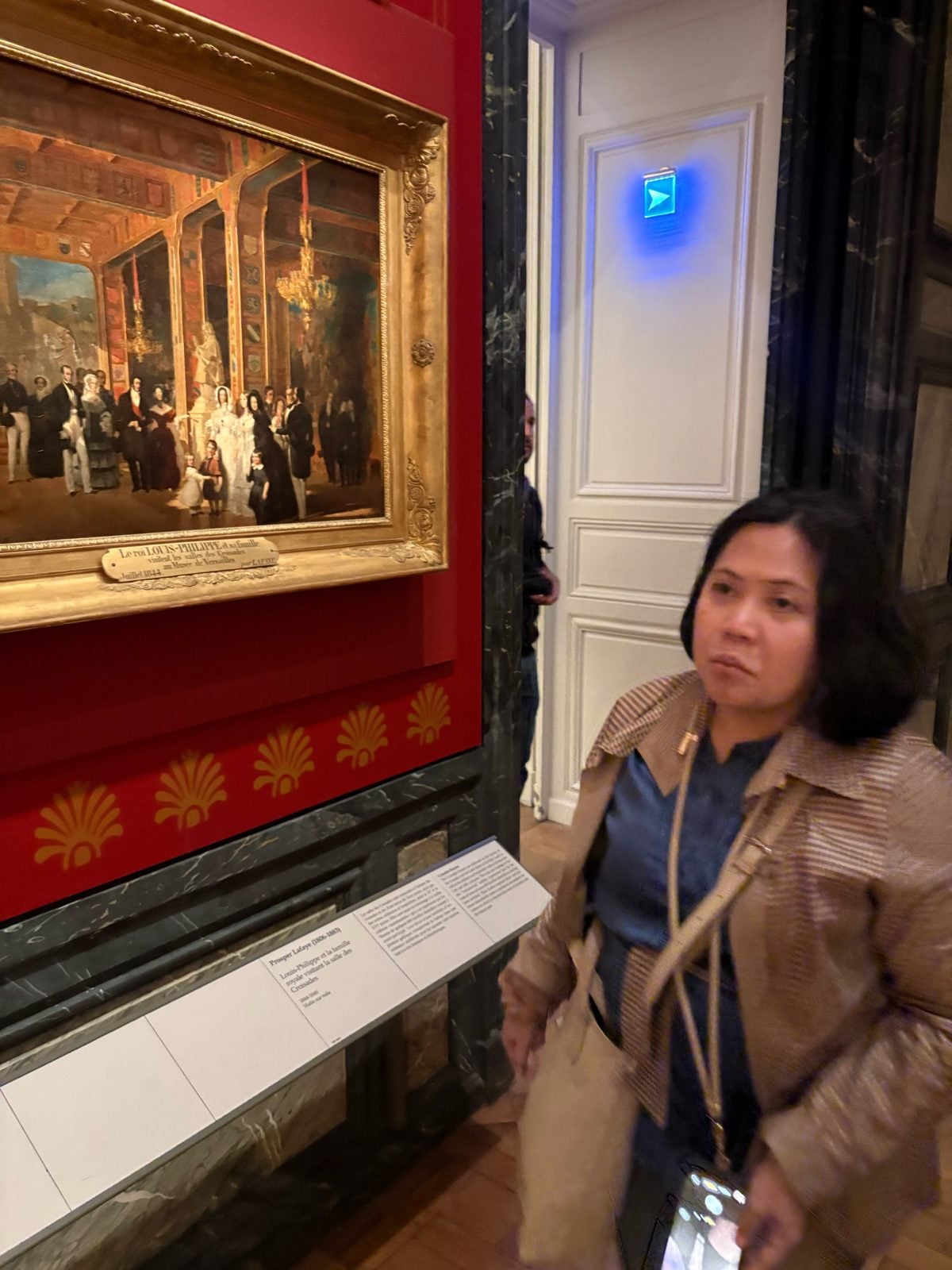
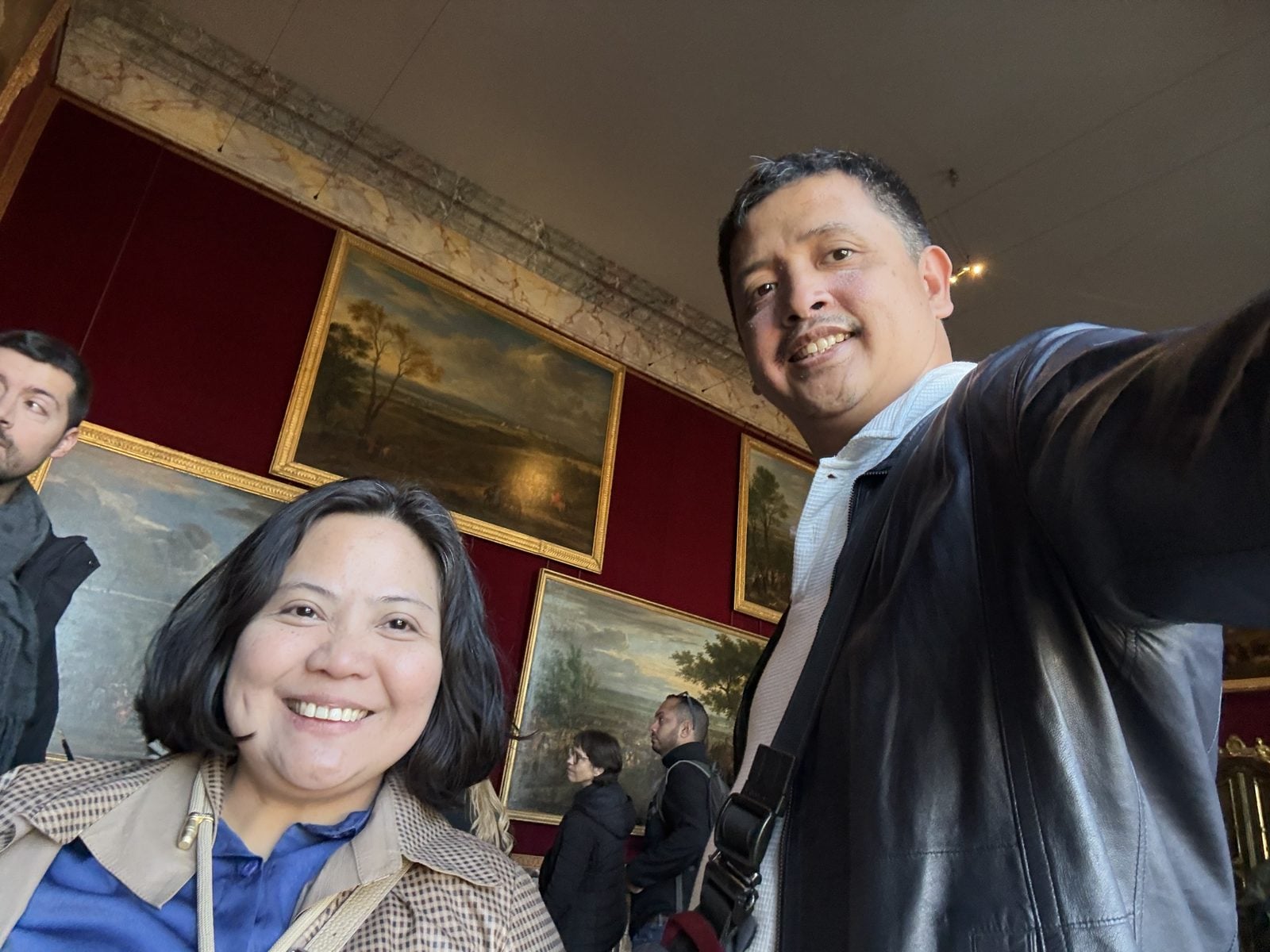
Look up!
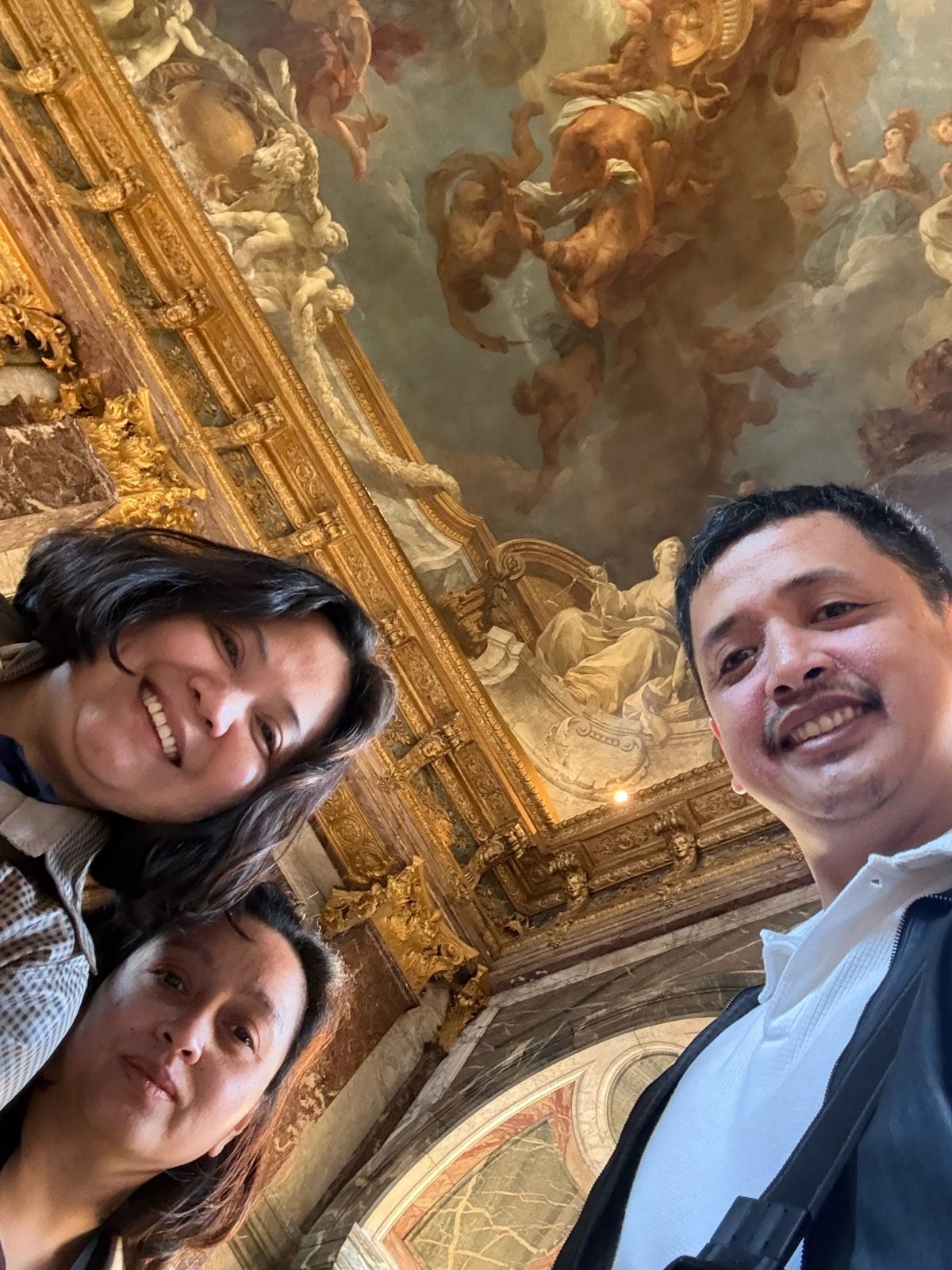
The ceilings are just as busy as the walls. Painted scenes, gold everywhere. Our necks got a workout.
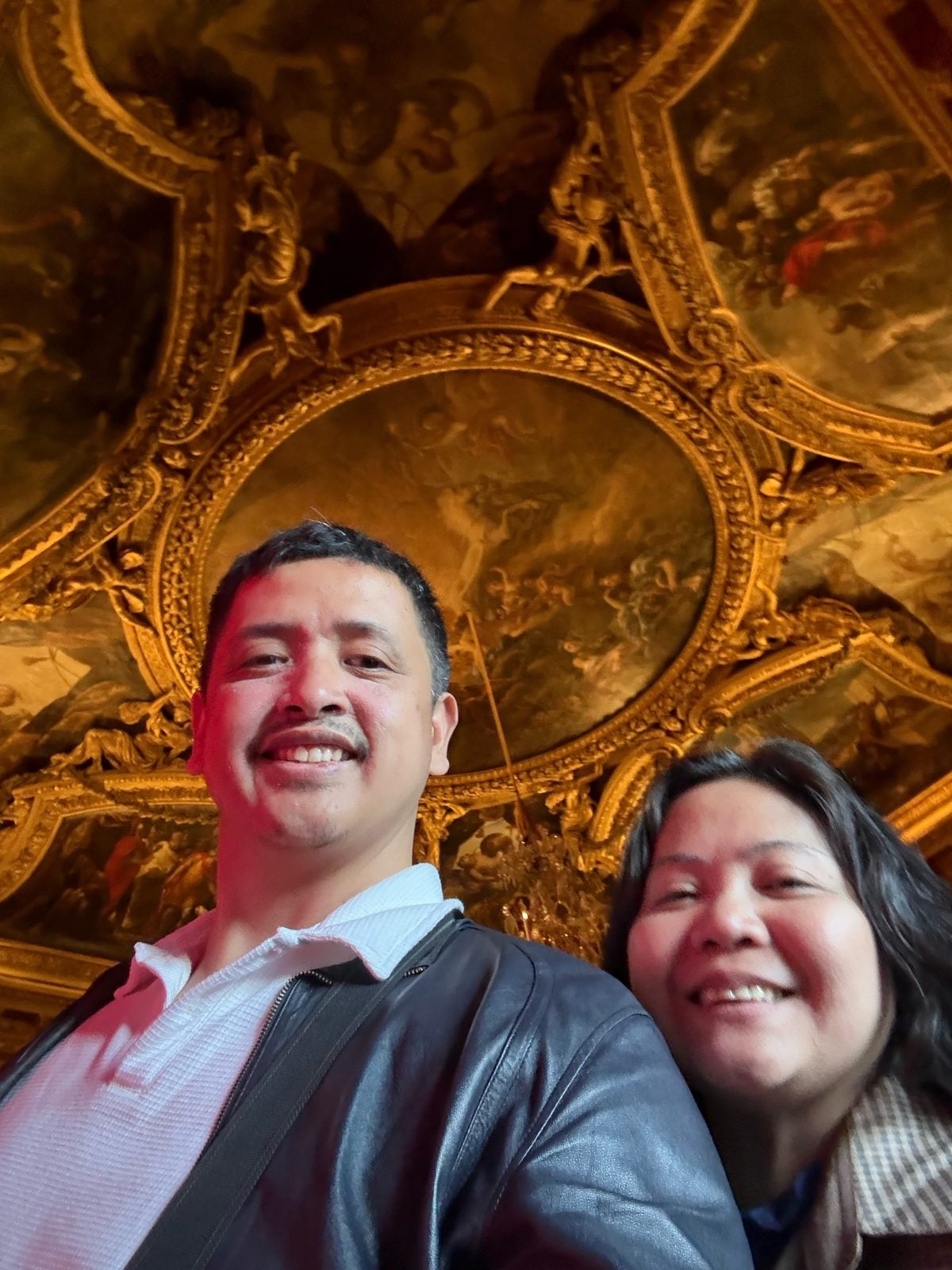
Silk walls, marble and a grand staircase
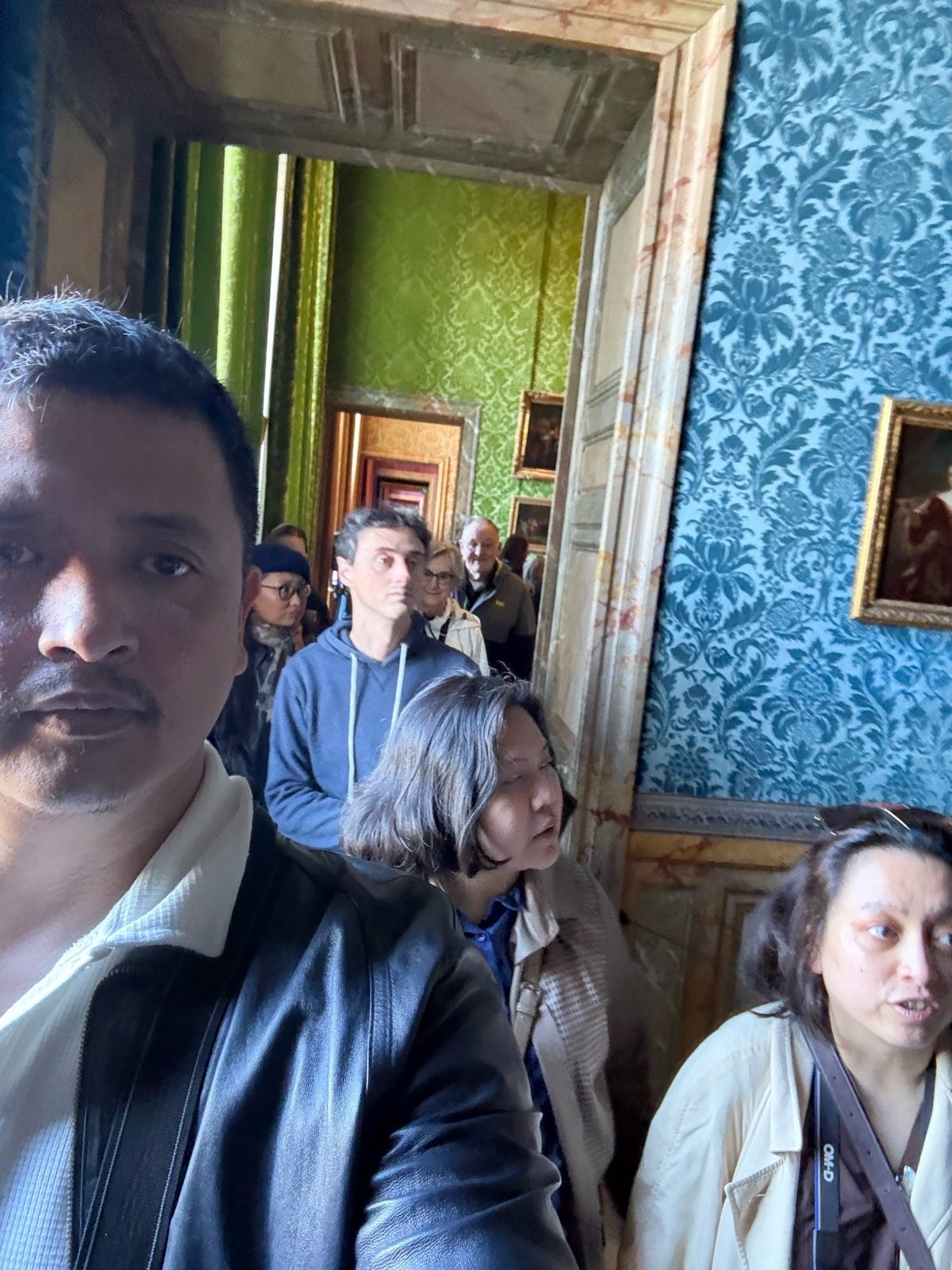
On the way, we climbed a grand staircase with a gilded lantern hanging in the middle. Then came room after room of rich colour: walls covered in blue and green silk, gold frames everywhere, and marble salons that felt made for a king. Dimple had her phone up, filming, in nearly every room. It was busy, and we were moving fast, but every doorway made us slow down for one more look.

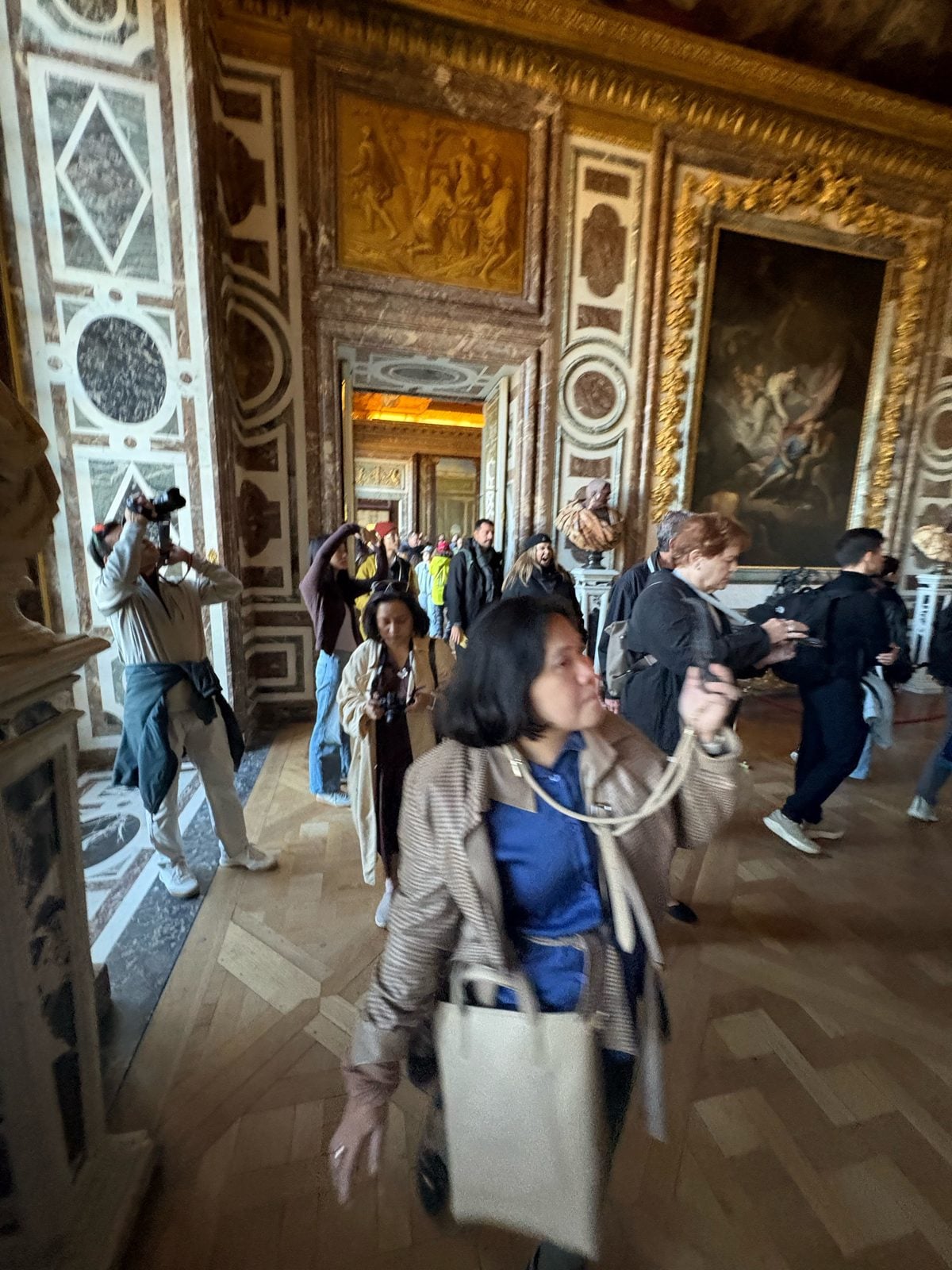
The Hall of Mirrors
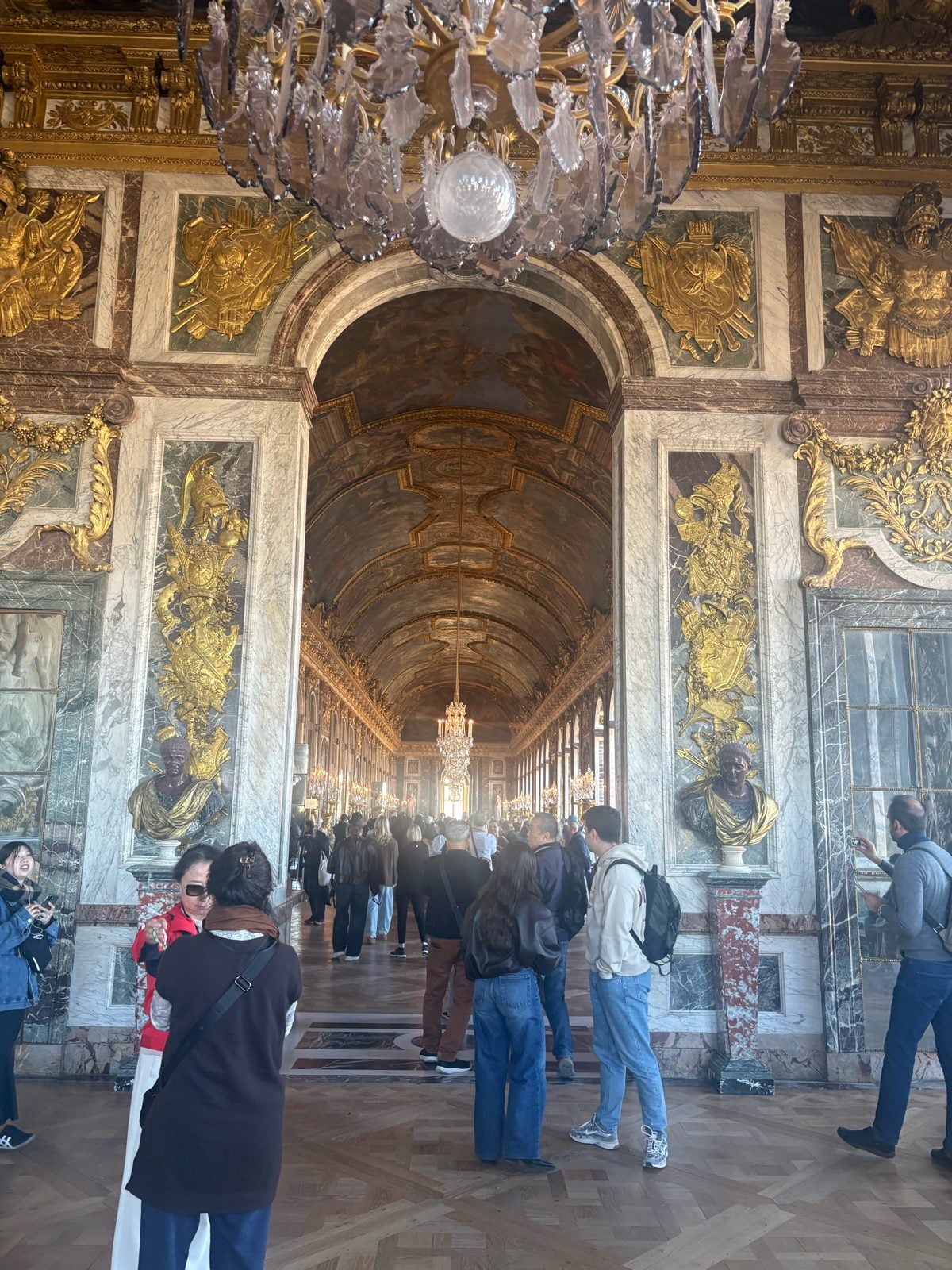
This is the room everyone comes for, and it lives up to the hype. Jules Hardouin-Mansart built it between 1678 and 1684. It is 73 metres long. On one side are 17 big windows over the gardens; on the other, 17 arches covered with 357 mirrors. Back then, mirrors were a luxury, and Venice controlled the market. Filling a hall with French-made mirrors was Louis XIV’s way of saying, "We can do that too, and bigger."
Look up and you’ll see Charles Le Brun’s painted ceiling, which tells the story of Louis XIV’s reign as a winning hero. Add the chandeliers glittering overhead in our photos, and it’s sparkle overload.
The history bit: This hall isn’t just pretty. The Treaty of Versailles, which ended the First World War, was signed right here on 28 June 1919. It was the same hall where the German Empire had been proclaimed in 1871. And French presidents still welcome official guests here today.
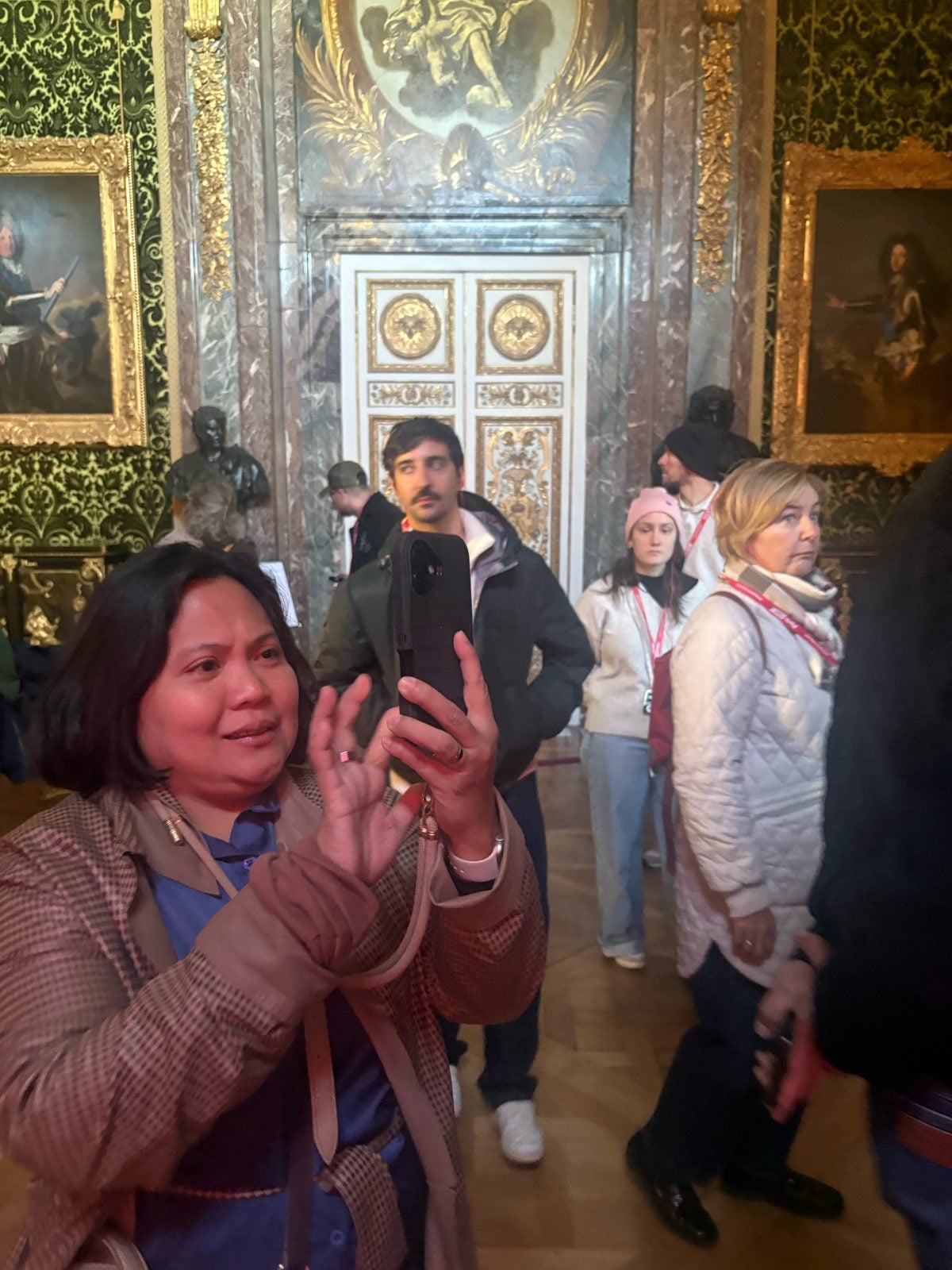
Tin had her camera out the whole time, and honestly, who could blame her? We squeezed through the crowd, grabbed our shots and kept moving. It was the quickest walk through history I’ve ever done.
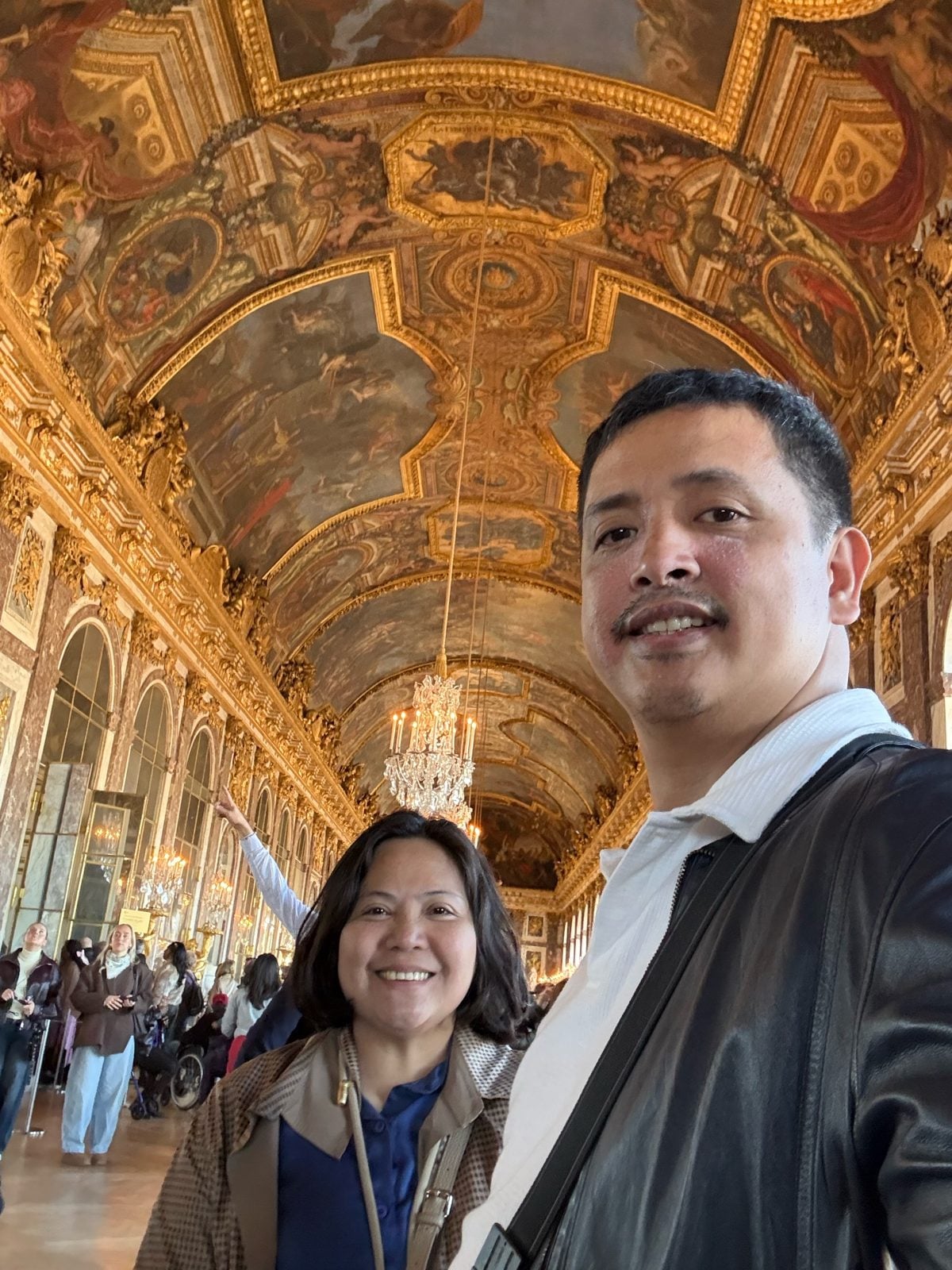
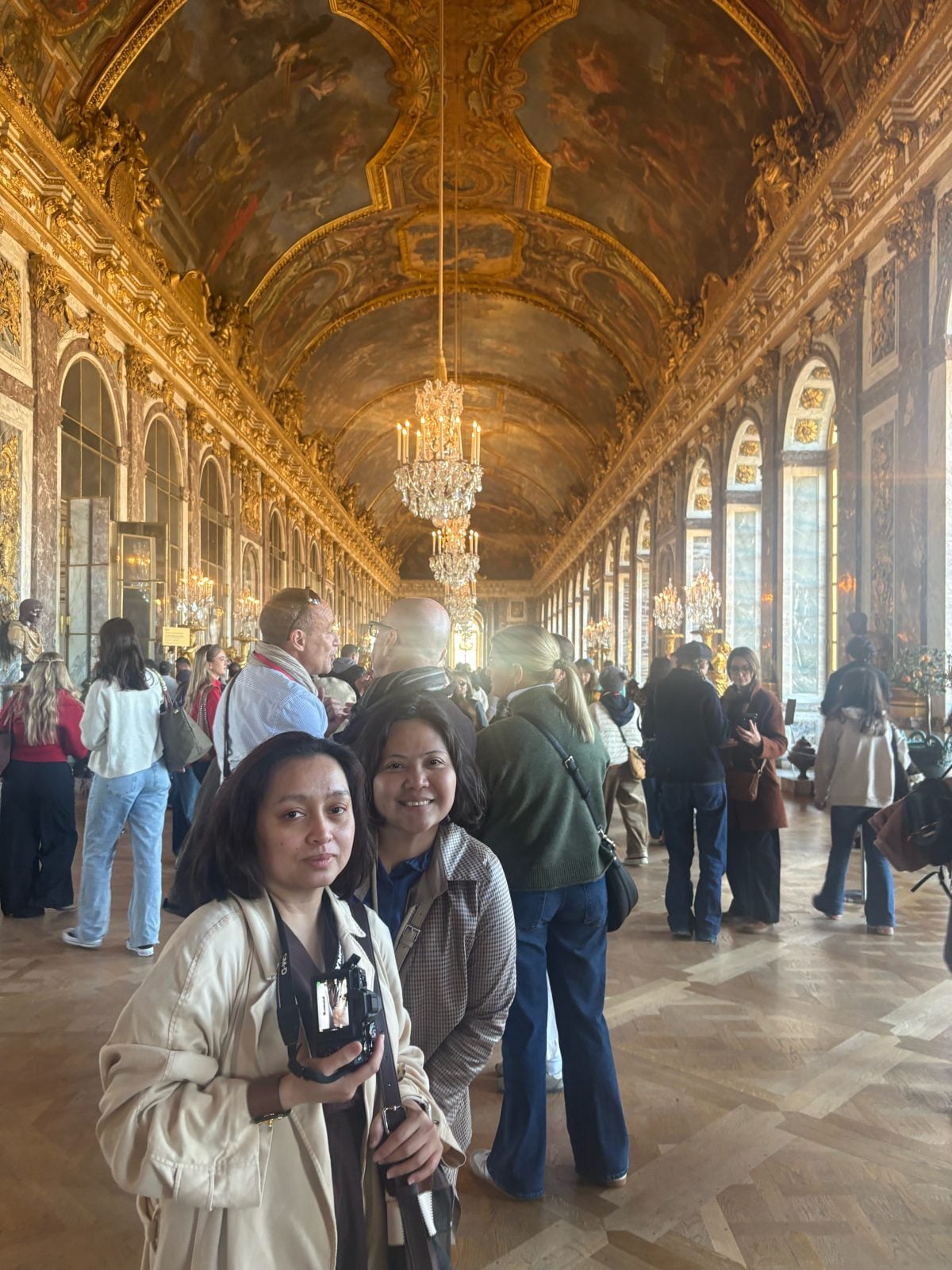
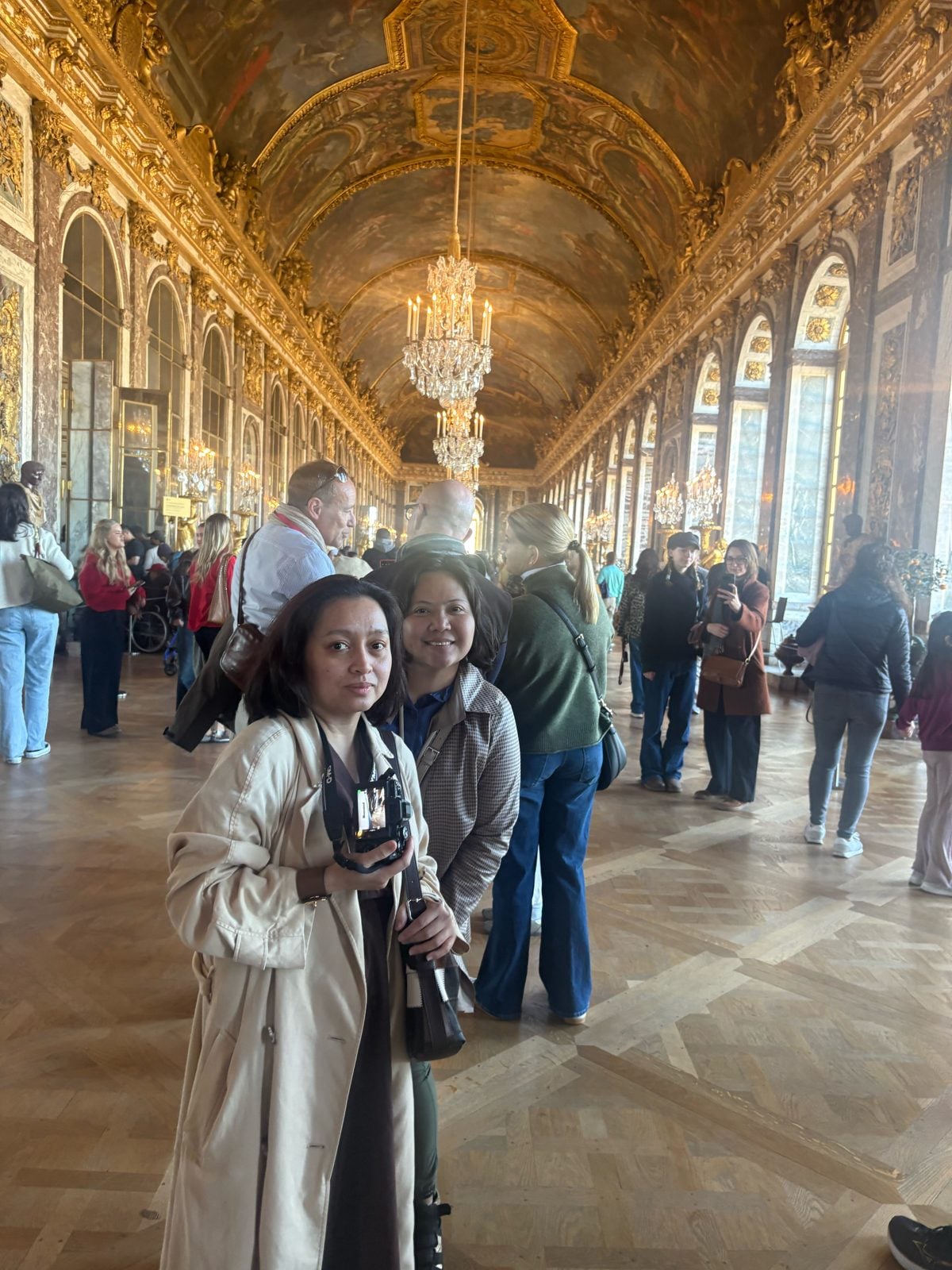
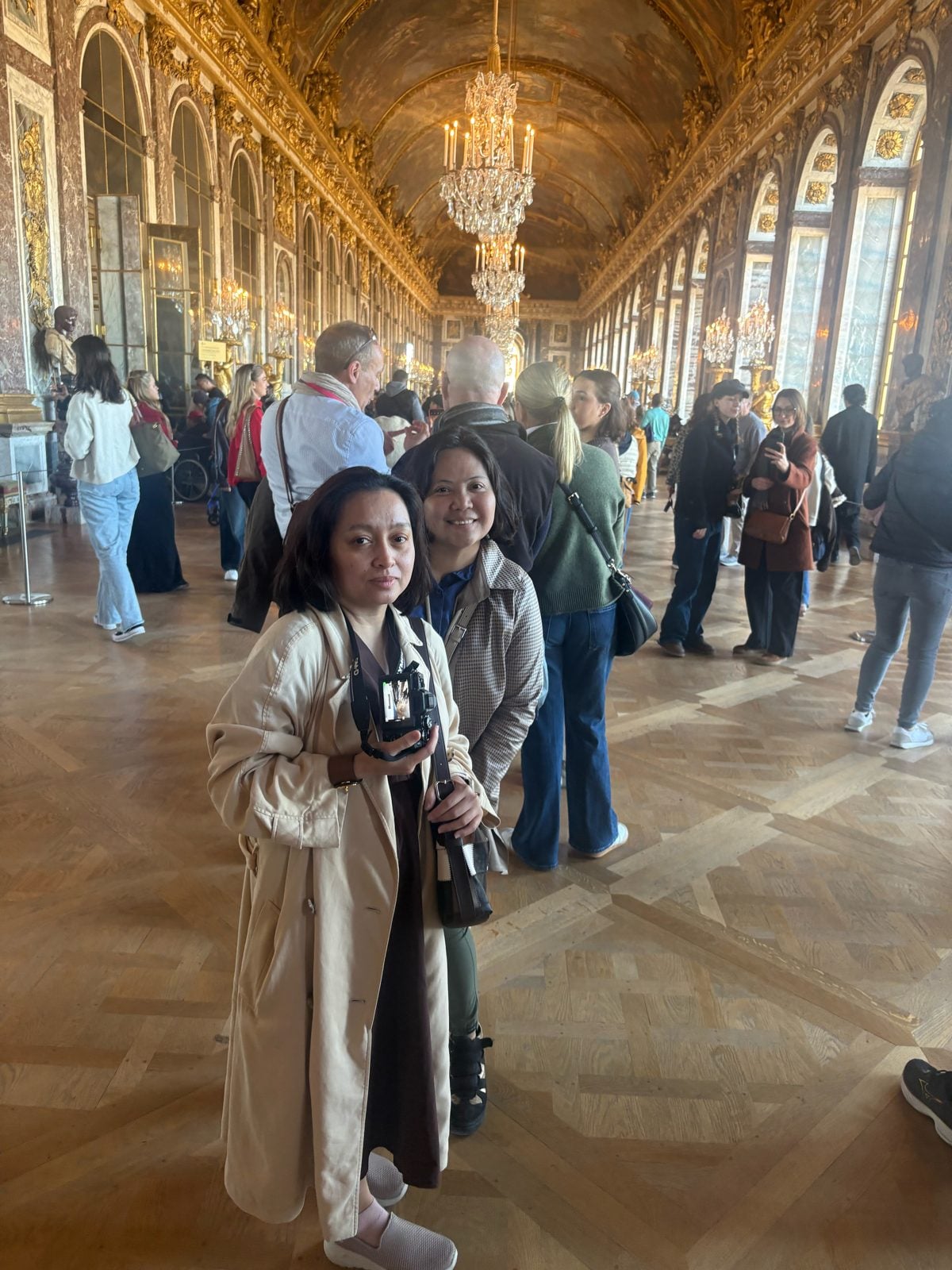
My favourite was the Hall of Mirrors. Walking where history was made, with Dimple and Tin snapping away beside me, was the moment it all sank in. If I could go back, I’d give the gardens a whole afternoon and just wander.
After Versailles, we rounded off the day with a panoramic tour of Paris.
Planning your Versailles visit
We went with a tour group, so someone else handled the logistics. If you’re going on your own, here’s what I’d want to know.
Getting there from Paris
- RER C to Versailles Château Rive Gauche is the easiest option. It’s the closest station, about a 10-minute walk to the palace. The Versailles tourist office puts the ride from central Paris at about 30-40 minutes.
- SNCF trains also run from Gare Montparnasse to Versailles Chantiers, and from Gare Saint-Lazare to Versailles Rive Droite. Both stations are a longer walk.
- Bus 171 runs from Pont de Sèvres (Metro line 9) to the palace.
- Buy your return ticket in advance. The Rive Gauche station gets very busy on the way back. A Navigo, Mobilis or Paris Visite pass also works.
Tickets: which one to buy
The Passport is the ticket most people want. It’s the only ticket that includes the palace with a timed entry, plus the gardens and the Estate of Trianon. The official site lists these options:
- Passport: the whole estate, with a time slot for the palace. €25 in low season, €35 in high season.
- Late-entry Passport: cheaper, but you get in late in the day and can’t see everything. €18 in low season, €28 in high season.
- Estate of Trianon only: Marie-Antoinette’s side of the estate, no palace. €15.
- Gardens on Musical Fountains or Musical Gardens days: €15. On other days, the gardens are free.
A few things to know:
- Buy online. Entry close to your booked slot is only guaranteed for online tickets, and you can show them on your phone.
- EEA residents get €3 off with proof of ID or residency.
- Free entry applies to under-18s, EU/EEA residents under 26, and some other groups. You still need to book a time slot and bring ID.
- Paris Museum Pass holders still need to get a free Passport ticket for their slot.
- No refunds or exchanges, so pick your day carefully.
Prices and conditions change, so always check the official Château de Versailles tickets page before you go.
How the visit works
- Entrance: walk through the golden gates into the Main Courtyard, then head to entrance A. No ticket yet? Go to the ticket office in the South Ministers’ Wing, on the left of the courtyard, first.
- Security: every bag is checked, and large bags and suitcases aren’t allowed. Travel light.
- Leave at home: food, drinks, tripods, selfie sticks, knives and scissors. No flash photos inside.
- Audio guide: download the free official app before you go. It includes the audio guide.
- Opening hours: check the official practical information page for opening hours before you go.
Beyond the palace
- Trianon and Marie-Antoinette’s Estate: the Grand Trianon, Petit Trianon and the Queen’s Hamlet are a walk across the gardens, or a ride on the little train. No time slot is needed.
- The Park is free to walk or bike around.
- Avoid the busiest days if you can. The château says Tuesdays and weekends are among the most crowded.
We didn’t make it to the Trianon or Marie-Antoinette’s Estate. Our tour group was already heading back, so that’s on our list for next time.
Tips for visiting Versailles
- Set aside at least half a day. This is my number one tip. Our tour group had us out by late morning, and it felt way too rushed. The palace and the gardens each deserve a proper, slow wander.
- Book ahead on the official site and pick a time slot for the Palace: chateauversailles.fr. Lines at the gate can be long.
- Don’t go on a Monday. The palace is closed.
- Want the fountains running? They only run on show days, so check the calendar on the official site.
- Go early. The morning light on the gates and courtyard is worth it (see our photos).
- Wear comfy shoes. The courtyard is cobbled and the gardens are huge.
- Look up in every room. The ceilings are half the show.
- Be patient in the Hall of Mirrors. It gets busy. Wait a moment and a gap opens for your photo.
Versailles FAQ
Yes. Between the golden gates, the gardens and the Hall of Mirrors, it’s one of the best day trips from Paris, even if, like us, you only get a quick morning there.
Louis XIV turned his father’s hunting lodge into a palace to show his power. In 1682 he moved the court and government there.
Royal balls and ambassador visits in the king’s time, and on 28 June 1919, the signing of the Treaty of Versailles that ended the First World War.
André Le Nôtre, starting in 1661, with Louis XIV checking the details himself.
On the official website, chateauversailles.fr.