










Start here
Paris public transport looks like a bowl of colourful spaghetti on the map. It’s actually friendly once you know three things: which ticket you need, how to tap in, and which direction your train is heading.
This guide is written for first-timers. Every bit of jargon gets explained the first time it shows up. Prices are the 2026 fares, which have been in force since 1 January 2026.
The short version of how we did it: we used the official Île-de-France Mobilités app (IDFM, the region’s transport authority) with a Navigo pass in Apple Wallet. We tapped the iPhone on the reader, topped up in the app, and got on with our croissants.
If you only remember 5 things
- A metro/RER ticket costs €2.55 and lets you change between metro and RER lines for 2 hours. It doesn’t work on buses.
- Buses and trams use a different ticket (€2.05), and it doesn’t get you onto the metro.
- The airports need their own ticket (€14). A normal metro ticket gets refused at the airport stations.
- Paper tickets aren’t sold anymore. Use a phone or a Navigo card.
- Zip your bag and keep your wallet in an inside pocket. Pickpockets love a distracted tourist.
The words you’ll keep seeing
- Metro: the underground train inside the city. There are 16 lines and 308 stations, with about 2 minutes between stations.
- RER: short for the regional express trains. They cross Paris and run out to the suburbs and the airports. RER B is the one to Charles de Gaulle (CDG).
- Transilien: suburban trains run by SNCF (the French railway) from the big Paris stations. They use the same ticket as the metro and RER.
- Bus and tram: street-level transport. They have their own ticket.
- Navigo: the name of the region’s travel card. It comes as a plastic card or as a digital card on your phone. You load tickets or passes onto it.
- Zones: rings around Paris, from 1 in the centre out to 5. Since 1 January 2025 zones don’t matter for single tickets: one price covers the whole region. They only matter for weekly and monthly passes.
- t+: the old name for the classic single ticket. It was replaced on 1 January 2025, but you’ll still see “t+” in older blogs and videos. If you read “buy a t+”, read “buy a Ticket Métro-Train-RER”.
Getting around: what’s what
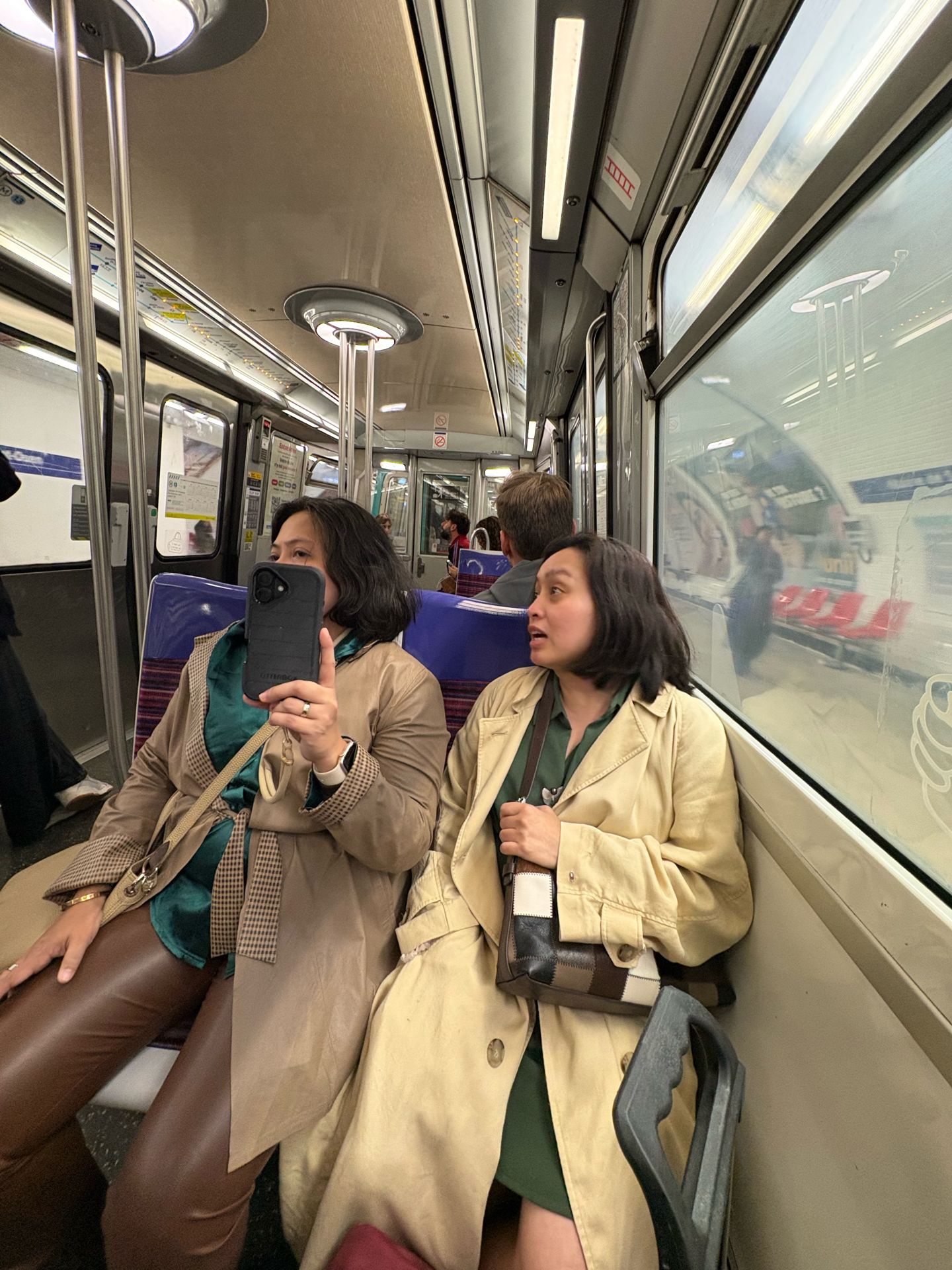
Metro
The workhorse. It runs from about 5:30 am to about 1:15 am, and until about 2:15 am on Friday and Saturday nights and the night before public holidays.
RER
Bigger, faster trains with fewer stops. They’re handy for crossing the city and essential for CDG. Hours vary a bit by source, so plan on roughly 5:30 am to about 1:20 am and check the line before an early start.
Transilien
Suburban trains from the main stations, on the same Métro-Train-RER ticket. Hours vary by line, so check before you go.
Buses and trams
They’re great for seeing the city as you go. Use the Ticket Bus-Tram, which allows bus and tram changes for 1 hour 30 minutes. Hours vary by line, so check the line page on ratp.fr.
All Paris buses and all trams are accessible, which is good news for strollers and suitcases too.
Tickets and passes, in plain words
Single tickets
| Ticket | Full fare | Reduced | What it covers |
|---|---|---|---|
| Ticket Métro-Train-RER | €2.55 | €1.30 | Metro, RER, trains and the Montmartre funicular, all zones, with metro/RER changes for 2 h. Not airport stations, not buses. |
| Ticket Bus-Tram | €2.05 | €1.05 | Bus, tram, Noctilien night buses and cable car C1, with bus/tram changes for 1 h 30. Not the metro. |
| Ticket bought on the bus | €2.50 (€2.55 by SMS or bank card) | – | That one bus ride. |
Reduced fares apply to children aged 4 to 9, among others.
Navigo Easy (the €2 card)
This is a plastic card for €2 that you load tickets onto.
- It’s anonymous, and you can lend it to someone else, but only one person can use it per trip. Everyone in your group needs their own.
- It holds up to 20 tickets of one type, plus a day pass, an airport ticket or a Paris Visite.
- It can’t hold full-fare and reduced-fare tickets at the same time.
Navigo Jour (day pass)
€12.30, covering all zones from midnight to midnight. Airports aren’t included.
Navigo Semaine and Mois (weekly and monthly)
- Semaine: €32.40 for all zones. It runs Monday to Sunday, a calendar week, not 7 days from when you buy it. So a Thursday arrival gets you only four days. It covers all modes, airports included, except Orlyval.
- Mois: €90.80 for all zones, from the 1st to the last day of the month.
- Cheaper versions for fewer zones exist (from €30.40), and this is the one place zones still matter.
- On a plastic card, visitors use the Navigo Découverte card: €5, with your name on it and an ID photo (3 × 2.5 cm). On a phone, you don’t need the photo card.
Paris Visite (tourist pass)
| Days | Adult | Child (4–9) |
|---|---|---|
| 1 | €30.60 | €15.30 |
| 2 | €45.40 | €22.70 |
| 3 | €63.80 | €31.90 |
| 5 | €78.00 | €39.00 |
It covers zones 1 to 5, including both airports, Orlyval, Disneyland and Versailles. It’s personal, so write your name on the Navigo Easy card.
Navigo Liberté+ (pay after you ride)
This is €2.04 per metro/RER trip, with a daily cap of €12.30, billed the next month by direct debit. It needs an IDFM account and a SEPA (European) bank account. For most visitors it’s not practical, so we’ve only mentioned it.
Tapping a bank card
This is a backup option, not a bargain. It costs €3.35 per metro or RER trip, with no free changes. It costs €2.55 on most buses in Paris and the inner suburbs. Handy in a pinch, but pricier.
Our setup: the IDFM app and Navigo in Apple Wallet
This is what we used and what we’d recommend if you have an iPhone.

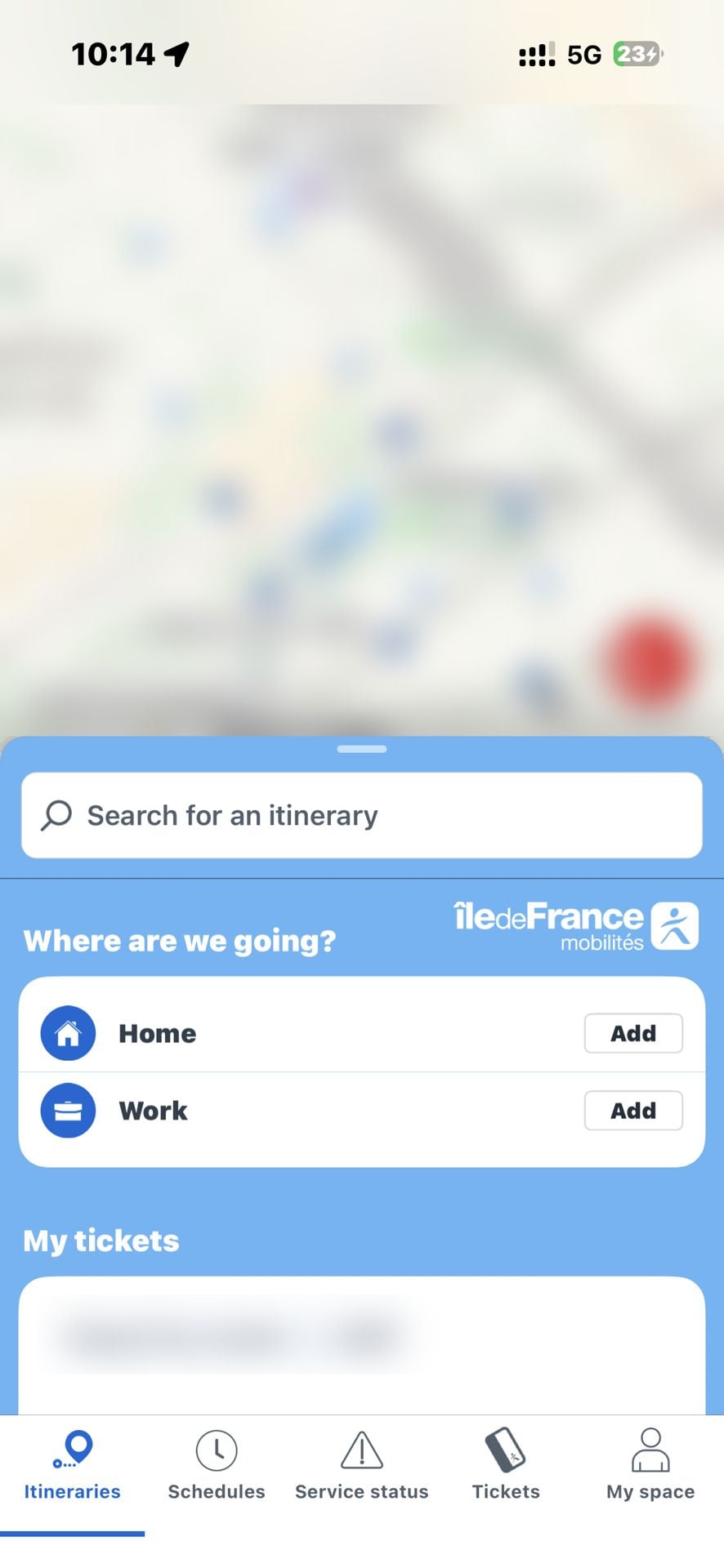
We have a digital Navigo card sitting in Apple Wallet. We buy tickets in the IDFM app (or right in Wallet), and at the gate we just hold the phone near the reader. There’s no fumbling for a card, and no paper ticket to lose at the bottom of a bag.
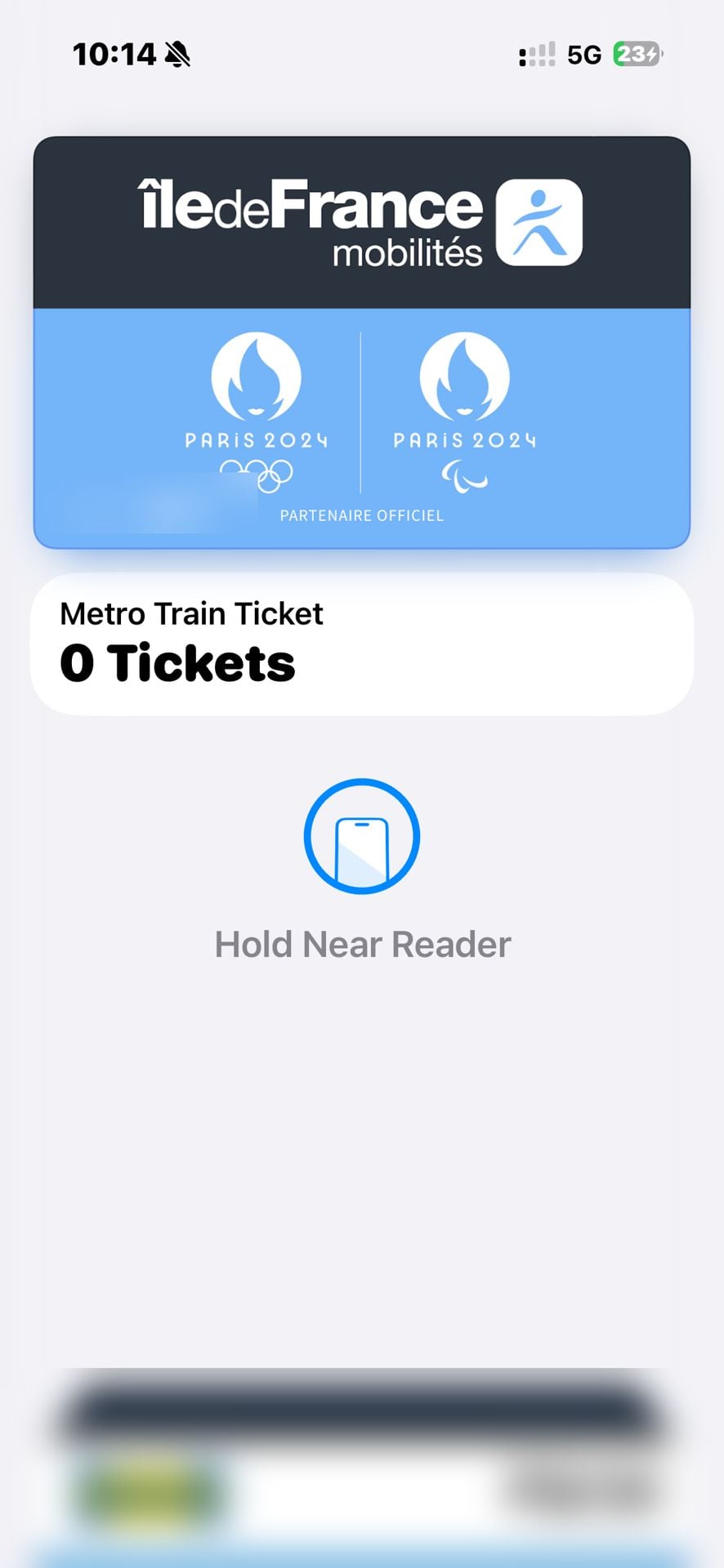
What you need: an iPhone XR/XS or newer.
Express Mode: this is on by default for your first Navigo card. You don’t even need to unlock the phone; just hold it near the reader. If you have more than one card, choose which one under Wallet > the card > … > Card Details > Express Transit.
Dead battery? On iPhone XR and newer, the Express card keeps working “for a certain time” after the battery dies, but not if you switched the phone off yourself. Don’t count on it for a whole day.
What you can load: Métro-Train-RER, Bus-Tram and airport tickets; Navigo Jour, Semaine and Mois; and Paris Visite. Wallet itself sells the day pass, Paris Visite and single tickets. For the weekly or monthly pass, use the app.
Two house rules:
– Airport tickets and Métro-Train-RER tickets can’t sit on the same card at once. Use up your metro tickets first, or put the airport ticket on a second card.
– Full-fare and reduced-fare tickets can’t share a card either, so kids need their own.
On Android? Use the IDFM app, Bonjour RATP, SNCF Connect or Samsung Wallet. You need NFC and a recent Android version. Older Google Pixels (4 and earlier), Nexus and recent Huawei/Honor phones aren’t supported.
How-tos, step by step
How to buy or load a ticket on your phone
- Download the Île-de-France Mobilités app (or open Wallet, tap +, then Transit Card, then France and Navigo).
- Add a Navigo card to Apple Wallet if you don’t have one yet.
- Buy your ticket or pass in the app. For a weekly or monthly pass, use the app rather than Wallet.
- Check the card in Wallet shows the tickets. If it says 0 tickets, you’re not going anywhere yet.
How to get through the gates
- Have your phone (or Navigo card) ready before you reach the gate. Nobody behind you wants to watch you scroll.
- Hold it flat near the reader on the gate.
- Wait for the gate to accept it, then walk through.
- Keep your ticket for the whole trip, and remember the bus needs its own ticket.
How to read the signs
- Find your line (a number for the metro, a letter for the RER) on the map in the app or at the station.
- Look at the end-of-line station in the direction you’re travelling. That’s how the platforms are signed.
- Follow the signs for that line and that direction.

How to change lines
- Get off at the connecting station.
- Follow the signs for your next line and direction. You don’t need a new ticket for metro and RER changes within 2 hours.
- Leaving the system and coming back in counts as a new trip.
How to get in from the airport
See the airport section just below. Buy the €14 airport ticket before you reach the gate, and keep it on its own card if your phone already holds metro tickets.
Airports: CDG and Orly
First, a heads-up for anyone reading older guides: both airport buses have stopped. Orlybus ended on 3 March 2025, and RoissyBus on 1 March 2026.
The airport ticket
The Ticket Paris Région <> Aéroports costs €14 (€7 reduced). It covers trains only (metro, RER, train and Orlyval) for 2 hours. A normal metro ticket is refused at the airport stations.
Paris Visite, an all-zones Navigo Mois and a Navigo Semaine also cover the airports.
Charles de Gaulle (CDG)
- RER B: a train every 6 to 15 minutes, from about 4:50 am to midnight.
- Express bus 9517: runs from Saint-Denis Pleyel (right by our hotel) to RoissyPôle at CDG in about 30 minutes. It runs daily from 5:20 am to 00:30, every 15 to 30 minutes. Check the fare before you ride.
- Buses 350 and 351: from Nation or Porte de la Chapelle, on a Bus-Tram ticket.
Orly
- Metro Line 14: Châtelet to Orly in 25 minutes.
- Orlyval: a shuttle train, also on the €14 ticket.
Getting to the H4 Hotel Wyndham Paris Pleyel (Saint-Denis)
We stayed at the H4 Hotel Wyndham Paris Pleyel Resort, just north of Paris in Saint-Denis. If you’re staying there too, two metro lines bring you close:
- Line 14 to Saint-Denis–Pleyel, the end of the line. It’s direct from Châtelet, Gare de Lyon, Madeleine or Saint-Lazare, and it’s step-free, which is a relief with suitcases. The station also connects with Line 13 and RER D.
- Line 13 to Carrefour Pleyel, on the Saint-Denis Université branch. It’s direct from Saint-Lazare, Champs-Élysées–Clemenceau, Invalides or Montparnasse. Watch which branch you board, because Line 13 splits.
A normal €2.55 Métro-Train-RER ticket covers the trip, whatever the zone.
Bonus: the 9517 express bus to CDG leaves from Saint-Denis Pleyel, so your airport run starts right on the doorstep.
Hungry before the commute? Here’s our review of the hotel breakfast at Le Chopin.
Night buses (Noctilien)
When the metro closes, the Noctilien night buses take over from about 00:30 to 5:30. Look for a blue “N” and a number.
- The main hubs are Châtelet, Montparnasse, Gare de l’Est, Gare Saint-Lazare and Gare de Lyon.
- From Châtelet, buses leave about every 30 minutes on weekdays and every 20 minutes at weekends.
- The Bus-Tram ticket works, and Navigo passes cover it at no extra cost.
Taxis and ride-hailing (VTC)
Taxis
Official fixed fares apply between the airports and Paris, in both directions, with no extras allowed:
| Route | Right Bank | Left Bank |
|---|---|---|
| CDG | €56 | €65 |
| Orly | €45 | €36 |
The Right Bank is the 1st–4th, 8th–12th and 16th–20th arrondissements (districts). The Left Bank is the 5th–7th and 13th–15th.
Fixed fares apply to trips to and from Paris itself. Saint-Denis, where our hotel was, is outside Paris, so that ride goes on the meter. Asking for a stop on the way also cancels the fixed fare.
Other 2026 rules include a minimum fare of €8.
How to spot a real taxi:
– a roof light (green means free, red means taken)
– a meter
– a time display on the back shelf
– a taxi number plate on the front right wing
– a professional card on the windscreen
VTC (app-booked drivers)
These are the Uber-style services. They can only pick you up with a booking made in advance. You can’t flag one down; only taxis pick up on the street.
At the airport, follow the signs and the app’s instructions, and say no to anyone in arrivals offering you a ride.
Vélib’ (city bikes)
| Option | Price | What’s included |
|---|---|---|
| Ticket-V | €3 | One trip, 45 min, classic or e-bike |
| 24 h classic | €5 | 30 min per trip on classic bikes |
| 24 h electric | €10 | 60 min classic or 45 min electric per trip |
| 3 days | €20 | 60 min classic or 45 min electric per trip |
Extra time costs €1 per 30 minutes on a classic bike and €2 on an e-bike. On the electric and 3-day passes, the first 5 e-bike trips are free, then €2 a trip.
Buy in the Vélib’ app or the IDFM app. Take a bike from a station and return it to a station. Return one to a hilltop station and you earn 6 bonus minutes, which feels fair after Montmartre.
Walking
Honestly, some of our favourite bits of Paris happened between stations. With about 2 minutes between metro stops, hopping on for one stop sometimes isn’t worth the stairs. Look at the map, and if it’s close, walk it.
Accessibility
- Line 14 is the only fully step-free metro line for wheelchair users travelling on their own. It has lifts from street to platform, wide gates and platforms level with the trains.
- All trams and all Paris buses are accessible. In the suburbs most bus lines are, but not every stop.
- RER: stations are step-free, but staff need to set out a ramp. At RATP stations, ask at the ticket office. At SNCF stations, book Accès Plus Transilien before 1 pm the day before.
- Check whether the lifts are working before you set off.
Safety, pickpockets and courtesy
Pickpockets are the one Paris tradition we’d happily skip. RATP’s advice:
– Close your bags.
– Keep valuables out of sight.
– Keep your wallet in an inside pocket.
– Stay alert when you’re on your phone.
If something’s stolen: for a non-violent theft under €1,000 where the thief can’t be identified, you can report it to RATP staff at a ticket office or service desk. Otherwise, go to a police station.
Keep your bags with you. An unattended bag can stop the trains for about an hour while it’s checked.

For assault or harassment, call 3117.
Common courtesy (not official rules, just what makes everyone’s day nicer): let people off before you get on, stand to one side on escalators so others can pass, and fold up the flip-down seats when it gets crowded.
FAQ
Is the metro ticket still €2.55?
Yes. In 2026 a Ticket Métro-Train-RER costs €2.55, and a Navigo Easy card costs €2.
What happened to the t+ ticket?
It was replaced on 1 January 2025 by the Ticket Métro-Train-RER and the Ticket Bus-Tram. Old paper t+ tickets still work on the metro until 14 December 2026.
Can I still buy paper tickets?
No. Sales stopped in November 2025. Use a phone or a Navigo card.
Do I need to worry about zones?
Not for single tickets; one price covers the whole region. Zones only matter for weekly and monthly passes.
Does one ticket cover my bus and my metro?
No. Metro and RER tickets cover metro/RER changes for 2 hours, and bus/tram tickets cover bus/tram changes for 1 hour 30.
How do I get from CDG to central Paris?
Take RER B with the €14 airport ticket. RoissyBus no longer runs.
Can I use my iPhone as a ticket?
Yes, on an iPhone XR/XS or newer. Add a Navigo card to Apple Wallet, buy tickets in the IDFM app or in Wallet, and tap.
Can each of us share one Navigo Easy card?
No. You can lend it, but only one person can travel on it per trip, so everyone needs their own.